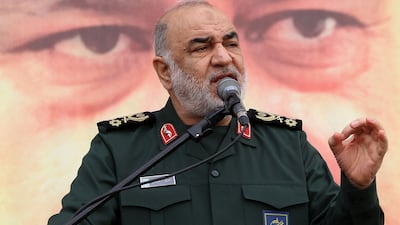
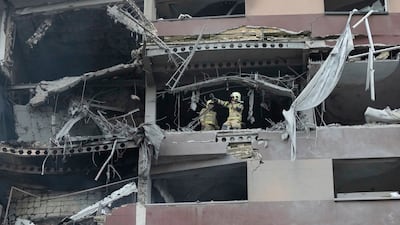
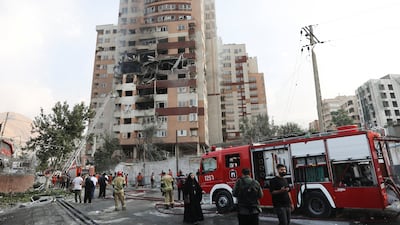
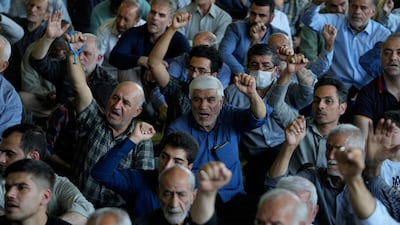
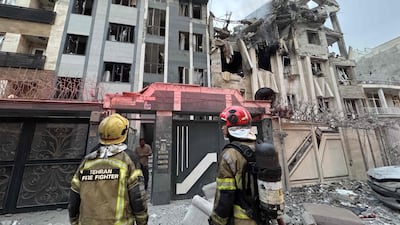
This is a fateful moment for the Islamic Republic of Iran.
Does it choose defiance and military brinkmanship? Or does it conclude that there is now no escaping a radical revision of its revolutionary doctrine built on a programme of nuclear power, regional expansionism and the strategic use of armed proxies?
Strategic patience is no longer an option, nor is its years-long conflict of attrition with Israel. This is now a different kind of war between two extremist doctrines, Iranian and Israeli.
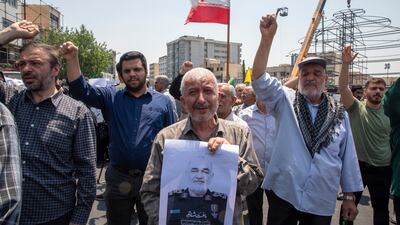
This round of confrontation is not performative, unlike previous skirmishes, because the traditional tacit understanding between the two sides has collapsed – perhaps for the first time. A real war has erupted, one that both Iran and Israel have framed in existential terms.
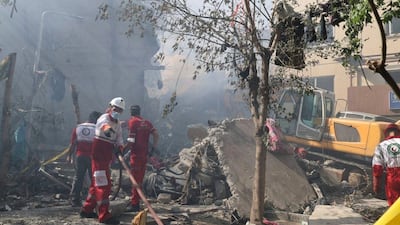
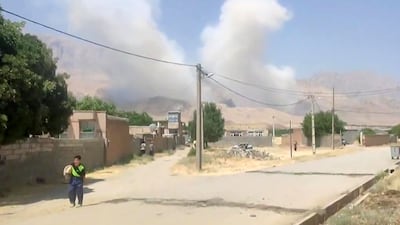
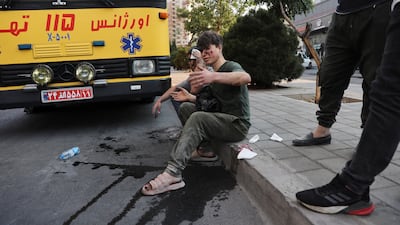
Israel has dramatically escalated its attacks, killing military and political leaders as well as nuclear scientists. It has achieved deep intelligence penetration inside Iran similar to its infiltration of Hezbollah’s ranks in Lebanon last year.
In doing so, Israel has goaded Tehran into retaliatory escalation. The resulting devastation of Israeli urban centres would rally overwhelming American and western support for Israel, no matter how Iran might brand such attacks as a triumph for itself.
What are the horizons of this war? Could it prove decisive for both Iran and Israel?
Let us imagine a scenario, however implausible, in which this war ends swiftly, after it reshuffles the negotiating cards in the US-Iran-Israel triangle, not only on nuclear matters but also by elevating the military stakes to force a permanent political settlement and co-existence between Iran and Israel. Imagine that the “Deal of the Century” – which US President Donald Trump has set as a strategic goal since his first term – is now ripe for implementation under an American umbrella and with Iranian-Arab-Israeli understanding.
Such a proposition is, of course, fundamentally incompatible with the existential logic of the Islamic Republic, whose doctrine includes Israel’s destruction, becoming a nuclear state and relying on armed proxies.
Realistically, however, the US has enabled Israel to degrade Iran’s surrogates across the Middle East. Washington has provided Israel with both cover and intelligence for unprecedented operations inside the Islamic Republic in recent years.
The encirclement of Iran is no passing development. It is part of a deliberate push to compel the ruling echelons in Tehran – from the supreme leader, Ayatollah Ali Khamenei, to the Islamic Revolutionary Guard Corps – to choose between survival and collapse.
All this explains why the war that erupted last Friday is no surprise. Israel has long signalled its readiness to launch major strikes against Iran. In parallel, Iran has conveyed to its allies that it, too, is at peak readiness to carry out retaliatory strikes, perhaps using the Ukraine model of saturation attacks – launching hundreds of drones and missiles in overwhelming blows similar to what Russia faced.
Tehran calculated that such a warning would hold Mr Trump hostage to its deterrence, assuming that hitting Israeli cities would place a burden on a US President with little appetite for war. But Iran’s bet failed. Israel made its move with US understanding anyway.
Another miscalculation by Tehran was assuming that Mr Trump would fall into the trap of endless open-ended nuclear talks and that its tactical shrewdness would allow it to avoid any discussion of ballistic missiles or proxies. Europe, however, delivered a blow to this strategy, issuing a sharp censure of Iran’s deception in its nuclear programme, its concealment of prohibited activities, and its evasion of the serious monitoring sought by the International Atomic Energy Agency.
Iran also misread the decision by Mr Trump’s envoy to the negotiations, Steve Witkoff, to limit talks to the nuclear programme, wrongly interpreting this as a green light to revive its proxies. Tehran did not pressurise the Houthis in Yemen to stand down. It also gave Hezbollah the impression that it was regaining strength through US negotiations, thereby emboldening the group to obstruct Beirut’s efforts to assert Lebanese state sovereignty.
Now that there is an actual war, Iran may yet activate all its armed proxies to overwhelm Israel, but this would be an enormous gamble. If any one of them targets US forces or bases, Washington will respond with overwhelming force.
There are of course question marks over how much co-ordination there was between Israeli Prime Minister Benjamin Netanyahu’s government and the Trump administration before the Friday strikes. Was there a view to mislead Iranian officials during the nuclear talks and secure Israel the element of surprise? Was Mr Trump opposed to the timing of the strikes, given the G7 and Nato summits are taking place over the next few days?
But these speculations are irrelevant because of American strategic policy, set in motion two years ago by Mr Trump’s predecessor, Joe Biden. In a nutshell, it is to delegate the mission of destroying Iran’s capabilities to Israel while providing it with military and intelligence support to carry out the task. Regardless of whether Mr Trump is pleased or furious right now, he remains committed to this strategic doctrine.
And so, even as Mr Trump issued ambivalent statements prior to Israel’s strikes and Tehran’s retaliation, he has now adopted a dual strategy of inducement and intimidation in his messaging towards Iran. He insists the door to diplomacy remains open, even as Tehran dismissed such a possibility for the foreseeable future.
However, Tehran has been encircled.
Its proxies are in the doldrums. Syria is no longer the open playground it once was for Iran’s Revolutionary Guards, nor is the Iraqi government prepared to submit to Tehran’s directives. The Houthis may fancy themselves to be the standard-bearers of the Axis of Resistance, yet the US and UK have drawn up plans to contain them. And Hezbollah has been severely debilitated.
Moreover, the Israeli government has been canny and aggressive in how it has conducted strikes across the region, and even criminal in its treatment of Palestinians in Gaza. Yet it’s not going to be deterred, given US support.
It remains to be seen whether or not this war will be prolonged and spiral into a regional conflict. Or whether there are those in Tehran reconsidering their options. Either way, more is yet to come.

COMPANY PROFILE
Founders: Sebastian Stefan, Sebastian Morar and Claudia Pacurar
Based: Dubai, UAE
Founded: 2014
Number of employees: 36
Sector: Logistics
Raised: $2.5 million
Investors: DP World, Prime Venture Partners and family offices in Saudi Arabia and the UAE
Islamophobia definition
A widely accepted definition was made by the All Party Parliamentary Group on British Muslims in 2019: “Islamophobia is rooted in racism and is a type of racism that targets expressions of Muslimness or perceived Muslimness.” It further defines it as “inciting hatred or violence against Muslims”.
Mercer, the investment consulting arm of US services company Marsh & McLennan, expects its wealth division to at least double its assets under management (AUM) in the Middle East as wealth in the region continues to grow despite economic headwinds, a company official said.
Mercer Wealth, which globally has $160 billion in AUM, plans to boost its AUM in the region to $2-$3bn in the next 2-3 years from the present $1bn, said Yasir AbuShaban, a Dubai-based principal with Mercer Wealth.
“Within the next two to three years, we are looking at reaching $2 to $3 billion as a conservative estimate and we do see an opportunity to do so,” said Mr AbuShaban.
Mercer does not directly make investments, but allocates clients’ money they have discretion to, to professional asset managers. They also provide advice to clients.
“We have buying power. We can negotiate on their (client’s) behalf with asset managers to provide them lower fees than they otherwise would have to get on their own,” he added.
Mercer Wealth’s clients include sovereign wealth funds, family offices, and insurance companies among others.
From its office in Dubai, Mercer also looks after Africa, India and Turkey, where they also see opportunity for growth.
Wealth creation in Middle East and Africa (MEA) grew 8.5 per cent to $8.1 trillion last year from $7.5tn in 2015, higher than last year’s global average of 6 per cent and the second-highest growth in a region after Asia-Pacific which grew 9.9 per cent, according to consultancy Boston Consulting Group (BCG). In the region, where wealth grew just 1.9 per cent in 2015 compared with 2014, a pickup in oil prices has helped in wealth generation.
BCG is forecasting MEA wealth will rise to $12tn by 2021, growing at an annual average of 8 per cent.
Drivers of wealth generation in the region will be split evenly between new wealth creation and growth of performance of existing assets, according to BCG.
Another general trend in the region is clients’ looking for a comprehensive approach to investing, according to Mr AbuShaban.
“Institutional investors or some of the families are seeing a slowdown in the available capital they have to invest and in that sense they are looking at optimizing the way they manage their portfolios and making sure they are not investing haphazardly and different parts of their investment are working together,” said Mr AbuShaban.
Some clients also have a higher appetite for risk, given the low interest-rate environment that does not provide enough yield for some institutional investors. These clients are keen to invest in illiquid assets, such as private equity and infrastructure.
“What we have seen is a desire for higher returns in what has been a low-return environment specifically in various fixed income or bonds,” he said.
“In this environment, we have seen a de facto increase in the risk that clients are taking in things like illiquid investments, private equity investments, infrastructure and private debt, those kind of investments were higher illiquidity results in incrementally higher returns.”
The Abu Dhabi Investment Authority, one of the largest sovereign wealth funds, said in its 2016 report that has gradually increased its exposure in direct private equity and private credit transactions, mainly in Asian markets and especially in China and India. The authority’s private equity department focused on structured equities owing to “their defensive characteristics.”
THE SPECS
Engine: six-litre W12 twin-turbo
Transmission: eight-speed dual clutch auto
Power: 626bhp
Torque: 900Nm
Price: Dh940,160 (plus VAT)
On sale: Q1 2020
TRAINING FOR TOKYO
A typical week's training for Sebastian, who is competing at the ITU Abu Dhabi World Triathlon on March 8-9:
- Four swim sessions (14km)
- Three bike sessions (200km)
- Four run sessions (45km)
- Two strength and conditioning session (two hours)
- One session therapy session at DISC Dubai
- Two-three hours of stretching and self-maintenance of the body
ITU Abu Dhabi World Triathlon
For more information go to www.abudhabi.triathlon.org.
Our family matters legal consultant
Name: Hassan Mohsen Elhais
Position: legal consultant with Al Rowaad Advocates and Legal Consultants.
RESULT
Bayern Munich 5 Eintrracht Frankfurt 2
Bayern: Goretzka (17'), Müller (41'), Lewandowski (46'), Davies (61'), Hinteregger (74' og)
Frankfurt: Hinteregger (52', 55')
Sheer grandeur
The Owo building is 14 storeys high, seven of which are below ground, with the 30,000 square feet of amenities located subterranean, including a 16-seat private cinema, seven lounges, a gym, games room, treatment suites and bicycle storage.
A clear distinction between the residences and the Raffles hotel with the amenities operated separately.
Cricket World Cup League 2
UAE squad
Rahul Chopra (captain), Aayan Afzal Khan, Ali Naseer, Aryansh Sharma, Basil Hameed, Dhruv Parashar, Junaid Siddique, Muhammad Farooq, Muhammad Jawadullah, Muhammad Waseem, Omid Rahman, Rahul Bhatia, Tanish Suri, Vishnu Sukumaran, Vriitya Aravind
Fixtures
Friday, November 1 – Oman v UAE
Sunday, November 3 – UAE v Netherlands
Thursday, November 7 – UAE v Oman
Saturday, November 9 – Netherlands v UAE
LIVERPOOL%20TOP%20SCORERS
%3Cp%3E(Premier%20League%20only)%3Cbr%3EMohamed%20Salah%20129%3Cbr%3ERobbie%20Fowler%20128%3Cbr%3ESteven%20Gerrard%20120%3Cbr%3EMichael%20Owen%20118%3Cbr%3ESadio%20Mane%2090%3Cbr%3E%3C%2Fp%3E%0A
The specs
Engine: 2.0-litre 4cyl turbo
Power: 261hp at 5,500rpm
Torque: 405Nm at 1,750-3,500rpm
Transmission: 9-speed auto
Fuel consumption: 6.9L/100km
On sale: Now
Price: From Dh117,059
US tops drug cost charts
The study of 13 essential drugs showed costs in the United States were about 300 per cent higher than the global average, followed by Germany at 126 per cent and 122 per cent in the UAE.
Thailand, Kenya and Malaysia were rated as nations with the lowest costs, about 90 per cent cheaper.
In the case of insulin, diabetic patients in the US paid five and a half times the global average, while in the UAE the costs are about 50 per cent higher than the median price of branded and generic drugs.
Some of the costliest drugs worldwide include Lipitor for high cholesterol.
The study’s price index placed the US at an exorbitant 2,170 per cent higher for Lipitor than the average global price and the UAE at the eighth spot globally with costs 252 per cent higher.
High blood pressure medication Zestril was also more than 2,680 per cent higher in the US and the UAE price was 187 per cent higher than the global price.
CREW
%3Cp%3E%3Cstrong%3EDirector%3A%20%3C%2Fstrong%3ERajesh%20A%20Krishnan%3C%2Fp%3E%0A%3Cp%3E%3Cstrong%3EStarring%3A%20%3C%2Fstrong%3ETabu%2C%20Kareena%20Kapoor%20Khan%2C%20Kriti%20Sanon%26nbsp%3B%3C%2Fp%3E%0A%3Cp%3E%3Cstrong%3ERating%3A%3C%2Fstrong%3E%203.5%2F5%3C%2Fp%3E%0A
The story in numbers
18
This is how many recognised sects Lebanon is home to, along with about four million citizens
450,000
More than this many Palestinian refugees are registered with UNRWA in Lebanon, with about 45 per cent of them living in the country’s 12 refugee camps
1.5 million
There are just under 1 million Syrian refugees registered with the UN, although the government puts the figure upwards of 1.5m
73
The percentage of stateless people in Lebanon, who are not of Palestinian origin, born to a Lebanese mother, according to a 2012-2013 study by human rights organisation Frontiers Ruwad Association
18,000
The number of marriages recorded between Lebanese women and foreigners between the years 1995 and 2008, according to a 2009 study backed by the UN Development Programme
77,400
The number of people believed to be affected by the current nationality law, according to the 2009 UN study
4,926
This is how many Lebanese-Palestinian households there were in Lebanon in 2016, according to a census by the Lebanese-Palestinian dialogue committee
The biog
Family: Parents and four sisters
Education: Bachelor’s degree in business management and marketing at American University of Sharjah
A self-confessed foodie, she enjoys trying out new cuisines, her current favourite is the poke superfood bowls
Likes reading: autobiographies and fiction
Favourite holiday destination: Italy
Posts information about challenges, events, runs in other emirates on the group's Instagram account @Anagowrunning
Has created a database of Emirati and GCC sportspeople on Instagram @abeermk, highlight: Athletes
Apart from training, also talks to women about nutrition, healthy lifestyle, diabetes, cholesterol, blood pressure
The specs
Engine: Turbocharged four-cylinder 2.7-litre
Power: 325hp
Torque: 500Nm
Transmission: 10-speed automatic
Price: From Dh189,700
On sale: now
The specs: 2018 Maxus T60
Price, base / as tested: Dh48,000
Engine: 2.4-litre four-cylinder
Power: 136hp @ 1,600rpm
Torque: 360Nm @ 1,600 rpm
Transmission: Five-speed manual
Fuel consumption, combined: 9.1L / 100km
Results
Men's finals
45kg:Duc Le Hoang (VIE) beat Zolfi Amirhossein (IRI) points 29-28. 48kg: Naruephon Chittra (THA) beat Joseph Vanlalhruaia (IND) TKO round 2.
51kg: Sakchai Chamchit (THA) beat Salam Al Suwaid (IRQ) TKO round 1. 54kg: Veerasak Senanue (THA) beat Huynh Hoang Phi (VIE) 30-25.
57kg: Almaz Sarsembekov (KAZ) beat Tak Chuen Suen (MAC) RSC round 3. 60kg: Yerkanat Ospan (KAZ) beat Ibrahim Bilal (UAE) 30-27.
63.5kg: Abil Galiyev (KAZ) beat Nouredine Samir (UAE) 29-28. 67kg: Narin Wonglakhon (THA) beat Mohammed Mardi (UAE) 29-28.
71kg: Amine El Moatassime (UAE) w/o Shaker Al Tekreeti (IRQ). 75kg: Youssef Abboud (LBN) w/o Ayoob Saki (IRI).
81kg: Ilyass Habibali (UAE) beat Khaled Tarraf (LBN) 29-28. 86kg: Ali Takaloo (IRI) beat Emil Umayev (KAZ) 30-27.
91kg: Hamid Reza Kordabadi (IRI) beat Mohamad Osaily (LBN) RSC round 1. 91-plus kg: Mohammadrezapoor Shirmohammad (IRI) beat Abdulla Hasan (IRQ) 30-27.
Women's finals
45kg: Somruethai Siripathum (THA) beat Ha Huu Huynh (VIE) 30-27. 48kg: Thanawan Thongduang (THA) beat Colleen Saddi (PHI) 30-27.
51kg: Wansawang Srila Or (THA) beat Thuy Phuong Trieu (VIE) 29-28. 54kg: Ruchira Wongsriwo (THA) beat Zeinab Khatoun (LBN) 30-26.
57kg: Sara Idriss (LBN) beat Zahra Nasiri Bargh (IRI) 30-27. 60kg: Kaewrudee Kamtakrapoom (THA) beat Sedigheh Hajivand (IRI) TKO round 2.
63.5kg: Nadiya Moghaddam (IRI) w/o Reem Al Issa (JOR).
PSA DUBAI WORLD SERIES FINALS LINE-UP
Men’s:
Mohamed El Shorbagy (EGY)
Ali Farag (EGY)
Simon Rosner (GER)
Tarek Momen (EGY)
Miguel Angel Rodriguez (COL)
Gregory Gaultier (FRA)
Karim Abdel Gawad (EGY)
Nick Matthew (ENG)
Women's:
Nour El Sherbini (EGY)
Raneem El Welily (EGY)
Nour El Tayeb (EGY)
Laura Massaro (ENG)
Joelle King (NZE)
Camille Serme (FRA)
Nouran Gohar (EGY)
Sarah-Jane Perry (ENG)
Two products to make at home
Toilet cleaner
1 cup baking soda
1 cup castile soap
10-20 drops of lemon essential oil (or another oil of your choice)
Method:
1. Mix the baking soda and castile soap until you get a nice consistency.
2. Add the essential oil to the mix.
Air Freshener
100ml water
5 drops of the essential oil of your choice (note: lavender is a nice one for this)
Method:
1. Add water and oil to spray bottle to store.
2. Shake well before use.
Results
2.30pm: Park Avenue – Conditions (PA) Dh80,000 (Dirt) 2,000m; Winner: Rb Seqondtonone, Abdul Aziz Al Balushi (jockey), Helal Al Alawi (trainer)
3.05pm: Al Furjan – Maiden (TB) Dh82,500 (Turf) 1,200m; Winner: Bosphorus, Dane O’Neill, Bhupat Seemar
3.40pm: Mina – Rated Condition (TB) Dh105,000 (D) 1,600m; Winner: Royal Mews, Tadhg O’Shea, Bhupat Seemar
4.15pm: Aliyah – Handicap (TB) Dh87,500 (T) 1,900m; Winner: Ursa Minor, Ray Dawson, Ahmad bin Harmash
4.50pm: Riviera Beach – Rated Conditions (TB) Dh95,000 (D) 2,200m; Winner: Woodditton, Saif Al Balushi, Ahmad bin Harmash
5.25pm: Riviera – Handicap (TB) Dh2,000 (T) 2,000m; Winner: Al Madhar, Antonio Fresu, Musabah Al Muhairi
6pm: Creek Views – Handicap (TB) Dh95,000 (T) 1,400m; Winner: Al Salt, Dane O’Neill, Erwan Charpy
Company: Instabug
Founded: 2013
Based: Egypt, Cairo
Sector: IT
Employees: 100
Stage: Series A
Investors: Flat6Labs, Accel, Y Combinator and angel investors