


The EU and GCC are examples of supranational institutions with very different designs. For many years, the EU served as a model that the GCC looked to emulate. Today, however, the GCC might serve as a source of inspiration for the EU in some areas. The time is right for collaborative EU-GCC research on the optimal structure of supranational institutions.
The world started experimenting with supranational institutions in earnest following the conclusion of the Second World War, spawning examples such as the Arab League, African Union and Association of South-East Asian Nations. These differ in terms of the level of political and economic integration, and the degree to which consensus is required for the formulation and implementation of central rulings. For example, the EU model shows high degrees of economic integration with moderate levels of political centralisation, while the Arab League is a much looser grouping where member states retain total sovereignty.
If the success metric for a supranational institution is its track record in defusing conflict, then the leading performer is surely the EU, which transformed Europe from the land of perennial wars to an exemplar of civilised conduct. While the EU model has served as a useful template for the GCC countries, so far, the six member states have maintained a supranational structure that ensures each retains a high degree of independence. Accordingly, the GCC often operates more as an intergovernmental forum.

To see the difference more clearly, consider that in the case of the EU, institutions such as the European Council and European Parliament have legislative authority that member states must respect, even if they disagree with the law passed. Further, the European Commission has significant executive authority, in addition to having the capacity to punish member states that fail to comply with supranational directives, in conjunction with the European Court of Justice. In the economic domain, the European Central Bank is the sole determinant of monetary policy for the 20 out of 27 EU member states that have adopted the euro, while the EU common market ensures that commercial regulations are virtually harmonised across the bloc.
In contrast, the GCC’s primary bureaucratic institution – and the loose analogue to the European Commission – is the GCC Secretariat General. It does not have the ability to ensure compliance through fines and other punitive instruments, which has contributed to continuing challenges in the implementation of the GCC single market. Moreover, despite the nominal status of the GCC as a customs union, several member states have promulgated bilateral free trade agreements outside the GCC.
The EU and GCC have been successful in many regards. However, both continue to face challenges, some of them shared.
For example, in the case of the EU, these include the lack of consensus on the structure of a fair migration agreement; slow decision-making at the EU-level making citizens feel disenfranchised; and tension over optimal monetary policy given the intra-EU differences in fiscal and monetary needs.
In the case of the GCC, there continues to be a deficit in defence and security integration. The bloc’s ability to negotiate free trade agreements has been limited by the divergence in the member states’ trade interests, while foreign policy heterogeneity has also undermined the GCC’s ability to unify the six members’ diplomatic positions. This latter challenge in particular is very much evident in the case of the EU, too, with internal differences limiting the EU’s ability to act effectively in a variety of global crises including Ukraine and Gaza.
These challenges indicate that the knowledge of how to optimally structure supranational institutions is incomplete, and that there is much to gain by further studying these issues using modern scientific methods.
While European scholars have extensively analysed the EU’s institutions, their work tends to be inward-looking, rarely drawing lessons from other blocs such as the GCC. In contrast, the GCC has modelled many of its institutions on the EU’s experience, though its scholarly literature remains comparatively limited. Notably, plans for a Gulf Monetary Union were delayed after learning from the EU’s handling of the Greek euro crisis.
Given the many challenges facing the EU, it would be beneficial for European scholars to study the GCC’s experience. Today, GCC researchers are far more experienced than in past decades and can contribute meaningfully to such collaborations.
-
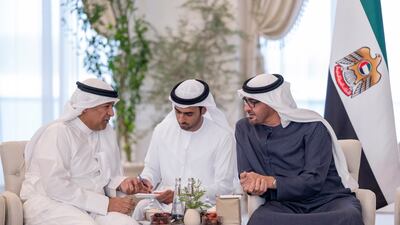
President Sheikh Mohamed held talks with GCC Secretary-General Jassim Al Budaiwi at Qasr Al Bahr in Abu Dhabi. All Photos: UAE Presidential Court -
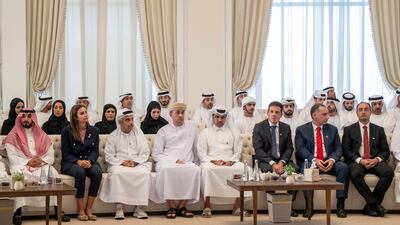
Hosted in Abu Dhabi by the Ministry of Interior, the workshop will run from September 16 to 19 -
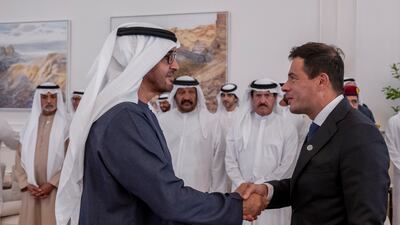
Sheikh Mohamed welcomes heads of GCC delegations, while stressing the importance of enhancing co-operation in the fight against drugs -
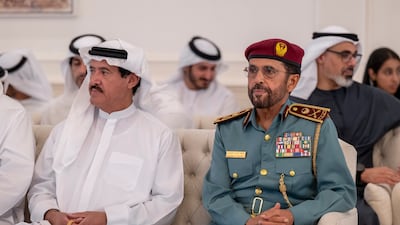
Sheikh Sultan bin Hamdan bin Mohamed, Adviser to the UAE President and Chairman of the Camel Racing Federation (left) at the workshop -
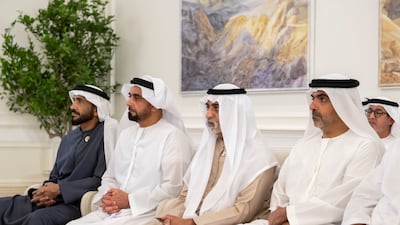
(From left) Sheikh Nahyan Bin Zayed, Chairman of the Board of Trustees of Zayed bin Sultan Al Nahyan Charitable and Humanitarian Foundation, Lt Gen Sheikh Saif bin Zayed Al Nahyan, UAE Deputy Prime Minister and Minister of Interior, Sheikh Nahyan bin Mubarak, UAE Minister of Tolerance and Coexistence and Sheikh Hamed bin Zayed -
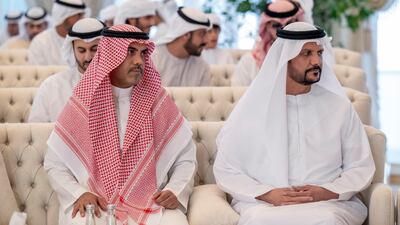
The workshop is titled ‘Preparing the GCC Strategy for Combating Drugs 2025-2028'


Greater co-operation would not only deepen EU-GCC ties but could also involve Asean, the African Union and the South American trade bloc Mercosur, enriching global understanding of regional governance. The collaboration could take various forms, such as physical research centres or virtual consortiums, with a hybrid model probably offering the greatest benefits by balancing deep immersion with broad participation.
Studying supranational institutions is crucial as regional blocs face growing challenges. While the EU and GCC follow different integration models, each offers valuable lessons. A research collaboration between their scholars would not only deepen academic understanding but also help address shared challenges.
With the GCC now a strong contributor to global scholarship, this is an ideal time for co-operation, aiming to develop more resilient, effective institutional frameworks that balance integration with national sovereignty.

