


When it comes to forecasting, there always remains the element of the unforeseen and the surprising. Yet it is possible to make predictions for the new year based on the events that unfolded in the previous year.
This can also be done by drawing on political indicators and the profiles of global leaders, supported by insights from experts across various fields and regions.
It, therefore, makes sense to begin with the impact the inauguration of US president-elect Donald Trump could have on his country’s future and that of the rest of the world.
Mr Trump will bring back with him his mercurial personality, unconventional ideas, boldness to experiment with new approaches, occasional inconsistency in decision-making, and at times a fierce insistence on his views.
Mr Trump is likely to start by imposing more than 25 tariffs on goods from Canada and Mexico, potentially sparking a trade war. Most significantly, a US-China trade war is expected to follow, shaking the global economy. A proposed tariff on EU goods could also lead to an economic crisis in Europe, which would have significant repercussions for the Middle East’s economies given their exposure to global markets.
The forced deportation of about 11 million undocumented immigrants in the US, which Mr Trump has promised, is expected to spark social unrest.
Meanwhile, recent developments in the US will have raised concerns regarding terrorism linked to groups such as Al Qaeda and ISIS, as well as the possibility of terrorism fuelled by white nationalism.
These issues highlight the deep social, political, intellectual and ideological divisions within the country. The problem is Mr Trump’s divisive personality exacerbates these fractures, as does the entrenched polarisation between the Republican and Democratic parties. Such polarisation undermines any hope of reconciliation.
In Europe, Germany’s general elections at the end of February will influence not only the country’s internal stability but also that of Europe. The identity of the new German chancellor will have a significant impact on reshaping the EU, with consequences for priorities such as the war in Ukraine and relations with Russia.
The conflict between the US and Russia carries potentially global repercussions, especially if it escalates.
A Russian expert I spoke to suggested to me that Moscow will never accept Mr Trump’s expected proposal to “freeze” the war while the US and Nato continue to arm Ukraine. Nor will it agree to merely “postpone” Ukraine’s Nato membership or to the introduction of international peacekeeping forces into Ukraine. For the Russian leadership, such measures would entrench the current government in Ukraine.
If this is true, then Mr Trump’s bid to mediate between Russia and Ukraine is likely to fail. Indeed, Russian Foreign Minister Sergey Lavrov has already laid the groundwork for rejecting Mr Trump’s proposals.
This increases the risk of direct conflict between Russia and Nato, particularly in the Baltic region.

This brings us to the Middle East, a region that raises the following question: is stability achievable?
It is known that Israel today is in its safest position in the regional balance of power, despite its internal turmoil. Its exceptional positioning is the result of American contributions to its regional achievements and a military partnership that has dismantled Iran’s capabilities and severely degraded Hezbollah.
It is true that Israel took risks. But it was the US that provided the weapons, intelligence and financial resources. Israel boasted, but without help from the administration of US President Joe Biden, it could not have achieved what it did. The US essentially delegated the task of cutting Iran to size to Israel without directly intervening in the conflict, thus achieving a strategic triumph for itself.
This has left the future of Syria and Lebanon, two countries where Iran had an outsized influence, uncertain.
For Syria, it is important to hold elections as soon as possible for the establishment of a legitimate government. The head of the interim administration, Ahmad Al Shara, needs to revise his statement about the new constitution taking three years to draft and elections occurring after four years, which would be catastrophic for the country as its people seek to turn the page.
In Lebanon, meanwhile, the expectations are that a parliamentary session will be held on January 9 to elect a president. The new leader will then need to appoint a full-time prime minister and a fully functional government.
-
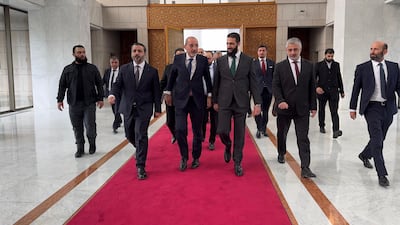
Jordan's Foreign Minister Ayman Safadi meets Syria's de facto leader Ahmad Al Shara in Damascus. Photo: Jordanian Foreign Ministry -
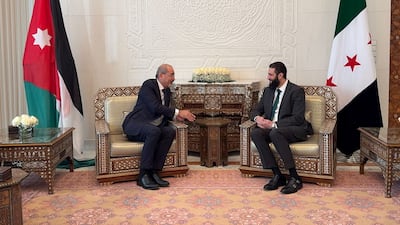
The two men held extensive talks in the Syrian capital. Photo: Jordanian Foreign Ministry -
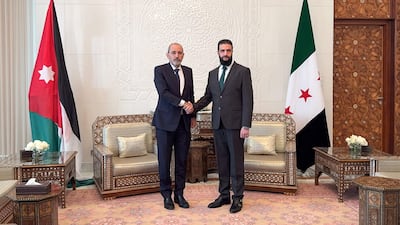
Mr Safadi, left, seen shaking hands with Mr Al Shara, is expected to meet other key Syrian officials during the visit. AFP -
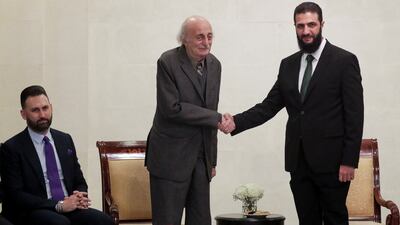
Lebanese Druze leader Walid Jumblatt, with his son Taymur looking on, is received by Mr Al Shara in Damascus. Reuters -
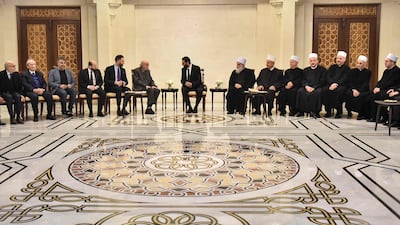
Walid and Taymur Jumblatt in talks with Mr Al Shara, Syria’s interim prime minister Mohammed Al Bashir and Druze leaders in Damascus. AFP -
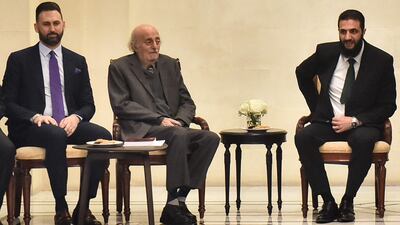
Walid Jumblatt is the first Lebanese leader to meet Mr Al Shara since his Hayat Tahrir Al Sham group and allied rebel factions launched a lightning offensive, seizing Damascus and ousting long-time Syrian president Bashar Al Assad. AFP -
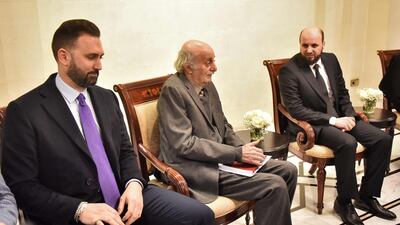
Taymur Jumblatt, Walid Jumblatt and Mr Al Bashir. AFP -
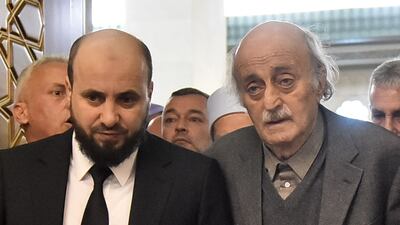
Mr Al Bashir with Walid Jumblatt. AFP -
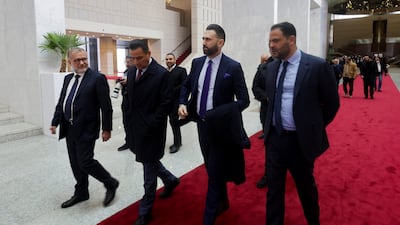
Taymur Jumblatt with officials in Damascus. Reuters -
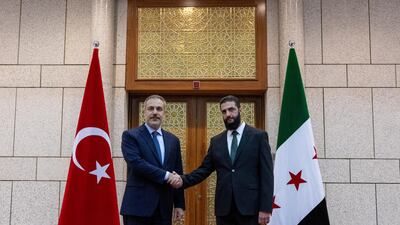
Turkish Foreign Minister Hakan Fidan meets Mr Al Shara in Damascus. Reuters -
Mr Fidan, left, with Mr Al Shara during their meeting. Mr Fidan is the first foreign minister to visit Damascus since president Bashar Al Assad's overthrow two weeks ago. Reuters -
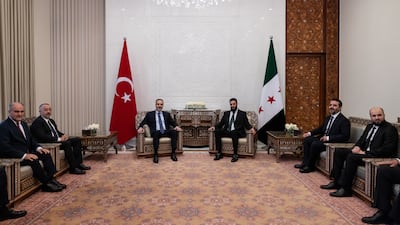
Mr Fidan and Mr Al Shara held talks on Sunday during which they vowed to strengthen bilateral ties. EPA -
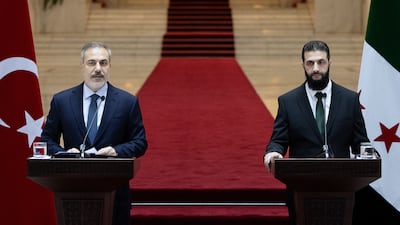
Mr Fidan, left, and Mr Al Shara attend a press conference after their meeting. EPA -
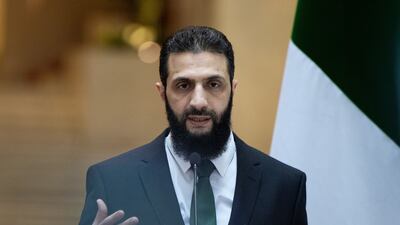
Hayat Tahrir Al Sham leader Mr Al Shara at a press conference after meeting Mr Fidan in Damascus, Syria. EPA -

Mr Fidan at a press conference after a meeting Mr Al Sharaa in Damascus, Syria. EPA


More than anything else, what needs to flow from these changes is a fundamental reset – one that includes reforms in mindset, reasoning and performance in the governance structure, away from corruption, gender discrimination and the sectarian calculations that have long plagued Lebanese politics.
In any case the consequences for the Levant are already profound.
Turkey’s rapprochement with its fellow Nato members is notable in light of what it considers to be its achievements in Syria, including gradually pushing Russia out of its Mediterranean bases and marginalising Iran in the country. What Washington needs from Ankara now – especially under Mr Trump – is to assume some responsibility for stability in Syria and fulfil its commitments to prevent the resurgence of ISIS, in exchange for Washington limiting its own influence in the country’s north-east.
Turkish influence in Syria will undoubtedly contribute to the reshaping of the Middle East and will profoundly affect regional power balances. Iran’s regional decline will continue, and Mr Trump may decide to strike its nuclear facilities if Tehran continues to manoeuvre and refuses the new administration’s offers of rewards in exchange for major concessions, including curbing its nuclear ambitions and abandoning its expansionist doctrine.
All of this is to say that the beginning of Mr Trump’s second term will coincide with a period of global anxiety and anticipation.

