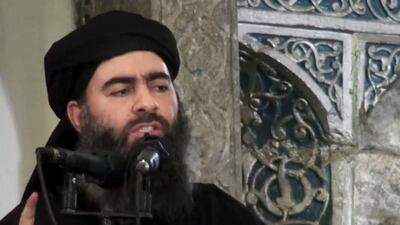
A decade ago, from the 12th-century Al Nouri Mosque – a historic landmark in the Iraqi city of Mosul – ISIS declared the establishment of the caliphate, undoubtedly marking a significant shift in modern terrorism. Led by Abu Bakr Al Baghdadi, ISIS aimed to establish the foundations of an Islamic state across territories in Iraq and Syria, imposing its interpretation of Sharia and launching a campaign of systematic terror.
Reflecting on the early days of ISIS's presence in Mosul, it has become evident that one of the group’s primary objectives was to initiate a "purification campaign" aimed at eradicating all things that did not adhere to their extreme misunderstanding of Islam. This involved forcibly deporting Christians, perpetrating genocide against the Yazidis, and arresting and executing Sunnis whom they deemed apostates. The terrorists also sought to eliminate any Shiite presence in Mosul and its surrounding areas. For several years, ISIS managed to achieve these heinous goals.
However, examining the events of the past decade alone does not provide sufficient answers as to why ISIS emerged so rapidly and was able to establish itself swiftly in Mosul and Raqqa. While numerous straightforward explanations can provide insight into the transformative events of June 2014 that reshaped Mosul and the global counter-terrorism landscape, several factors stand out. These include the sectarianism that took root following the 2003 invasion, the ongoing political conflict in Iraq, and some of the nefarious influences of Turkey and Iran. Additionally, the Middle East underwent significant political shifts during this period.
For decades before the rise of ISIS, Mosul experienced significant social and political changes. Since the 1970s, Christians in Mosul had expressed increasing discomfort, with no attempts or initiatives by local community leaders to address these issues. Saddam Hussein showed little interest, relying on a tribal system that proved more loyal to his regime. This neglect created further vacuums, and manifestations of these divisions became more pronounced after the 2003 US-led invasion.
Mosul was primed to fall into ISIS's hands, influenced by factors such as the sectarianism inherent in Iraq's political system and the waning interest of its people in maintaining the city's stability. Mosul had become so disconnected from reality that it appeared the only force capable of filling the ensuing vacuum was ISIS. The wake-up moment for the people of Mosul came tragically late.
Since its liberation, Mosul has witnessed several initiatives to reconstruct what was destroyed; the UAE-supported Unesco initiative to restore Christian and Muslim landmarks, as well as historic houses, stands out. However, the city remains socially tumultuous, with Iran-backed militants wielding major influence. The people, once again silenced, are unable to advocate for their rights. It may take decades before the people of Mosul find the right environment to begin meaningful dialogue and reconciliation.
Sectarian divisions between Sunni and Shiite communities deepened during ISIS’s reign, exacerbated by retaliatory violence and the sectarian militias that mobilised against the radicals. The Kurdistan Regional Government and Shiite militias played pivotal roles in countering ISIS, but were sometimes at odds with each other, reflecting broader regional dynamics.
In the broader regional and global context, ISIS’s rise had far-reaching implications. The group's ability to inspire and co-ordinate terrorist attacks beyond its controlled territories demonstrated the transnational nature of modern extremism. ISIS-affiliated groups and sympathisers conducted attacks in Europe, the Middle East, and beyond, prompting heightened security measures and international co-operation in countering terrorist financing, recruitment networks and online propaganda.
The Global Coalition to Defeat ISIS employed a multifaceted approach that combined military operations, intelligence sharing, and diplomatic efforts to degrade ISIS’s capabilities and dismantle its infrastructure. Although military victories drove ISIS militants into hiding, weakened their territorial hold and disrupted its command structure, efforts to counter the organisation’s propaganda, rehabilitate former militants, and support communities affected by violence require sustained international commitment and innovative strategies. Importantly, ISIS’s underlying ideological appeal to vulnerable communities and militant recruits persists.
Even after losing control over its physical territory, ISIS continues to exert influence through its expanding branches in various regions; these continue to maintain ISIS’s position as the deadliest terrorist organisation in the world, according to the 2024 Global Terrorism Index. It is still able to inspire and mobilise affiliates across the Middle East, Africa and South-East Asia. These branches operate with a significant degree of autonomy while adhering to the core ideological tenets established during the height of its power.
In fact, although ISIS’s ideology expanded through a potent combination of religious extremism and sophisticated propaganda, we must not forget the lessons learnt from the past. Conditions conducive to a terrorist organisation’s development – consider, for instance, the early stages following Al Qaeda’s formation – often lead to unforeseeable consequences. ISIS benefited from a framework that allowed it to not only declare a “caliphate”, but also bring together physically and intellectually a number of ideologues that the movement had never before seen. This developed an ideological corpus whose breadth, development and implications we will fully understand only with the passage of time.
-

Al Masfi Mosque, Mosul’s oldest, opened its doors to the public on March 7, nearly a decade since ISIS took over Iraq’s second city. It is pictured here in ruins in June 2021. Photo: Guilde Europeenne du Raid -
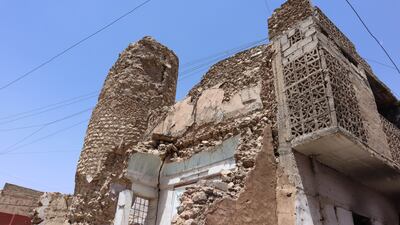
Al Masfi was closed for reconstruction during the ISIS onslaught in mid-2014 and was partially damaged during military operations to drive out the militants in 2017. Photo: Guilde Europeenne du Raid -
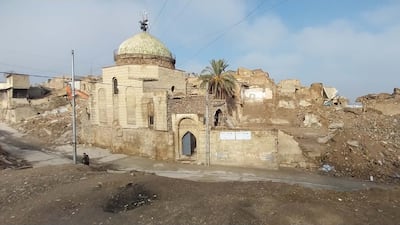
The damaged Al Masfi pictured in 2022. Photo: La Guilde Europeenne du Raid -
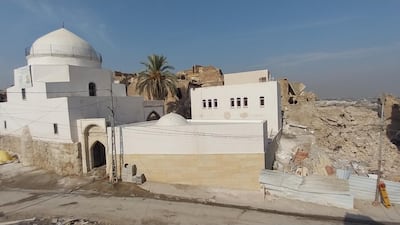
It is also known as the Ancient Mosque or Umayyad Mosque. Photo: La Guilde Europeenne du Raid -
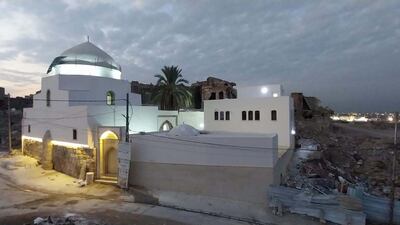
The mosque, pictured in January 2024, lies in the heart of the Old City of Mosul. Photo: La Guilde Europeenne du Raid -

It was built after the Islamic conquest of the city in 638 AD. Photo: Aliph Foundation -
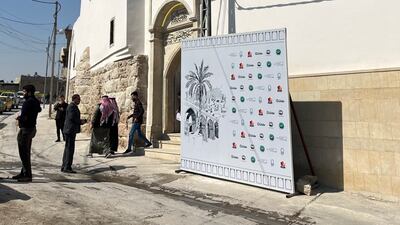
Al Masfi is reopening thanks to painstaking rebuilding efforts. Photo: Aliph Foundation -
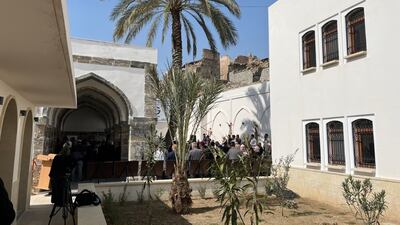
The $1.1 million reconstruction took a year to complete. Photo: Aliph Foundation -

Al Masfi's reconstruction was part of a larger project called the Mosul Mosaic, which aims to revive the cultural spirit of the city. Photo: Aliph Foundation -
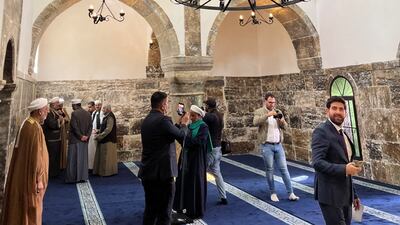
Al Masfi Mosque now takes pride of place among Mosul's historic buildings once more. Photo: Aliph Foundation


Other than ideology, ISIS shifting towards a decentralised operational model has allowed the group to expand to several regions of Africa and Asia, with some provinces – such as those in the Sahel – growing steadily. However, the Sahel may lack the appeal of other scenarios; liberating Timbuktu cannot match the symbolism of liberating Mosul or Damascus. In fact, the grievances that drive such militancy in the Sahel are mainly rooted in local issues and tend to differ markedly from the objectives pursued by global Islamic extremism.
However, while the militants’ current agenda may seem focused on local issues, a crucial lesson gleaned from past experiences is that it is merely a matter of time until, under opportune conditions, they will attempt to internationalise their actions. The occurrence of attacks in the West should not be the sole criterion for assessing the immediacy of the threat. Nor should the fact that an extremist organisation holds and governs de facto territory be a criterion for assessing the urgency of the situation.
If none of the organisations active in the Sahel have yet opted to declare an Islamist administration, it is not due to lack of capability – quite the opposite; terrorist groups already administer territory. It is simply that a pragmatic cost-benefit analysis based on past experiences by these organisations shows that, for the time being, it is better not to do so.
One of the most disturbing facts about the past 10 years is that, despite the potential for effective and successful global mobilisation, such as forming the Coalition, sustaining such initiatives – and finding consensus to expand their activities – remains challenging. This difficulty is exemplified by Iraq, the main partner in the Coalition, requesting that it leave and end its mandate in the country. This request has raised numerous questions among various communities in Iraq who fear a resurgence of ISIS. Despite the political difficulties and dynamics in the country, the Coalition should continue to collaborate with Baghdad.
Many challenges persist in post-ISIS Iraq, including governance deficits, economic disparities and unresolved sectarian tensions. Reconstruction efforts are hindered by political instability, corruption and competing regional interests. The detention of thousands of ISIS fighters and their families in Iraqi prisons and displacement camps poses security and humanitarian challenges, necessitating comprehensive strategies for justice, rehabilitation and community reintegration.
Looking ahead, the 10th anniversary of ISIS’s “caliphate” declaration should be both a moment for reflection but also a call to action against the persistent and evolving threat of extremism. As seen in the intricate dynamics of post-ISIS Iraq, sustainable peace and stability hinge on inclusive governance, economic development and reconciliation initiatives that address underlying grievances and prevent an extremist resurgence. International solidarity and co-operation remain essential in confronting the evolving threat posed by radical ideologies and ensuring a peaceful future for affected regions.