


A year has passed since the introduction of the UAE’s 9 per cent federal corporation tax. The levy comes at a time when the philosophy of taxation is undergoing a fundamental transformation globally. Although it is too early to draw any definitive conclusions, the early signs are that the tax has achieved its primary goals, broadening the fiscal toolkit available to Emirati policymakers.
The tax is nominally like that in countries such as France and the UK – albeit set a considerably lower rate. Western European economies, however, have a highly idiosyncratic history of taxation that must be acknowledged if one is to understand the different path that countries such as the UAE have taken to get to their current fiscal arrangements.
In the early modern era (16th-18th centuries), central governments in Western Europe underwent a deep transformation from flimsy fiefdoms to modern states. The defining element of that transition was the large expansion in the tax base: governments went from levying taxes in a decentralised, haphazard and limited manner to exercising robust monopolies on the collection of tax revenues.
Although many factors contributed to this transformation, the most important was the high frequency of intra-European wars: in a fight to the death, the political unit that can most effectively amass the financial means required to raise an army is the most likely to prevail. The traditional model of kings sending out notes to their knights asking them to join a fight was no longer enough, especially following the development of gunpowder weapons that gave an organised and well-equipped army a massive advantage.
The states that could not evolve their fiscal machinery quickly enough were swallowed by the ones that could, and the result was the arrangement of perennially fighting, medium-sized powers we see in modern-day Europe. The colonial race of the 19th century, followed by the First and Second World Wars, only served to accentuate European governments’ insatiable appetite for tax revenues.
The history of the Gulf countries, including the UAE, helps us understand why we haven’t seen similar tax practices emerging. In the pre-oil era, the harshness of the desert meant that only small populations were sustainable, and the sort of free-for-all, conquest-happy combat that typified European life was off the table. This limited the need for the local states to develop an advanced fiscal machinery.
Following the advent of oil, high population densities became feasible, and modern weapons became affordable. However, two factors allowed Gulf societies to avert the need to levy taxes. The first was oil revenues, which went directly into the coffers of the central government, making traditional taxes unnecessary. The second was the security guarantees offered initially by the UK and subsequently by the US, and demonstrated dramatically during the liberation of Kuwait in 1991.
However, since the turn of the millennium, the environment has evolved, contributing to the decision by countries such as the UAE to introduce taxes similar to those seen in other countries. The first is that gradual decline in the credibility of the aforementioned security guarantees.
-
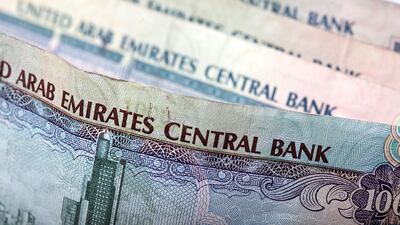
The UAE issued its federal corporate tax law that will levy a headline 9 per cent rate on taxable income exceeding Dh375,000. Silvia Razgova / The National -

Taxable income below the aforementioned threshold will be subject to a 0 per cent rate of corporate tax. Chris Whiteoak/ The National -

No corporate tax will apply on salaries or other personal income from employment — be it in the government, semi-governmental, or private sector, the Ministry of Finance said. Chris Whiteoak/ The National -
Businesses will become subject to the UAE corporate tax from the beginning of their first financial year that starts on or after June 1, 2023. Victor Besa / The National -
The UAE corporate tax regime builds from best practices globally and incorporates principles that are internationally known and accepted. Victor Besa / The National


At the same time, the future prospects for oil revenues have started to diminish. While gross hydrocarbon income for countries such as the UAE have continued to grow, the per capita revenues are not what they were in the 1970s, as shale oil and climate change concerns have combined to dampen the growth of global demand. Moreover, the UAE’s population continues to grow at a high rate, increasing the pressure on budgets.
A more recent development is the transforming ethical role of a tax. Once upon a time, a tax was the way in which the government secured the resources required to deliver its core services such as defence, and law and order. However, after the 2008 global financial crisis and following the rise of the Occupy Wall Street movement, people have started to demand that governments use taxes to corner the super-rich who have become adept at evading payment through guileful relocations of their capital.
The result is a global corporate tax system – led by figures such as US economist and Treasury Secretary Janet Yellen – that will shortly require a minimum profit tax of 15 per cent for multinational businesses. This development has helped accelerate the adoption of the 9 per cent levy by the UAE for two reasons: first, it offers the Emirates the safety of knowing that other leading business hubs cannot undercut its taxes; and second, it allows the country to further demonstrate its willingness to be a constructive contributor to multilateralism.
The UAE’s government has not wanted to leave anything to chance, however, and has therefore striven to continue giving businesses operating in the Emirates high-quality services in exchange for their tax dollars. Traditionally, this has been in the domain of physical infrastructure and a favourable business climate from a regulatory perspective.
More recently, the UAE has strained every sinew to secure free-trade agreements with strong economies, making locating in the Emirates a more attractive prospect. The India-UAE FTA, for example, offers Emirati businesses unique access to one the world’s largest, growing economies. With the promise of more FTAs on the horizon, it is a good time to do business in the UAE.
The success of the Emirates’ strategy is reflected in persistently high inward FDI flows, and the absence of any notable capital flight following the imposition of the tax. As we await more data on the revenues generated and the tax’s impact on businesses, the initial signs are that the policy has been a success.

