


Only once in history has a human disease been eradicated, wiped off the face of the planet. That was smallpox in 1980. This was no easy task. It took leadership, commitment, dedication, persistence, a vaccine and continued investment. While there is no magic wand, co-ordinated efforts could finally mean wild polio and Guinea worm disease will follow suit and be eradicated in the very near future.
In 1986, there were roughly 3.5 million cases of Guinea worm disease, mainly in Africa. Thanks in large part to a programme launched by former US President Jimmy Carter, just 13 cases were recorded in 2023. The UAE's Founding Father, the late Sheikh Zayed bin Sultan Al Nahyan, was one of this programme’s early supporters, paving the way for a strong local legacy in global health philanthropy.
We are well on the way to eliminating other infectious diseases. Indeed, the World Health Organisation has identified several diseases as eradicable or eliminable as we develop new tools and approaches. To date, 50 countries have eliminated at least one neglected tropical disease (NTD) and over 40 countries have eliminated malaria. Iraq’s elimination of trachoma in July 2023 signifies the halfway mark to the 100-country target set in the latest NTD road map.
The NTD Lymphatic filariasis (LF), also known as elephantiasis, is transmitted to humans through different types of mosquitoes and is one of the most common vector-borne parasitic disease. However, a report released by the WHO in 2023 shows that progress is being made against this debilitating disease, which can cause severe swelling to body parts and even permanent disabilities; 18 out of 72 endemic countries have managed to eliminate LF as a public health problem.
At Glide, the Global Institute for Disease Elimination, our mission is to advance knowledge and accelerate progress like this, building on Sheikh Zayed’s philanthropic legacy to consign eradicable infectious diseases to the history books.
Just a little over four years ago, Glide was launched in Abu Dhabi with support from President Sheikh Mohamed in partnership with the Bill and Melinda Gates Foundation. That’s why I’m particularly excited about our first symposium taking place this week in Abu Dhabi. We will welcome more than 100 global health leaders, experts, national health programme managers, philanthropists, and government officials, to explore opportunities to boost collaboration, integration and progress.
Infectious diseases don’t just threaten our health. They keep children out of school, limit economic productivity and risk crippling already fragile health systems around the world. Over 1.6 billion people are infected by at least one NTD and 600,000 die each year from malaria. The world’s poorest are disproportionately affected and often left behind.
Not so very long ago you were most likely to die from an infectious disease. The odds were that you wouldn’t make it past your fifth birthday. Modern science and medicine changed this, extending and improving lives across the world. But this progress can’t be taken for granted. Covid-19 reminded the world of the devastating impact a novel infection can have, and new challenges continue to present themselves.
A warming world is likely catalysing the migration of disease vectors, like mosquitos, to new latitudes and altitudes. Furthermore, climate change exacerbates poor sanitation, malnutrition, and overcrowded living conditions that are all triggers for the transmission of infectious diseases. Anti-microbial resistance is on the increase, threatening the effective prevention and treatment of a range of infections, and in turn the medical gains of the past century. From NTDs to HIV, to tuberculosis and malaria, drug resistance is accelerating and must be addressed.
-
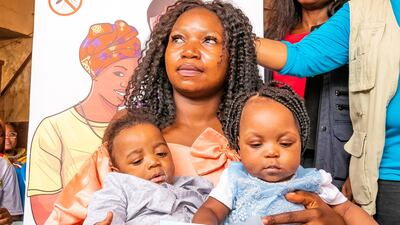
Noah Ngah (left), the first baby to receive the malaria vaccine, and his twin sister, Judith Ndzie, are held for a photograph after receiving vaccines at a hospital in Soa, Cameroon. AFP -
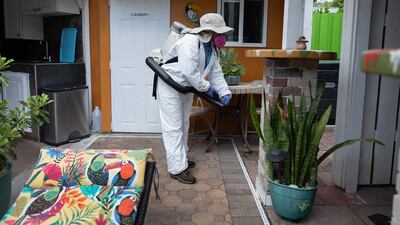
Margine Rodriguez, a Mosquito control inspector, sprays a pesticide to kill mosquitos in Miami. Getty Images -

Antoine Bissa, a nurse and the owner of a street pharmacy is giving a anti malaria injection to a patient, in Bangui. AFP -
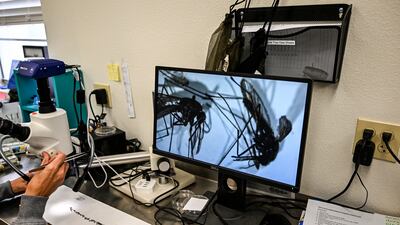
Health officials at Sarasota County Mosquito Management Services study specimens of mosquitoes that cause malaria, in Florida. AFP -

People gather outside a health centre as they wait to get treatment for malaria, in San Felix, Venezuela. Reuters -
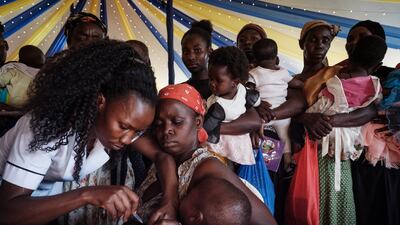
A child receives a shot during the launch of the extension of the world's first malaria vaccine pilot programme in Gisambai, Kenya. AFP -

A medical volunteer of the Doctors Without Borders (MSF) organization takes a blood sample from a patient to be tested for malaria at his home in Barcelona, Venezuela. AFP -
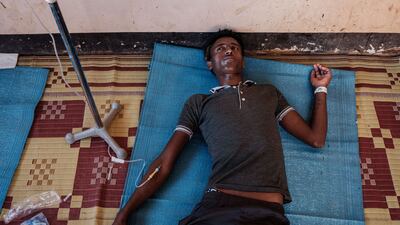
An Ethiopian refugee who fled Ethiopia's Tigray conflict is treated with a drip infusion of sodium chloride after being diagnosed with malaria and diarrhoea inside a clinic at the Um Raquba refugee camp in Sudan's eastern Gedaref state. AFP


More than ever, an integrated, cross-border approach is required to strengthen existing interventions and develop innovative responses. A Glide-supported research project to better address transmission of river blindness on the Malawi-Mozambique and Ghana-Cote d’Ivoire borders is a prime example of this and will be crucial to its elimination from the continent by 2030.
Larger, more diversified investment into these sorts of programmes is essential – from philanthropy, private sector and governments, including through multilateral mechanisms like Gavi and the Global Fund. As the past 40 years have shown, despite vast scientific strides, achieving disease eradication remains among the greatest and toughest human challenges.
President Sheikh Mohamed is following in his father’s footsteps. Through Reaching the Last Mile, Sheikh Mohamed has invested more than $376 million to global efforts to end polio since 2011, alongside support for many more initiatives targeted at curbing the tide of infectious disease.
Working together, we will one day soon witness another historical disease eradication. With further advances, we won’t have to wait another 45 years until ending the next one.

