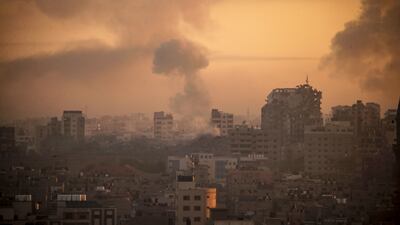

The unfolding horror in Gaza is a reminder of two important lessons that should have been heeded by Hamas, Israel and the US.
The first came from the late Ibrahim Abu Lughod, the brilliant Palestinian-American historian. He always cautioned never to make judgements based on the day’s headlines, because like the ocean’s tides or waves, they come in and go out. If we are driven by them, we are left flailing about without being grounded in reality. Rather, we should focus on the deep currents that shape the direction of events.
Using that lesson, I disagree with some experts who insist that after this Israel-Gaza War, nothing will ever be the same again. No doubt, some things will be different, but when the dust settles, no matter how much damage Israel is able to inflict on Hamas, the Palestinian people and Gaza, too many constants will remain.
In the first place, Palestinians will still be under an oppressive occupation, chafing at the way Israel controls their land and denies them freedom.
Hamas may be defeated, but out of the anger and trauma caused by this huge display of Israeli might, the seeds are being planted for Hamas 2.0 or something worse. At the same time, the already diminished Palestinian Authority will have become even more irrelevant and Palestinians, as they have been since the tragic end of Yasser Arafat, will be operating without a leadership that could actually inspire them. That unfortunately is unlikely to change.
-

US Secretary of State Antony Blinken speaks to members of the media before leaving Cairo, en route to Jordan. AP -
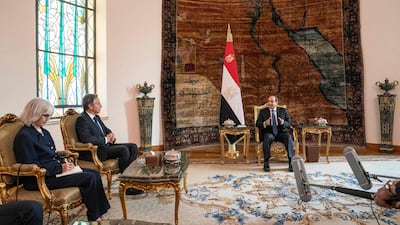
Egypt's President Abdel Fattah El Sisi, right, meets with Mr Blinken, centre, in Cairo. AFP -

US Secretary of State Antony Blinken meets Saudi Crown Prince Mohammed bin Salman in Riyadh. AFP -

Mr Blinken shakes hands with a Saudi official before boarding a plane leaving Riyadh. AP -

Mr Blinken toured six Arab capitals to build pressure on Hamas. AP -

President Sheikh Mohamed and Mr Blinken at Shati Palace, Abu Dhabi. Ryan Carter / UAE Presidential Court -
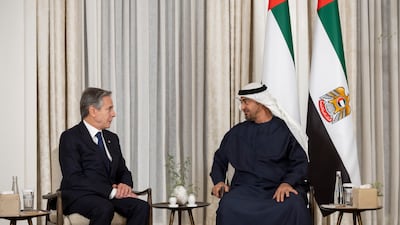
Sheikh Mohamed and Mr Blinken. Ryan Carter / UAE Presidential Court -

From left: Sheikh Tahnoon bin Zayed, Deputy Ruler of Abu Dhabi and UAE National Security Adviser; Sheikh Abdullah bin Zayed, UAE Minister of Foreign Affairs; Sheikh Khaled bin Mohamed bin Zayed, Crown Prince of Abu Dhabi and chairman of Abu Dhabi Executive Council; Dr Anwar bin Mohamed Gargash, diplomatic advisor to the UAE President; and Reem bint Ibrahim Al Hashimi, UAE Minister of State for International Co-operation. Ryan Carter / UAE Presidential Court -

Saudi Foreign Minister Prince Faisal bin Farhan meets Mr Blinken, in Riyadh. AFP -

Mr Blinken arrives in Riyadh, Saudi Arabia, after a one-day tour of Jordan, Qatar, and Bahrain. AFP -
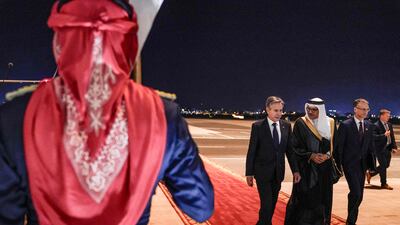
Mr Blinken is received by Bahrain's Foreign Minister Abdullatif bin Rashid and US Ambassador to Bahrain Steven Brody, in Manama. AFP -
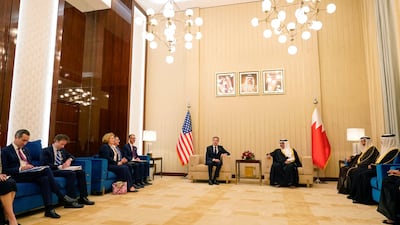
The US Secretary of State meets Bahrain's Prime Minister Crown Prince Salman Bin Hamad, in Manama. Reuters -
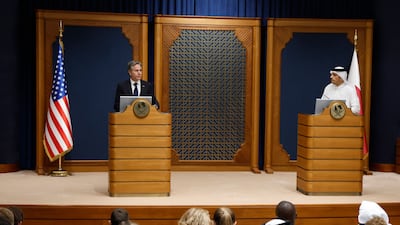
Mr Blinken and Qatar's Prime Minister Mohammed bin Abdulrahman Al Thani after their meeting in Doha. AFP -

Qatari Emir Sheikh Tamim holds talks with Mr Blinken, in Doha. Reuters -
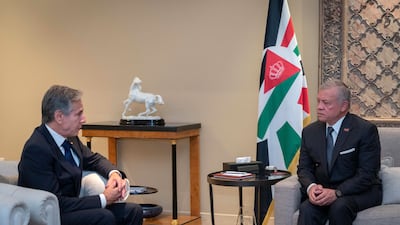
King Abdullah of Jordan receives the US Secretary of State, in Amman. EPA -
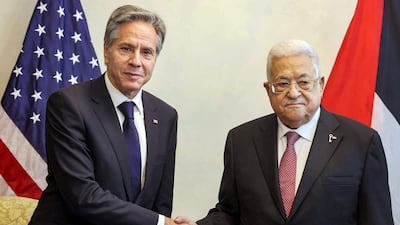
Mr Blinken meets Palestinian President Mahmoud Abbas, in Amman. AFP -

With Tom Sullivan, US deputy chief of staff for policy, as they depart Tel Aviv, en route to Jordan. AP -

Mr Blinken speaks with survivors of a Hamas attack on a rave party, in Tel Aviv. AP -

Visiting the donation centre for victims of the Hamas attacks, in Tel Aviv. Reuters -
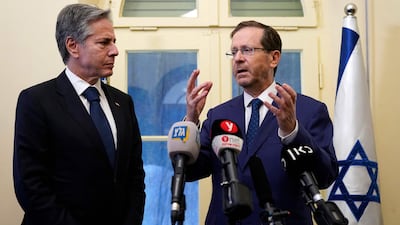
Mr Blinken and Israel’s President Isaac Herzog during a media briefing at the Kirya, in Tel Aviv. AFP -
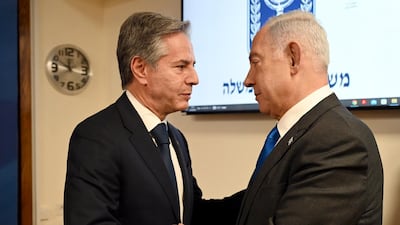
Israeli Prime Minister Benjamin Netanyahu and Mr Blinken during a meeting at the Kirya. EPA


Israel is also unlikely to change. As it emerges from its trauma, its politics will not be more moderate. There may be less of a push for radical changes in the judiciary and fewer accommodations made for the ultra-Orthodox, but Prime Minister Benjamin Netanyahu’s new/old partner, former defence minister Benny Gantz, is no less hardline on the Palestinian issue. In fact, Mr Gantz’s past critique of Mr Netanyahu was that he hadn’t “finished off” Hamas in the last Gaza war.
Sadly, little will anything change on the US front. While public opinion, especially among Democrats, continues to be increasingly critical of Israeli right-wing policies (and will most likely become more critical after Israel finishes bombing Gaza), the pro-Israel lobby will continue to influence elected officials in both parties. At some point, the Biden administration may decide that Israel has gone too far with its assault and press it to halt the violence, but the US shouldn’t be expected to apply the kind of pressure needed to force an end to the occupation or justice for Palestinians.
The bottom line is that because constants are unlikely to change, neither will the political realities shaping the conflict.
The second lesson comes from the famous “doctrine” attributed to Colin Powell, the former US secretary of state. He laid out a series of questions to be considered before ever engaging in a war. Among them were: Is there a clear and attainable objective? Have risks and consequences been assessed? Is there an exit strategy?
It will be recalled that the late Mr Powell tragically didn’t follow his own doctrine that led to American debacles in Afghanistan and Iraq. It’s equally clear that neither Hamas nor Israel heeded his guidance.
There are 2.3 million Palestinians in Gaza. In our most recent polling, Hamas has the support of about 20 per cent of them. If history is our guide, Israel’s assault will only make Palestinians angrier and more inclined to fight Israel, just as Hamas’s attack only gave reprieve to an unpopular Mr Netanyahu.
What then were the attainable objectives for either Hamas or Israel? Did Hamas think it would actually advance its cause? Did it believe that its butchery would end the occupation, harm the Netanyahu government, or improve its own standing among Palestinians or in the Arab world? And does Israel really believe that massacres in Gaza are going to pacify Palestinians, turning their hatred into acceptance or that they will salvage Mr Netanyahu’s electoral fortunes? And did either Israel or Hamas think of what might happen in weeks two or three of this war or what the end game might be?
One can try to understand – but never excuse – Hamas and Israel for striking out blindly. But the US needed to be more level-headed. Having seen Israel engage in similar past efforts to destroy Hamas or Hezbollah – and seen them fail – why did the US think this would be different?
Did the administration actually believe that by giving Mr Netanyahu full-throated support that he would act with restraint? Or that the resultant devastation of Gaza and killing of thousands would hasten the prospects for regional peace? And did they really believe that Israel would be any more successful in this war than it was in 2006 in Lebanon or the biannual wars with Hamas over the past 15 years, or for that matter than the US, itself, was in Afghanistan or Iraq?
It’s too late to answer these questions now. They should have been asked and answered by all parties before Hamas launched its deadly attacks, Israel embarked on its huge devastation and killing in Gaza, and the US gave Israel blank-cheque support. Now we’re left to live with the horrific consequences of everyone’s lack of discretion – the dead, the rubble, and the trauma and anger on both sides.

