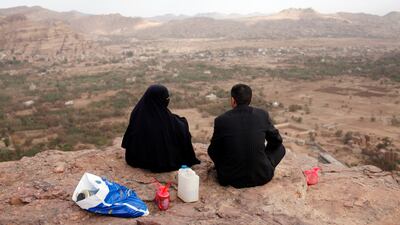
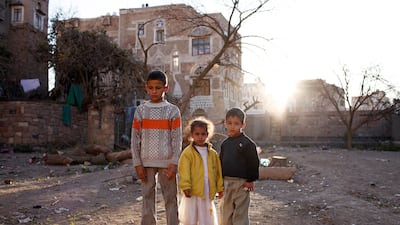
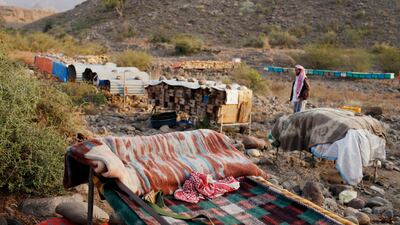
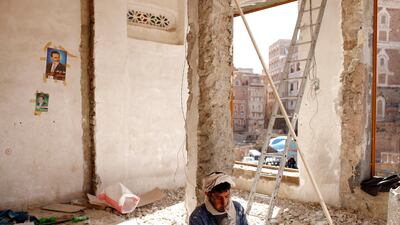
What was it like to write the first military history of the UAE at war, using the words of the soldiers, sailors and airmen themselves? This was the task I set myself in writing the forthcoming book 25 Days to Aden, which recounts the climactic struggle to liberate the Yemeni port city of Aden before the commencement of Eid Al Fitr in July 2015.
This was the first battle of the Yemen war, which started when Yemen’s government asked for international support from the UN Security Council and the Arab League. The Gulf Arabs drew a line in the sand to stop Iran-backed Houthi tribesmen from dominating the southern tip of the Arabian Peninsula and seizing the key shipping lanes that connect the eastern and western hemispheres via the Red Sea and the Suez Canal.
In the opening days of the war, the UAE stepped up to help Yemeni resistance fighters to hold the southern port-city of Aden, a strategic outpost on the Indian Ocean that had been the busiest port in the world just decades beforehand. If the Houthis could take Aden, they would not only have overrun Yemen’s second-largest city (in addition to their control of the capital Sanaa) but they would also sit astride a maritime choke point that controlled 20 per cent of global oil traffic. As one special forces soldier told me, the Yemen war was the story of Arab elite forces “fighting a ghost from the mountain, next to the world’s most important seaway”.
The military historian has a big responsibility because she or he is keeping alive the memory of those who gave their lives for their country and for their fellow warriors. At the same time, history must be as perfectly accurate as possible because it is our gift to future generations. This means not only celebrating victories and proud achievements but also confronting hard truths and sad moments, and learning lessons that can help the nation and its soldiers, sailors and airmen face new challenges.
As a result, it took more than five years to meticulously research, write and fact-check 25 Days to Aden. To really, truly understand a battle, one must speak to many participants to work out the events that never made it into the official records, and one must peruse the records to find the things that humans forget. Just as important, a historian also needs to make the closest map study of the terrain and then walk the ground. This is what I did in Aden.
To really, truly understand a battle, one must speak to many participants to work out the events that never made it into the official records
For instance, only by getting on the ground can one really appreciate the extreme topography of the oldest parts of Aden – literally a deep volcanic caldera surrounded by towering thousand-foot cliffs. And only by moving back and forth along the exposed causeway that made up the approaches to Aden’s key terrain – the international airport – can you appreciate how important the UAE’s armoured vehicles were in overcoming the Houthi firepower that defended the airport.
The liberation of Aden began with the Yemeni resistance pinned with their backs to the sea, days from defeat. I interviewed those Yemeni fighters and the UAE special forces who were covertly inserted into the defensive pocket in Aden. The story of the Aden battle is a story of this partnership between Yemenis and Emiratis, who first held the line and then reinforced the defensive area with Emirati Al Forsan rangers and Land Forces artillery, and finally launched a surprise attack on the Houthis that smashed them out of Aden and pursued them for a hundred kilometres in all directions. The UAE Navy and Air Force and Air Defence worked round the clock and under terrible conditions to keep the lines of supply open and to keep up a precise and heavy bombardment upon the enemy. It was a true team effort: the whole nation pulling towards one objective – helping the Yemenis to liberate Aden.
It is unusual for outsiders to be allowed to talk to UAE military personnel about their service but in the course of researching and writing this book, I spent hundreds of hours interviewing and living alongside UAE military personnel. In many cases, I gathered their stories while they were deployed on battlefronts in Yemen, during my visits to the frontlines, and they kindly gave their evenings and down-time to retell the story of Aden from their perspectives. Other times, I visited them with their families back in the Emirates. Reliving the conflict seemed to help them process thoughts and feelings that had been buried since 2015, and I hope they keep talking about the war with each other and their families, to the extent that security allows.
When an outsider spends so much time talking to Emiratis about a sensitive subject such as war, the experience is very instructive about the nation’s mentality towards conflict. UAE military men and women take no joy from the destructive business of war. Like all warriors, they are amazed by the precision and power of modern weapons, but I found a special level of seriousness and maturity in Emirati troops, who genuinely hated the death and misery caused by war. Yet Emirati troops were also undoubtedly good at modern warfare: trained in real conflicts alongside the best western militaries, UAE forces were also blessed with a superior understanding of the local culture in Yemen and with excellent relations with the Yemeni resistance forces.
The story of 25 Days to Aden belongs to the Emirati men and women who fought the battle alongside their Yemeni partners. The book is dedicated to the five UAE troops who were killed in the battle and it is only fitting that the last word of this article goes to one of the exceptional young people who fought in (and survived) the battle of Aden. When I interviewed him, he was looking back after a few years on his war experience as a 27-year-old UAE soldier with good training but seeing battle for the first time. He told me: “After this operation, a real war, my mentality changed completely. I was brought up in this country, with good living standards and education, and then I was suddenly in a war zone, away from my friends and family, my kids. It’s lonely and makes you appreciate life. I saw poverty and suffering in Yemen. It made me appreciate more the need to protect our home.”
“25 Days to Aden: The Untold Story of Arabian Elite Forces at War” will be published by Profile Books this month in both Arabic and English

SPECS
%3Cp%3E%3Cstrong%3EEngine%3A%20%3C%2Fstrong%3E4-litre%20flat-six%0D%3Cbr%3E%3Cstrong%3EPower%3A%20%3C%2Fstrong%3E525hp%20(GT3)%2C%20500hp%20(GT4)%0D%3Cbr%3E%3Cstrong%3ETorque%3A%20%3C%2Fstrong%3E465Nm%20(GT3)%2C%20450Nm%20(GT4)%0D%3Cbr%3E%3Cstrong%3ETransmission%3A%20%3C%2Fstrong%3ESeven-speed%20automatic%0D%3Cbr%3E%3Cstrong%3EPrice%3A%20%3C%2Fstrong%3EFrom%20Dh944%2C000%20(GT3)%2C%20Dh581%2C700%20(GT4)%0D%3Cbr%3E%3Cstrong%3EOn%20sale%3A%20%3C%2Fstrong%3ENow%0D%3Cbr%3E%3C%2Fp%3E%0A
The specs
Engine: 3.0-litre twin-turbo flat-six
Power: 480hp at 6,500rpm
Torque: 570Nm from 2,300-5,000rpm
Transmission: 8-speed dual-clutch auto
Fuel consumption: 10.4L/100km
Price: from Dh547,600
On sale: now
Our family matters legal consultant
Name: Hassan Mohsen Elhais
Position: legal consultant with Al Rowaad Advocates and Legal Consultants.
%20Ramez%20Gab%20Min%20El%20Akher
%3Cp%3E%3Cstrong%3ECreator%3A%3C%2Fstrong%3E%20Ramez%20Galal%3C%2Fp%3E%0A%3Cp%3E%3Cstrong%3EStarring%3A%3C%2Fstrong%3E%20Ramez%20Galal%3C%2Fp%3E%0A%3Cp%3E%3Cstrong%3EStreaming%20on%3A%20%3C%2Fstrong%3EMBC%20Shahid%3C%2Fp%3E%0A%3Cp%3E%3Cstrong%3ERating%3A%20%3C%2Fstrong%3E2.5%2F5%3C%2Fp%3E%0A
Quick%20facts
%3Cul%3E%0A%3Cli%3EStorstockholms%20Lokaltrafik%20(SL)%20offers%20free%20guided%20tours%20of%20art%20in%20the%20metro%20and%20at%20the%20stations%3C%2Fli%3E%0A%3Cli%3EThe%20tours%20are%20free%20of%20charge%3B%20all%20you%20need%20is%20a%20valid%20SL%20ticket%2C%20for%20which%20a%20single%20journey%20(valid%20for%2075%20minutes)%20costs%2039%20Swedish%20krone%20(%243.75)%3C%2Fli%3E%0A%3Cli%3ETravel%20cards%20for%20unlimited%20journeys%20are%20priced%20at%20165%20Swedish%20krone%20for%2024%20hours%3C%2Fli%3E%0A%3Cli%3EAvoid%20rush%20hour%20%E2%80%93%20between%209.30%20am%20and%204.30%20pm%20%E2%80%93%20to%20explore%20the%20artwork%20at%20leisure%3C%2Fli%3E%0A%3C%2Ful%3E%0A
What is Folia?
Prince Khaled bin Alwaleed bin Talal's new plant-based menu will launch at Four Seasons hotels in Dubai this November. A desire to cater to people looking for clean, healthy meals beyond green salad is what inspired Prince Khaled and American celebrity chef Matthew Kenney to create Folia. The word means "from the leaves" in Latin, and the exclusive menu offers fine plant-based cuisine across Four Seasons properties in Los Angeles, Bahrain and, soon, Dubai.
Kenney specialises in vegan cuisine and is the founder of Plant Food Wine and 20 other restaurants worldwide. "I’ve always appreciated Matthew’s work," says the Saudi royal. "He has a singular culinary talent and his approach to plant-based dining is prescient and unrivalled. I was a fan of his long before we established our professional relationship."
Folia first launched at The Four Seasons Hotel Los Angeles at Beverly Hills in July 2018. It is available at the poolside Cabana Restaurant and for in-room dining across the property, as well as in its private event space. The food is vibrant and colourful, full of fresh dishes such as the hearts of palm ceviche with California fruit, vegetables and edible flowers; green hearb tacos filled with roasted squash and king oyster barbacoa; and a savoury coconut cream pie with macadamia crust.
In March 2019, the Folia menu reached Gulf shores, as it was introduced at the Four Seasons Hotel Bahrain Bay, where it is served at the Bay View Lounge. Next, on Tuesday, November 1 – also known as World Vegan Day – it will come to the UAE, to the Four Seasons Resort Dubai at Jumeirah Beach and the Four Seasons DIFC, both properties Prince Khaled has spent "considerable time at and love".
There are also plans to take Folia to several more locations throughout the Middle East and Europe.
While health-conscious diners will be attracted to the concept, Prince Khaled is careful to stress Folia is "not meant for a specific subset of customers. It is meant for everyone who wants a culinary experience without the negative impact that eating out so often comes with."
THE SPECS
Engine: 6.0-litre, twin-turbocharged W12
Transmission: eight-speed automatic
Power: 626bhp
Torque: 900Nm
Price: Dh1,050,000
On sale: now
Seven%20Winters%20in%20Tehran
%3Cp%3E%3Cstrong%3EDirector%20%3A%3C%2Fstrong%3E%20Steffi%20Niederzoll%3C%2Fp%3E%0A%3Cp%3E%3Cstrong%3EStarring%3A%3C%2Fstrong%3E%20Reyhaneh%20Jabbari%2C%20Shole%20Pakravan%2C%20Zar%20Amir%20Ebrahimi%3C%2Fp%3E%0A%3Cp%3E%3Cstrong%3ERating%3A%3C%2Fstrong%3E%204%2F5%3C%2Fp%3E%0A
A list of the animal rescue organisations in the UAE
Lexus LX700h specs
Engine: 3.4-litre twin-turbo V6 plus supplementary electric motor
Power: 464hp at 5,200rpm
Torque: 790Nm from 2,000-3,600rpm
Transmission: 10-speed auto
Fuel consumption: 11.7L/100km
On sale: Now
Price: From Dh590,000
How much do leading UAE’s UK curriculum schools charge for Year 6?
- Nord Anglia International School (Dubai) – Dh85,032
- Kings School Al Barsha (Dubai) – Dh71,905
- Brighton College Abu Dhabi - Dh68,560
- Jumeirah English Speaking School (Dubai) – Dh59,728
- Gems Wellington International School – Dubai Branch – Dh58,488
- The British School Al Khubairat (Abu Dhabi) - Dh54,170
- Dubai English Speaking School – Dh51,269
*Annual tuition fees covering the 2024/2025 academic year
Killing of Qassem Suleimani
RACECARD
%3Cp%3E5pm%3A%20Al%20Shamkha%20%E2%80%93%20Maiden%20(PA)%20Dh80%2C000%20(Turf)%201%2C400m%0D%3Cbr%3E5.30pm%3A%20Khalifa%20City%20%E2%80%93%20Handicap%20(PA)%20Dh80%2C000%20(T)%201%2C400m%0D%3Cbr%3E6pm%3A%20Masdar%20City%20%E2%80%93%20Handicap%20(PA)%20Dh80%2C000%20(T)%201%2C600m%0D%3Cbr%3E6.30pm%3A%20Wathba%20Stallions%20Cup%20%E2%80%93%20Handicap%20(PA)%20Dh70%2C000%20(T)%202%2C200m%0D%3Cbr%3E7pm%3A%20Emirates%20Championship%20%E2%80%93%20Group%201%20(PA)%20Dh1%2C000%2C000%20(T)%202%2C200m%0D%3Cbr%3E7.30pm%3A%20Shakbout%20City%20%E2%80%93%20Handicap%20(TB)%20Dh80%2C000%20(T)%202%2C400m%3C%2Fp%3E%0A
How it works
A $10 hand-powered LED light and battery bank
Device is operated by hand cranking it at any time during the day or night
The charge is stored inside a battery
The ratio is that for every minute you crank, it provides 10 minutes light on the brightest mode
A full hand wound charge is of 16.5minutes
This gives 1.1 hours of light on high mode or 2.5 hours of light on low mode
When more light is needed, it can be recharged by winding again
The larger version costs between $18-20 and generates more than 15 hours of light with a 45-minute charge
No limit on how many times you can charge
The specs: 2019 Subaru Forester
Price, base: Dh105,900 (Premium); Dh115,900 (Sport)
Engine: 2.5-litre four-cylinder
Transmission: Continuously variable transmission
Power: 182hp @ 5,800rpm
Torque: 239Nm @ 4,400rpm
Fuel economy, combined: 8.1L / 100km (estimated)
Killing of Qassem Suleimani
Florence and the Machine – High as Hope
Three stars
Ways to control drones
Countries have been coming up with ways to restrict and monitor the use of non-commercial drones to keep them from trespassing on controlled areas such as airports.
"Drones vary in size and some can be as big as a small city car - so imagine the impact of one hitting an airplane. It's a huge risk, especially when commercial airliners are not designed to make or take sudden evasive manoeuvres like drones can" says Saj Ahmed, chief analyst at London-based StrategicAero Research.
New measures have now been taken to monitor drone activity, Geo-fencing technology is one.
It's a method designed to prevent drones from drifting into banned areas. The technology uses GPS location signals to stop its machines flying close to airports and other restricted zones.
The European commission has recently announced a blueprint to make drone use in low-level airspace safe, secure and environmentally friendly. This process is called “U-Space” – it covers altitudes of up to 150 metres. It is also noteworthy that that UK Civil Aviation Authority recommends drones to be flown at no higher than 400ft. “U-Space” technology will be governed by a system similar to air traffic control management, which will be automated using tools like geo-fencing.
The UAE has drawn serious measures to ensure users register their devices under strict new laws. Authorities have urged that users must obtain approval in advance before flying the drones, non registered drone use in Dubai will result in a fine of up to twenty thousand dirhams under a new resolution approved by Sheikh Hamdan bin Mohammed, Crown Prince of Dubai.
Mr Ahmad suggest that "Hefty fines running into hundreds of thousands of dollars need to compensate for the cost of airport disruption and flight diversions to lengthy jail spells, confiscation of travel rights and use of drones for a lengthy period" must be enforced in order to reduce airport intrusion.