


In past weeks, I explained how the GCC member states adeptly found their strategic direction in 2022, and are in the midst of realigning regionally and internationally.
The grouping, helmed by Secretary General Nayef Al Hajraf, is working to implement the vision of its six member states with pragmatism, efficiency and strategic guile. Opportunities are arising thanks to shrewd decisions, pursued through road maps that don’t prejudice strong security relations with the US-led West, and at the same time don’t shy away from exploring new economic and strategic horizons with the East, especially China.
It's now worth turning our attention to Iran and Turkey, the region's other notable powers, to see how they have fared this year.
Let's begin with Iran by stating, in a nutshell, that it has lost its strategic direction. The regime lost its bearing following Chinese President Xi Jinping’s visit to Riyadh this month and the final communiques of his three summits with Saudi Arabia, the Gulf states and the Arab states were released. The regime is also suffering the repercussions of its involvement in the Ukraine war alongside Russia in opposition to Europe. The protests at home, which it has tried to suppress through executions and the killing of young women and men, remain a challenge for the regime.
The final communiques of the Riyadh summits brought a shock to the Iranian regime, with Beijing adopting stances Tehran had not expected it would take, and leading some to accuse the regime of “ideological blindness” that prevented its leaders from having a realistic reading of China.
From Iran’s nuclear programme and its regional activities, to the three Emirati islands occupied by Tehran, China took positions that dealt painful blows to the regime. Indeed, Tehran had wagered that its 25-year comprehensive strategic pact with Beijing would cushion it from US-led sanctions, and serve as a sharp instrument in its regional plans and in its stand-off with the West.
The Riyadh summits poured cold water over Iran’s attempts to pivot to the East. Some now fear that Tehran’s economic bets on China could collapse, believing what happened to be a dangerous deviation from the pact the two sides signed last year.
-
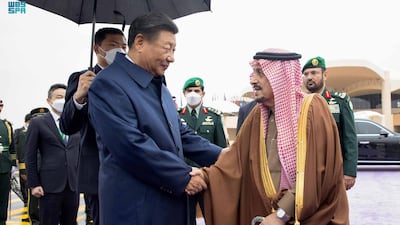
Xi Jinping, President of the People's Republic of China, leaves Riyadh. SPA -
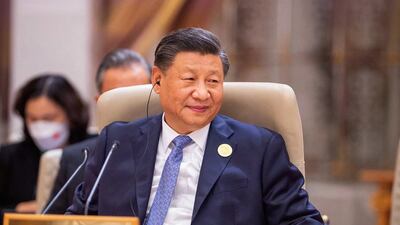
Mr Xi during the China-Arab Summit in Riyadh. AFP -
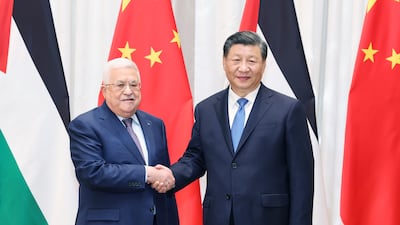
Mr Xi and Palestinian President Mahmoud Abbas. AP -
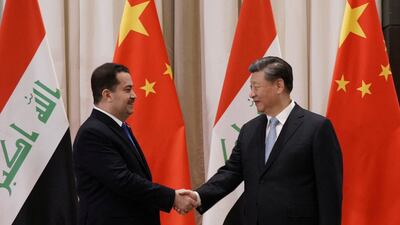
Iraqi Prime Minister Mohammed Shia Al Sudani and Mr Xi. -

Saudi Arabia's King Salman welcomes Mr Xi to Riyadh. EPA -
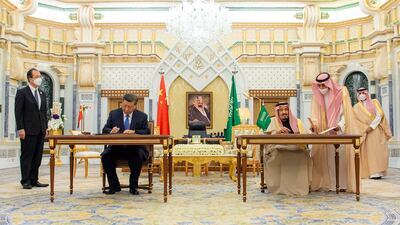
The Chinese president is on a three-day working visit to Saudi Arabia. EPA -
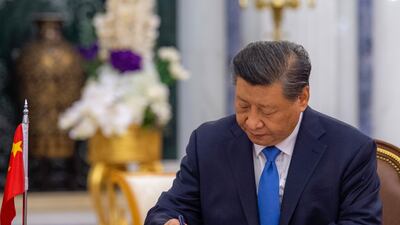
He will attend a GCC summit, a wider China-Arab conference and also seek to strengthen ties with Saudi Arabia. EPA -

Saudi Arabia and China signed agreements on 'harmonising' the kingdom's Vision 2030 plan and China's Belt and Road Initiative on Thursday. EPA -

The new agreements also covered judicial assistance, direct investments, education and hydrogen energy. EPA -
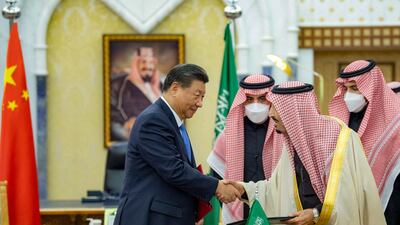
King Salman and Mr Xi agreed to hold meetings every two years. AFP -
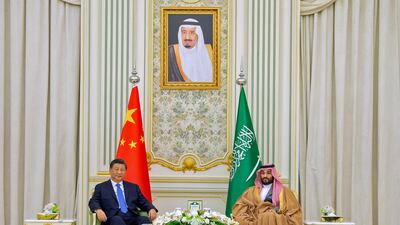
Saudi Crown Prince Mohammed bin Salman welcomes Mr Xi during a ceremony in the capital, Riyadh. AFP -
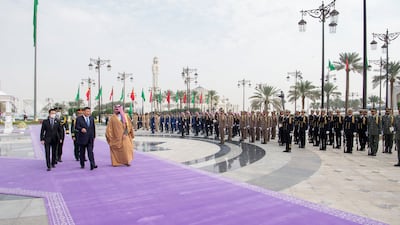
Mr Xi met Prince Mohammed on the second day of his state visit to Saudi Arabia. Reuters -
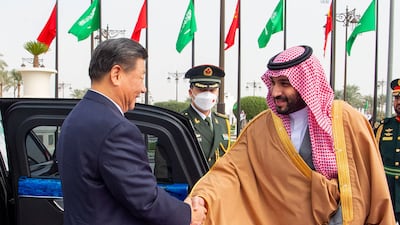
They shook hands in the Royal Court in Riyadh before Prince Mohammed led Mr Xi inside to meet King Salman. AFP -
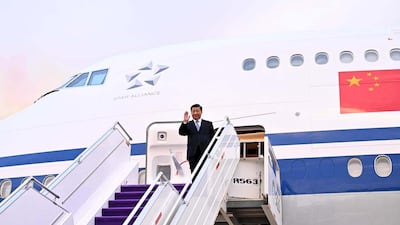
Mr Xi will attend the inaugural China-Arab States Summit. Saudi Press Agency -
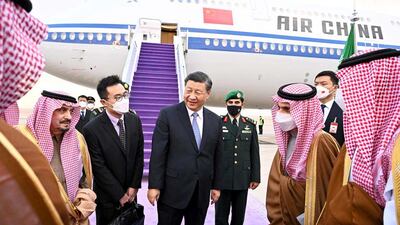
It is only Mr Xi's third overseas visit since the outbreak of Covid-19. SPA -
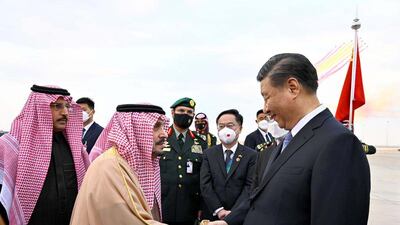
Mr Xi is greeted by Prince Faisal bin Bandar, Governor of Riyadh. SPA -
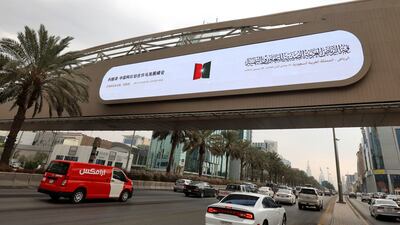
A billboard welcomes the Chinese president to Saudi Arabia. AFP -
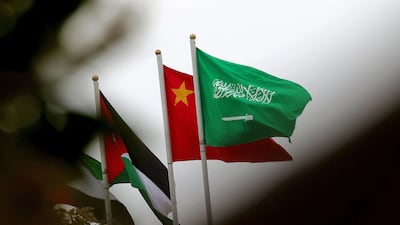
Saudi and Chinese flags adorn a street a street in Riyadh before the arrival of Mr Xi. AFP


Russia has also contributed to Iran’s strategic confusion.
By supplying advanced drones to Moscow for their use in the Ukraine war, Tehran has effectively pitted itself against Nato and drawn the ire of the Europeans. Apart from its involvement on the battlefield jamming the brakes on its long-standing assumption of European support in the nuclear negotiations, it has also invited sanctions from them.
In short, Iran’s European compass has been put completely out of whack. It now has little option but to double down on its alliance with Russia in Ukraine, as is the case in Syria.
Indeed, weapons deals between Russia and Iran are worth billions of dollars. Both countries have a number of other shared interests, from the Caspian Sea to the conflict between Azerbaijan and Armenia. Then there is the crucial nuclear issue: if tensions with the West escalate even further, Moscow could realistically offer Tehran assistance to continue its nuclear programme.
In the region, Russia remains a key conduit for Iran, while Turkey remains a threat to both countries' interests, especially in Syria. There is also Israel, which causes Iran much worry and Russia no small measure of trouble. But if Tehran decides to embark on an adventure – and not just a bluff – of launching pre-emptive strikes on Israel, the West will not stand idly by.
In summation, China has circumvented Iran in the Gulf, and its new policies could lead to a reining-in of Tehran’s activities in Yemen. Russia has implicated Iran in Europe, and this could invite joint US-European pressures to rein in Tehran's activities in Iraq, Syria and Lebanon, directly and by supporting Israel’s activities in Syria. At home, the regime has encircled itself through repression and exposed its moral bankruptcy in the eyes of the world.
It is clear now that this is no fleeting crisis, but an existential one for it.
For its part, Turkey is climbing up Nato’s strategic ropes, sponsoring initiatives such as the grain export deal with Russia and Ukraine, engaging with Moscow on Syria, and launching projects with it to become a natural gas export and trade hub.
This week, Turkey struck a calmer tone in Syria. It had previously threatened to establish a buffer zone inside its territory on the pretext of protecting its national interests and countering terrorism. Ankara went too far in its threats, then relented thanks to a Russian backstop, for reasons related to the Ukraine war, natural gas and elections.
Right now, Turkish President Recep Tayyip Erdogan appears confident on the world stage. The Ukraine crisis has boosted his profile inside Nato. It has increased Ankara's leverage over the US, the Europeans and Russia. During the TRT World Forum in Istanbul last week, a Turkish sense of triumph over the grain deal was clear, and Mr Erdogan appeared confident that Ankara can play a distinguished role in the region and the world.

To Russian President Vladimir Putin, he suggested establishing a trilateral mechanism in Syria (also involving Iran) to expedite their diplomatic process. This would begin with a meeting between the three countries’ security services, followed by a meeting of their ministers of defence, then their foreign ministers, culminating with a presidential summit. According to Mr Erdogan, Mr Putin responded positively, bearing in mind that it was the latter who had persuaded Mr Erdogan to pause his march on Syria and talk directly to President Bashar Al Assad.
Mr Putin seeks an end to the turbulence in Syria. Like Mr Erdogan, he needs a diplomatic victory that would allow him to save face amid other challenges. The problem is that trust among the various stakeholders remains in deficit.
Moscow, meanwhile, has proposed establishing a natural gas hub in Turkey, eyeing exports to foreign markets. Ankara is working to become an international natural gas trading hub, viewing itself as a natural choice, being home to seven international liquefied gas pipelines. This is a crucial relationship for both Turkey and Russia, and it must undoubtedly have shaped the Turkish equation in Syria and its Russian dimensions.
Important for Ankara right now is to fix its strategic compass, bearing in mind that its leadership has a difficult history with various players – from the US to Europe, Russia, Iran, the Arab states and Israel.
Turkey today is a key player in the Ukraine crisis and has benefited from it at the levels of its diplomacy and energy agenda. But one of the big challenges for it is at home, where the margin of freedoms is narrowing and where Turkey is threatening to become a one-party state. This is not in the country’s interests, despite its march towards normalising relations and seeking reconciliation with its neighbours.

