


Claims that Russia may have resorted to using chemical weapons during an attack against Ukrainian positions raises important questions about how the West might respond to any further escalation in the conflict.
To date, Nato leaders have been determined not to enter the war for fear of becoming involved in a military confrontation with Russia, a development that could have catastrophic consequences for the rest of Europe.
Nato Secretary General Jens Stoltenberg neatly summed up the continent's dilemma following a recent meeting between members of the security umbrella, when he warned that the alliance was treading a fine line between providing Kyiv with military support it needed, but not to the extent that it risked provoking a direct conflict with Moscow.
It is for this reason that the alliance has been reluctant to provide Ukraine with offensive weaponry, such as tanks and warplanes, preferring instead to concentrate on defensive measures, including anti-tank and anti-aircraft missiles. The Neptune anti-ship missile, believed to have struck Russia's Black Sea flagship Moskva, is a Ukrainian-made weapon based on a Soviet-era anti-ship missile.
But while western leaders are taking extreme caution to prevent the conflict from spreading beyond Ukraine's borders, the issue of chemical weapons – and whether Russian forces might be tempted to employ them as they intensify their efforts to capture the Donbas region of eastern Ukraine – presents a completely different set of challenges.
A decade ago, during the Syrian civil war, the possibility that the Assad regime might use chemical weapons against rebel forces was deemed by the Obama administration and its western allies, such as the UK, to be a "red line" that, if crossed, would prompt a military response.
But when forces loyal to Syrian President Bashar Al Assad were accused of using chemical weapons in an attack on the Damascus suburb of Ghouta in August 2013, the West's failure to respond by launching military strikes seriously damaged its international credibility.
The Ukraine conflict is different in nature, but the issue of chemical weapons is one that western policymakers cannot simply ignore.
-
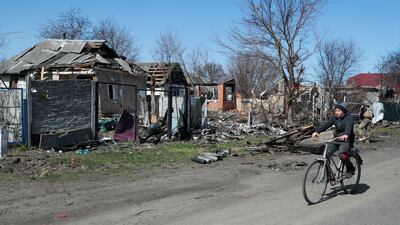
A boy rides a bicycle past a house that was damaged by shelling in Andriivka village, not far from Kyiv. EPA -
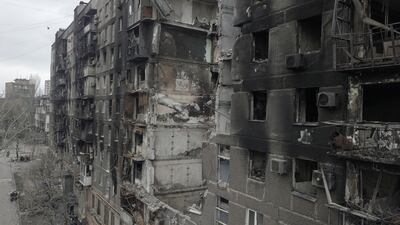
A destroyed residential building in Mariupol, south-eastern Ukraine. Reuters -
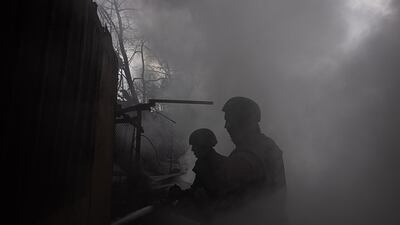
Firefighters at work on the outskirts of Kharkiv, north-east Ukraine. EPA -
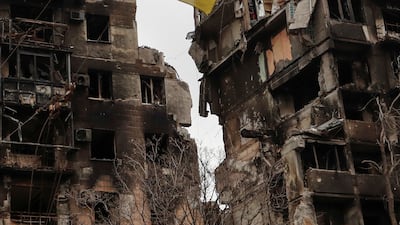
A torn Ukrainian flag in front of a ruined Mariupol apartment building. Reuters -
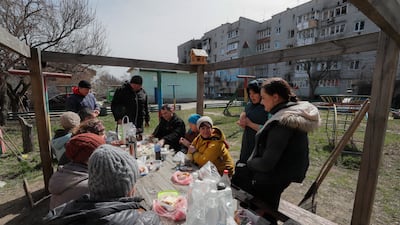
Residents who cleared debris after Russian shelling eat lunch outside a damaged building in Makariv, near Kyiv. EPA -

Children play with a therapeutic dog at a shelter organised by volunteers in Zaporizhzhya, Ukraine. Reuters -
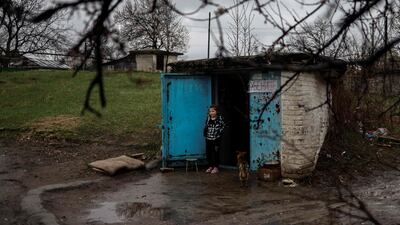
A girl stands by the door of a bunker in Severodonetsk, in eastern Ukraine's Donbas region, as Russian troops intensify a campaign to take the strategic port city of Mariupol. AFP -

A firefighter at work following a missile attack near Kharkiv International Airport. Reuters -
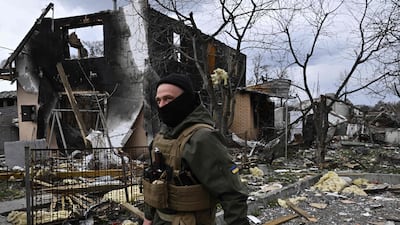
A Ukrainian fighter walks in front of a destroyed house in Bohdanivka village, north-east of Kyiv. AFP -

Two women hug outside a heavily damaged apartment block following an artillery attack in Kharkiv. Reuters -

Ukrainian soldiers guard the village of Barvinkove, as Russia's invasion on Ukraine continues. Reuters -
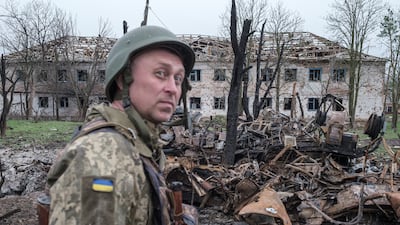
Leonid Serdiuchenko, a Ukrainian commander, stands next to destroyed vehicles outside Barvinkove. Reuters -

A woman carries the portrait of Dmytro Stefienko, 32, a civilian killed during the war, during his funeral in Bucha, Ukraine. AP -
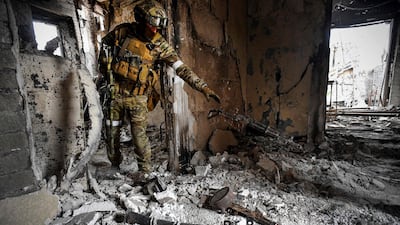
A Russian soldier collects weapons from inside the Mariupol drama theatre in Ukraine. AFP -
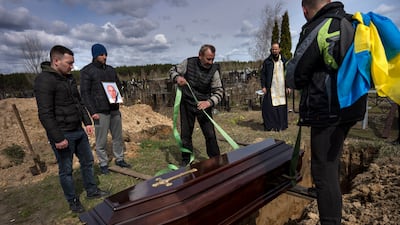
Relatives and friends attend the funeral of Andriy Matviychuk, 37, who served as a territorial defence soldier, who was captured and killed by the Russian army in Bucha, Ukraine. AP -
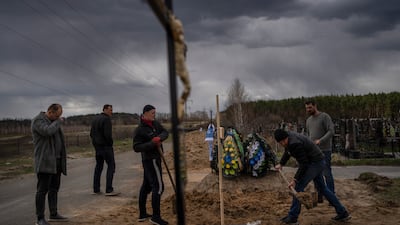
Anatoliy Morykin, 45, left, mourns the death of his mother, Valentyna Morykina, 82, who died in a retirement home in Bucha during the Russian invasion. AP -
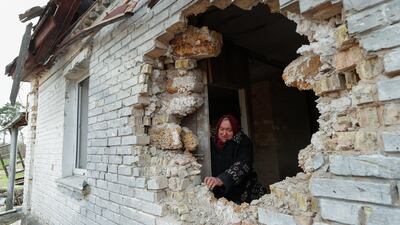
Nadiya, 65, shows a hole in a wall of a building after shelling in Zalissya, Ukraine. EPA -

A booby trap found by locals near their home in Zalissya. EPA -
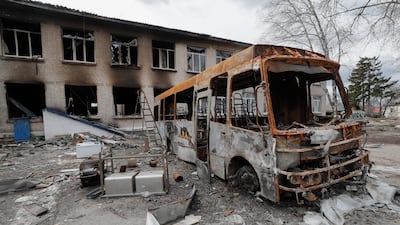
Debris of a school bus near a damaged school that was a base for Russian troops in Bohdanivka, Ukraine. EPA -
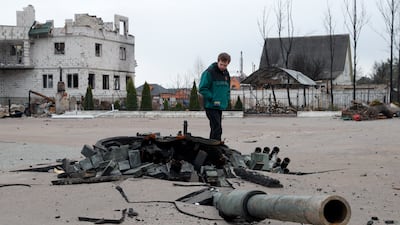
A man examines the debris of a destroyed Russian tank in Bohdanivka. EPA -

President Joe Biden speaks to the media before boarding Air Force One at Des Moines International Airport, en route to Washington. AP -

Valentina Saroyan sits in the basement of a school in Yahidne, near Chernihiv, Ukraine. AP -
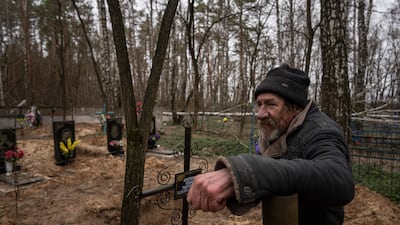
Vasyl Cherepenko stands next to a mass grave at a cemetery in Yahidne, near Dnipro, Ukraine. AP -
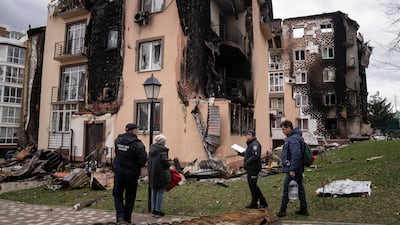
Oksana, second from left, and Yevhen, right, talk with police officers next to their apartment building damaged by shelling in Irpin, Ukraine. AP -
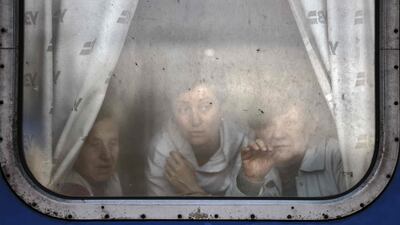
Women bid farewell to relatives as they leave the Slovyansk central station in the Donbas region. AFP -
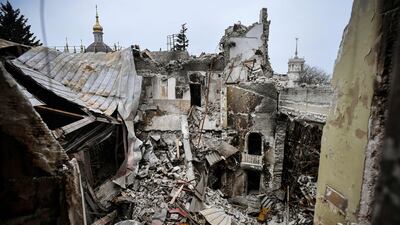
The partially destroyed Mariupol drama theatre in Ukraine, hit on March 16 by an air strike. AFP -
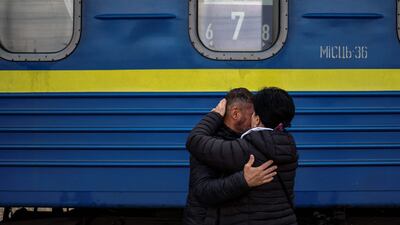
A man embraces his wife as she prepares to board a train at Slovyansk central station in the Donbas region. AFP -
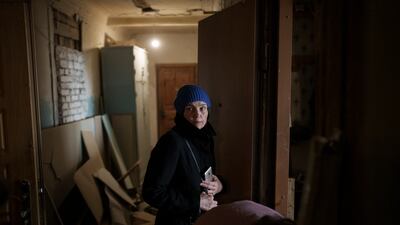
A woman walks through a damaged apartment building after a Russian attack in Kharkiv, Ukraine. AP -
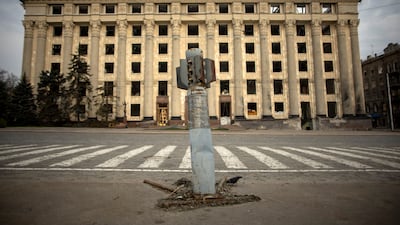
A missile pierces the road in front of the Kharkiv Regional State Administration building amid Russia's attack on Ukraine. Reuters -
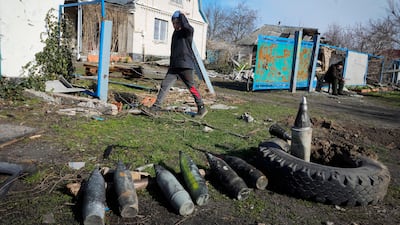
A boy walks by unexploded Russian shells in the village of Andriyivka close to Kyiv, Ukraine. AP -

Ukrainian tanks move down a street in Irpin, on the outskirts of Kyiv. AP -
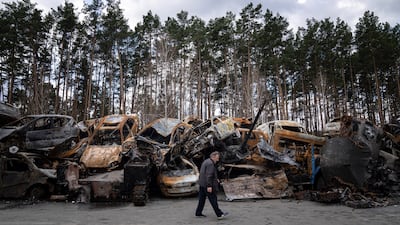
A man walks past a storage place for burned armed vehicles and cars, on the outskirts of Kyiv. AP -
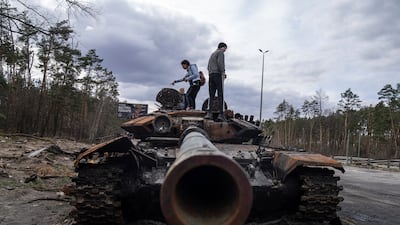
Local residents stand on top of a Russian tank on the outskirts of Kyiv. AP -
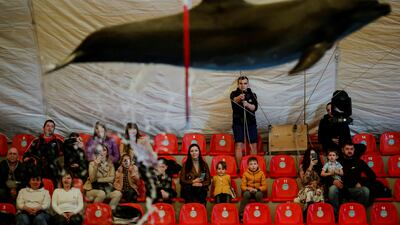
Ukrainian families, who have fled Kherson amid the Russian invasion, watch a dolphin show at a hotel in Odesa, Ukraine. Reuters -
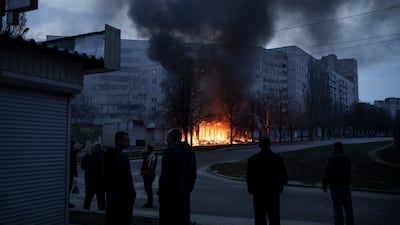
Residents stand outside their apartments as shops burn after a Russian attack in Kharkiv, Ukraine. AP -

Irina Szymanska holds her baby in a temporary shelter at the central train station for displaced people heading to Poland in Lviv, Ukraine. Getty Images -
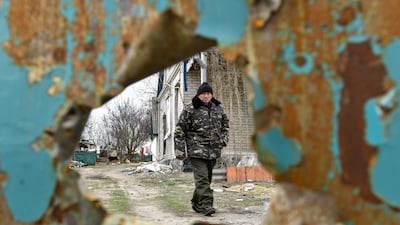
A man walks in his yard, damaged by shelling, in the village of Andriivka, Ukraine. EPA -

Sixty-two-year-old Luba hugs a Ukrainian servicewoman in Andriivka. EPA -
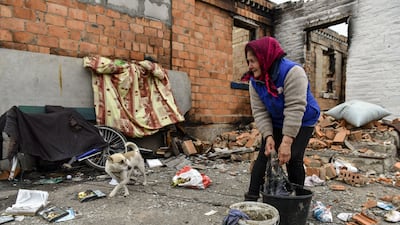
A woman washes clothes in the yard of a ruined house in Andriivka. EPA -
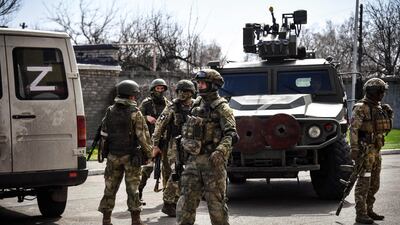
Russian soldiers patrol a street in Volnovakha, in the self-proclaimed Donetsk People's Republic. The picture was taken during a trip organised by the Russian military. AFP -
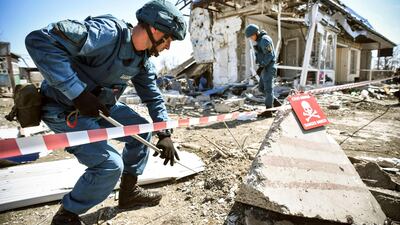
Russian mine clearers search for explosive objects in a building the Russian authorities say was damaged by Ukrainian shelling. AFP -
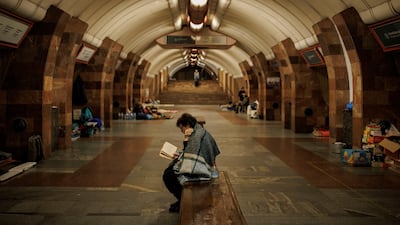
A woman reads a book as residents find shelter from shelling in a metro station in Kharkiv. Reuters -
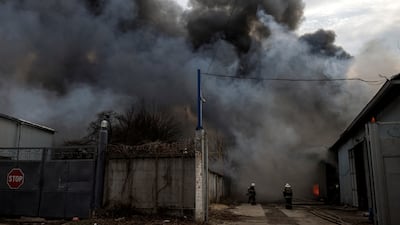
Firefighters try to contain a fire at a plant in Kharkiv following Russian shelling. Reuters -

Farm owner Zlobina Lubov tends to her animals in the village of Malaya Rohan, Ukraine. Reuters -
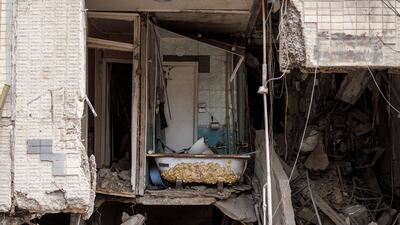
A bathtub is seen inside a building that was heavily damaged by shelling in Kharkiv. Reuters -
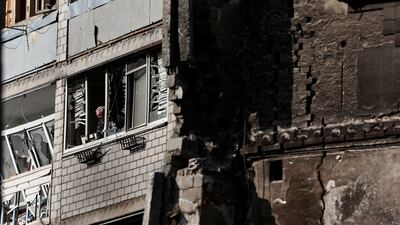
A man looks out of his window, amid Russia's invasion of Ukraine, in Borodianka. Reuters -
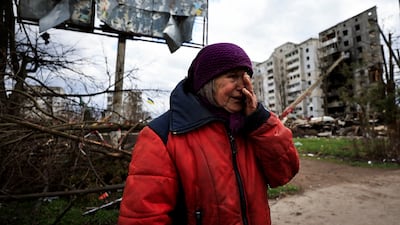
Soldiers 'came to my house and said go to the basement' Zinaida Makishaiva, 82, said, before they started to shoot around her. 'God saved my life,' she said. Reuters -
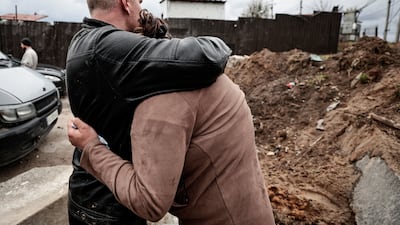
A mother waits for police officers to exhume the body of her son from a well at a fuel station in Buzova, Kyiv region. According to the head of the village, he was killed by Russian soldiers. Reuters


To date, they have declined to be drawn on whether they would consider the use of such weapons against Ukrainian forces to be the proverbial red line that obliges them to act. Speaking after a meeting of Nato leaders in March, US President Joe Biden simply stated that his country and its allies would respond "in kind" if such weapons were used, without providing precise details.
Indeed, the longer the conflict continues, there is a deepening understanding among western leaders that, rather than stating their intentions in public, it is to their advantage to introduce a degree of ambiguity in their statements, thereby keeping Moscow guessing as to how they might react to any given situation.
The West's dilemma was brought into focus this week after unconfirmed reports of a possible attack taking place against Ukrainian forces defending the besieged city of Mariupol.
A video published online by Ukraine's Azov Regiment, which is playing a key role in Mariupol’s defence, claimed that a Russian drone had dropped some form of poisonous material on Azov fighters and civilians in the city. The report claimed victims experienced difficulty breathing, muscular function problems, pain and irritation to throat and lungs, and racing heartbeat.
Three people required medical attention, although no one was badly injured, with the worst-affected casualty said to be an elderly civilian.
Concerns that banned weapons might have been used at Mariupol deepened after Eduard Basurin, the leader of Russian separatist forces in the region, had claimed that the only way to defeat the Azov forces was to "bring in chemical troops".

The West was quick to take the reports at face value, with British Foreign Secretary Liz Truss issuing a warning. "Any use of such weapons would be a callous escalation in this conflict and we will hold [Russian President Vladimir] Putin and his regime to account." In Washington, US Secretary of State Antony Blinken claimed that the US had "credible information" that Russia could use some form of "chemical agents" in its efforts to capture Mariupol.
"We have credible information that Russian forces may use a variety of riot control agents, including tear gas mixed with chemical agents, that would cause stronger symptoms to weaken and incapacitate entrenched Ukrainian fighters and civilians, as part of the aggressive campaign to take Mariupol," Mr Blinken said.
To date, there has been no independent confirmation whether last week's alleged attack contained a chemical agent. There is also a chance the report could have been a propaganda exercise on the part of Ukraine's highly effective information warfare centre.
Nevertheless, the incident will have concentrated the minds of western leaders.
The Russian military, it is alleged, has allowed for the use of banned weaponry before – including supposedly in Syria, where chemical weapons of varying descriptions were used against civilian targets in cities such as Aleppo. Moscow has long denied doing so, but human rights groups have accused Syrian government forces fighting alongside the Russians of launching co-ordinated chemical attacks against opposition-controlled parts of the country's north.
Whether or not such tactics will be used in Ukraine, the West is yet unclear about how its leaders might respond without provoking an even bigger conflict with Moscow.

