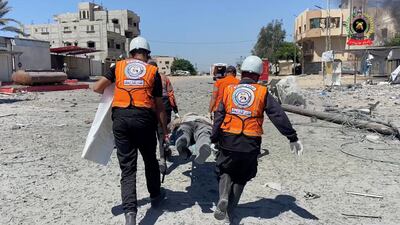
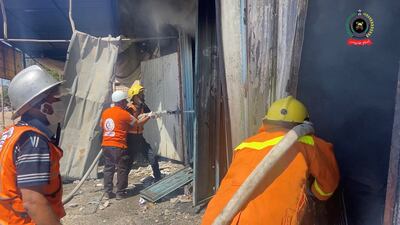
One thing of which we can all be certain is that there will be consequences to what many legal experts are describing as a genocide in Gaza.
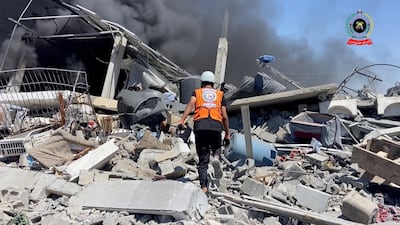
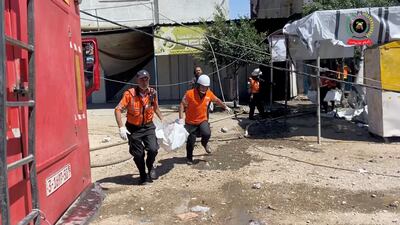
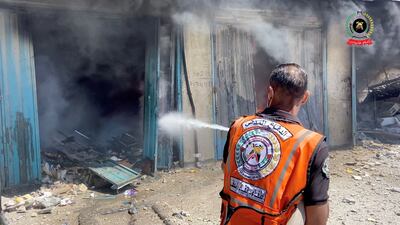
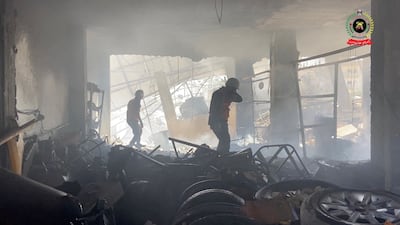
It is difficult to wrap one’s head around the excruciating pain being endured by Palestinians in the territory. We only know the rough outline of the devastation. Tens of thousands have been murdered in aerial bombardments, more than 100,000 have sustained serious injuries, the majority of homes have been demolished, and, as a result of Israel’s blockade, mass starvation is affecting more than one million people. In addition, schools and hospitals have been destroyed, and other essential services to provide support for births, illnesses, deaths and grieving, and treatment of the psychological wounds of war have been largely terminated.
We know that most of the dead and wounded are civilians, with the majority being women and children. We also know that upwards of 4,000 people have lost limbs. And many wounded children are the only survivors in their families, making them maimed orphans without a support network.
Much has been written before about the indecency of those “day after” discussions that focus exclusively on matters of governance or bricks and mortar while ignoring the human dimension and long-term consequences of this conflict. Of course, reconstruction issues are important, and it is gratifying that working papers are being developed to address them. But building housing and infrastructure and creating administrative structures should not be the sole considerations; attention must be paid also to addressing and healing the physical and psychological wounds of this war.
Consider the psychological wounds experienced by Gaza’s children. We know that significant losses produce trauma. Losing a parent, a sibling or a friend, or even just moving to a new neighbourhood can be unsettling and have an impact on behaviour or mental stability. We also know that the degree of the shock can be mitigated by other factors. For example, the discomfort experienced by a child when their family moves to a new city, and when they lose friends and a familiar environment, can be somewhat offset by a supportive family.
But what if, as is the case in Gaza, your family has lost many loved ones (parents, children and close extended family members), been forced to move several times, and is now living in a tent without food or water? And then imagine that during the last ceasefire, children, already traumatised by loss, joined the hundreds of thousands of Palestinians making the long trek northward to their old homes. What they find upon arrival is that not only their home but also their entire neighbourhood is rubble and unrecognisable. And then they are forced to deal with hunger and the indignity of witnessing their parents begging for food.
We know that as we grow, our brains organise our experiences so that they make sense to us. We develop a mental map of our relationships and our place in the world in which we live. But what if, in the case of a 12-year-old returning to Gaza city, they find that there is no home, and the way to school, the neighbourhood store, a friend’s home, or the mosque or school have all have been erased. The compounding of multiple losses and extreme dislocation can only be seen as profoundly traumatising. Under these circumstances, it is impossible to calculate the severity of the impact on this child’s well-being or future development. What will become of them, their older siblings and their parents? How will their brains ingest and make sense of all of these losses?
Given the seriousness of this situation, it becomes imperative not only to end the conflict and make plans for reconstruction and governance, but also to create strategies to address psychological and developmental needs. The US media focuses on the need to address the trauma of those young Israelis who have been held hostage in Gaza. This is obviously needed, but the extent to which the trauma experienced by Palestinians in Gaza has been ignored by so many, particularly in the US, is disturbing.
Why? In a word, racism. Many people, including many in America, apparently don’t see Palestinians as fully human, and so they fail to understand how destroying their lives, and denying them a normal present and a hopeful future, can result in deformities in their sense of self. If the rest of the world doesn’t demonstrate compassion and implement a comprehensive approach to rebuilding Gaza and restoring a sense of wholeness to its people, I fear what the future may have in store.
Even now, neither Israel nor the US has shown any interest in addressing the humanity of Palestinians. They are, instead, advancing plans that see this much-beleaguered people reduced to pawns to be moved about to help Israel achieve its goals.
The solution must come from a forceful and united stand taken by Arabs and key European states to sanction Israel for its crimes, force them to evacuate Gaza and end their occupation of Palestinian lands. Then and only then, under an international mandate, can reconstruction begin that will rebuild Gaza and help to heal the wounds of the Palestinian victims of this war.
If the international community does not take this course, the bitter seeds being planted today will be bearing fruit in future generations.

MATCH INFO
Uefa Champions League final:
Who: Real Madrid v Liverpool
Where: NSC Olimpiyskiy Stadium, Kiev, Ukraine
When: Saturday, May 26, 10.45pm (UAE)
TV: Match on BeIN Sports
The specs
Engine: 2.0-litre 4cyl turbo
Power: 261hp at 5,500rpm
Torque: 405Nm at 1,750-3,500rpm
Transmission: 9-speed auto
Fuel consumption: 6.9L/100km
On sale: Now
Price: From Dh117,059
Gothia Cup 2025
4,872 matches
1,942 teams
116 pitches
76 nations
26 UAE teams
15 Lebanese teams
2 Kuwaiti teams
Red flags
- Promises of high, fixed or 'guaranteed' returns.
- Unregulated structured products or complex investments often used to bypass traditional safeguards.
- Lack of clear information, vague language, no access to audited financials.
- Overseas companies targeting investors in other jurisdictions - this can make legal recovery difficult.
- Hard-selling tactics - creating urgency, offering 'exclusive' deals.
Courtesy: Carol Glynn, founder of Conscious Finance Coaching
Results
2.30pm: Expo 2020 Dubai – Conditions (PA) Dh80,000 (Dirt) 1,600m; Winner: Barakka, Ray Dawson (jockey), Ahmad bin Harmash (trainer)
3.05pm: Now Or Never – Maiden (TB) Dh82,500 (Turf) 1,600m; Winner: One Idea, Andrea Atzeni, Doug Watson
3.40pm: This Is Our Time – Handicap (TB) Dh82,500 (D) 1,600m; Winner: Perfect Balance, Tadhg O’Shea, Bhupat Seemar
4.15pm: Visit Expo 2020 – Handicap (TB) Dh87,500 (T) 1,600m; Winner: Kaheall, Richard Mullen, Salem bin Ghadayer
4.50pm: The World In One Place – Handicap (TB) Dh95,000 (T) 1.900m; Winner: Castlebar, Adrie de Vries, Helal Al Alawi
5.25pm: Vision – Handicap (TB) Dh95,000 (D) 1,200m; Winner: Shanty Star, Richard Mullen, Rashed Bouresly
6pm: Al Wasl Plaza – Handicap (TB) Dh95,000 (T) 1,200m; Winner: Jadwal, Dane O’Neill, Doug Watson
Game Changer
Director: Shankar
Stars: Ram Charan, Kiara Advani, Anjali, S J Suryah, Jayaram
Rating: 2/5
UAE currency: the story behind the money in your pockets
Who was Alfred Nobel?
The Nobel Prize was created by wealthy Swedish chemist and entrepreneur Alfred Nobel.
- In his will he dictated that the bulk of his estate should be used to fund "prizes to those who, during the preceding year, have conferred the greatest benefit to humankind".
- Nobel is best known as the inventor of dynamite, but also wrote poetry and drama and could speak Russian, French, English and German by the age of 17. The five original prize categories reflect the interests closest to his heart.
- Nobel died in 1896 but it took until 1901, following a legal battle over his will, before the first prizes were awarded.
Wicked: For Good
Director: Jon M Chu
Starring: Ariana Grande, Cynthia Erivo, Jonathan Bailey, Jeff Goldblum, Michelle Yeoh, Ethan Slater
Rating: 4/5
What vitamins do we know are beneficial for living in the UAE
Vitamin D: Highly relevant in the UAE due to limited sun exposure; supports bone health, immunity and mood.
Vitamin B12: Important for nerve health and energy production, especially for vegetarians, vegans and individuals with absorption issues.
Iron: Useful only when deficiency or anaemia is confirmed; helps reduce fatigue and support immunity.
Omega-3 (EPA/DHA): Supports heart health and reduces inflammation, especially for those who consume little fish.
Who's who in Yemen conflict
Houthis: Iran-backed rebels who occupy Sanaa and run unrecognised government
Yemeni government: Exiled government in Aden led by eight-member Presidential Leadership Council
Southern Transitional Council: Faction in Yemeni government that seeks autonomy for the south
Habrish 'rebels': Tribal-backed forces feuding with STC over control of oil in government territory
England squad
Moeen Ali, James Anderson, Jofra Archer, Jonny Bairstow, Dominic Bess, James Bracey, Stuart Broad, Rory Burns, Jos Buttler, Zak Crawley, Sam Curran, Joe Denly, Ben Foakes, Lewis Gregory, Keaton Jennings, Dan Lawrence, Jack Leach, Saqib Mahmood, Craig Overton, Jamie Overton, Matthew Parkinson, Ollie Pope, Ollie Robinson, Joe Root, Dom Sibley, Ben Stokes, Olly Stone, Amar Virdi, Chris Woakes, Mark Wood
Milestones on the road to union
1970
October 26: Bahrain withdraws from a proposal to create a federation of nine with the seven Trucial States and Qatar.
December: Ahmed Al Suwaidi visits New York to discuss potential UN membership.
1971
March 1: Alex Douglas Hume, Conservative foreign secretary confirms that Britain will leave the Gulf and “strongly supports” the creation of a Union of Arab Emirates.
July 12: Historic meeting at which Sheikh Zayed and Sheikh Rashid make a binding agreement to create what will become the UAE.
July 18: It is announced that the UAE will be formed from six emirates, with a proposed constitution signed. RAK is not yet part of the agreement.
August 6: The fifth anniversary of Sheikh Zayed becoming Ruler of Abu Dhabi, with official celebrations deferred until later in the year.
August 15: Bahrain becomes independent.
September 3: Qatar becomes independent.
November 23-25: Meeting with Sheikh Zayed and Sheikh Rashid and senior British officials to fix December 2 as date of creation of the UAE.
November 29: At 5.30pm Iranian forces seize the Greater and Lesser Tunbs by force.
November 30: Despite a power sharing agreement, Tehran takes full control of Abu Musa.
November 31: UK officials visit all six participating Emirates to formally end the Trucial States treaties
December 2: 11am, Dubai. New Supreme Council formally elects Sheikh Zayed as President. Treaty of Friendship signed with the UK. 11.30am. Flag raising ceremony at Union House and Al Manhal Palace in Abu Dhabi witnessed by Sheikh Khalifa, then Crown Prince of Abu Dhabi.
December 6: Arab League formally admits the UAE. The first British Ambassador presents his credentials to Sheikh Zayed.
December 9: UAE joins the United Nations.
New UK refugee system
- A new “core protection” for refugees moving from permanent to a more basic, temporary protection
- Shortened leave to remain - refugees will receive 30 months instead of five years
- A longer path to settlement with no indefinite settled status until a refugee has spent 20 years in Britain
- To encourage refugees to integrate the government will encourage them to out of the core protection route wherever possible.
- Under core protection there will be no automatic right to family reunion
- Refugees will have a reduced right to public funds
Volunteers offer workers a lifeline
Community volunteers have swung into action delivering food packages and toiletries to the men.
When provisions are distributed, the men line up in long queues for packets of rice, flour, sugar, salt, pulses, milk, biscuits, shaving kits, soap and telecom cards.
Volunteers from St Mary’s Catholic Church said some workers came to the church to pray for their families and ask for assistance.
Boxes packed with essential food items were distributed to workers in the Dubai Investments Park and Ras Al Khaimah camps last week. Workers at the Sonapur camp asked for Dh1,600 towards their gas bill.
“Especially in this year of tolerance we consider ourselves privileged to be able to lend a helping hand to our needy brothers in the Actco camp," Father Lennie Connully, parish priest of St Mary’s.
Workers spoke of their helplessness, seeing children’s marriages cancelled because of lack of money going home. Others told of their misery of being unable to return home when a parent died.
“More than daily food, they are worried about not sending money home for their family,” said Kusum Dutta, a volunteer who works with the Indian consulate.
Gulf Under 19s final
Dubai College A 50-12 Dubai College B
How to help
Send “thenational” to the following numbers or call the hotline on: 0502955999
2289 – Dh10
2252 – Dh 50
6025 – Dh20
6027 – Dh 100
6026 – Dh 200
Global state-owned investor ranking by size
|
1.
|
United States
|
|
2.
|
China
|
|
3.
|
UAE
|
|
4.
|
Japan
|
|
5
|
Norway
|
|
6.
|
Canada
|
|
7.
|
Singapore
|
|
8.
|
Australia
|
|
9.
|
Saudi Arabia
|
|
10.
|
South Korea
|
The Africa Institute 101
Housed on the same site as the original Africa Hall, which first hosted an Arab-African Symposium in 1976, the newly renovated building will be home to a think tank and postgraduate studies hub (it will offer master’s and PhD programmes). The centre will focus on both the historical and contemporary links between Africa and the Gulf, and will serve as a meeting place for conferences, symposia, lectures, film screenings, plays, musical performances and more. In fact, today it is hosting a symposium – 5-plus-1: Rethinking Abstraction that will look at the six decades of Frank Bowling’s career, as well as those of his contemporaries that invested social, cultural and personal meaning into abstraction.
THE%20SPECS
%3Cp%3EEngine%3A%203-litre%20V6%20turbo%20(standard%20model%2C%20E-hybrid)%3B%204-litre%20V8%20biturbo%20(S)%0D%3Cbr%3EPower%3A%20350hp%20(standard)%3B%20463hp%20(E-hybrid)%3B%20467hp%20(S)%0D%3Cbr%3ETorque%3A%20500Nm%20(standard)%3B%20650Nm%20(E-hybrid)%3B%20600Nm%20(S)%0D%0D%3Cbr%3EPrice%3A%20From%20Dh368%2C500%0D%3Cbr%3EOn%20sale%3A%20Now%3C%2Fp%3E%0A
STAY%2C%20DAUGHTER
%3Cp%3E%3Cstrong%3EAuthor%3A%20%3C%2Fstrong%3EYasmin%20Azad%3C%2Fp%3E%0A%3Cp%3E%3Cstrong%3EPublisher%3A%20%3C%2Fstrong%3ESwift%20Press%3C%2Fp%3E%0A%3Cp%3E%3Cstrong%3EAvailable%3A%20%3C%2Fstrong%3ENow%3C%2Fp%3E%0A
Mohammed bin Zayed Majlis
Our legal columnist
Name: Yousef Al Bahar
Advocate at Al Bahar & Associate Advocates and Legal Consultants, established in 1994
Education: Mr Al Bahar was born in 1979 and graduated in 2008 from the Judicial Institute. He took after his father, who was one of the first Emirati lawyers
Results
Ashraf Ghani 50.64 per cent
Abdullah Abdullah 39.52 per cent
Gulbuddin Hekmatyar 3.85 per cent
Rahmatullah Nabil 1.8 per cent
More on Coronavirus in France
Two-step truce
The UN-brokered ceasefire deal for Hodeidah will be implemented in two stages, with the first to be completed before the New Year begins, according to the Arab Coalition supporting the Yemeni government.
By midnight on December 31, the Houthi rebels will have to withdraw from the ports of Hodeidah, Ras Issa and Al Saqef, coalition officials told The National.
The second stage will be the complete withdrawal of all pro-government forces and rebels from Hodeidah city, to be completed by midnight on January 7.
The process is to be overseen by a Redeployment Co-ordination Committee (RCC) comprising UN monitors and representatives of the government and the rebels.
The agreement also calls the deployment of UN-supervised neutral forces in the city and the establishment of humanitarian corridors to ensure distribution of aid across the country.