An HSBC bank branch in London. Despite its high-flown status, the bank nearly brought down the industry in the UK and imperiled operations in many other places. EPA


HSBC's Lebanese troubles make the case for top-level accountability


  • English
  • Arabic

April 16, 2025

Thanks to The National, we now know that for more than 10 years, HSBC turned a blind eye to alleged substantial money laundering by Raja Salameh, brother of Lebanon’s former central bank chief, Riad Salameh.

Swiss authorities have banned the bank from taking on new politically exposed customers and Lebanon has filed a lawsuit against HSBC

Suspicious transactions totalling hundreds of millions of dollars were allowed to go unchecked by the bank’s Geneva branch. This, despite compliance officers raising red flags including a “lack of information on the transactions”, according to the internal documents seen by The National. Concerns were dismissed as “inappropriate” by Raja Salameh’s representative, who described him as a man of “morality”.

Raja is accused of helping embezzle $300 million in public funds from Banque du Liban, between 2000 and 2015. Now, thanks to some excellent journalism, attention is focusing on the alleged enablers behind the international scheme, among them the banks that were happy to allow Lebanon’s ruling elite carte blanche so long as the country’s financial system was solid.

Barring this trade was not worth it, seemingly, in the larger picture of netting the country’s overall banking business. As a result, HSBC allowed Riad Salameh and his associates to purchase luxury properties abroad and salt away the cash. The papers reveal that one single HSBC manager was able to repeatedly bypass the bank’s internal controls.

HSBC bosses over time have not taken responsibility for the bank's practices, argues Chris Blackhurst. Sammy Dallal / The National

HSBC refuses to comment. Meanwhile, the Swiss authorities have banned the bank from taking on new politically exposed customers and Lebanon has filed a lawsuit against HSBC – its first against a foreign bank – accusing it of failing to conduct proper due diligence.

On it goes, another case against HSBC and yet another against a major bank that says one thing about complying with the law and cracking down on illicit money flows, but is then shown to have done something quite different.

For me, it has an especially familiar ring. In my book, Too Big To Jail, I detailed how HSBC, the giant multinational that likes to portray itself as “the world’s local bank”, the friendly face of corporate and personal finance, acted as a conduit for the fearsome Mexican Sinaloa crime cartel led by El Chapo to wash its ill-gotten drugs proceeds.

It was an exposé that rang across Hong Kong, London, Washington, the Cayman Islands and Mexico. At the end, I highlighted other centres where HSBC operated that also aroused concern. One was Switzerland, where court evidence disclosed HSBC admitted to conspiring with clients to commit US tax fraud, tax evasion and filing false tax returns.

How much was being kept from US officials? Said the papers: “HSBC Switzerland held approximately $1.26 billion in undeclared assets for US clients.”

Asked to co-operate by US investigators, HSBC claimed Swiss bank secrecy. It chose to supply account codenames and numbers rather than identifiable details and used nominees in the British Virgin Islands, Liechtenstein and Panama to conceal their true ownership.

The HSBC Swiss bankers allegedly flew to the US to drum up tax evasion business – “at least four HSBC Switzerland bankers travelled to the United States to meet at least 25 different clients. One banker also attended Design Miami, a major annual arts and design event in Miami, Florida, in an effort to recruit new US clients to open undeclared accounts with HSBC Switzerland.” For that, the bank was required by the US Justice Department to pay a penalty of $192.35 million and given three years to demonstrate good conduct.

Compared with the fine imposed for money laundering for “drug kingpins and rogue nations”, including El Chapo and his organisation, and considering how US prosecutors framed the charge, that was small. Then, HSBC was hit with a record US fine of $1.9 billion.

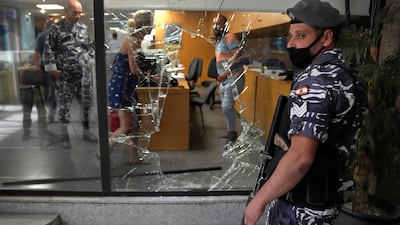
  • A Lebanese policeman stands guard next to a bank window broken by depositors who had demanded access to their money. An activist group said it will continue to organise bank raids to help people retrieve their trapped savings. AP photo
    A Lebanese policeman stands guard next to a bank window broken by depositors who had demanded access to their money. An activist group said it will continue to organise bank raids to help people retrieve their trapped savings. AP photo
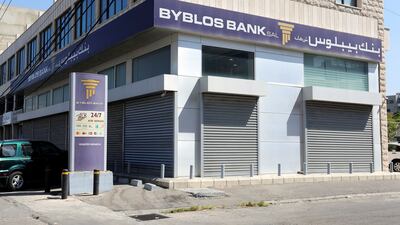
  • A closed Byblos Bank branch, where a man was reportedly detained after allegedly holding up the bank to access his own savings, in Ghazieh, Lebanon. Reuters
    A closed Byblos Bank branch, where a man was reportedly detained after allegedly holding up the bank to access his own savings, in Ghazieh, Lebanon. Reuters
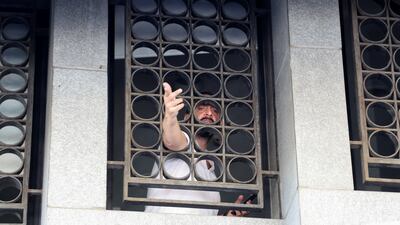
  • A man identified as Abed Soubra inside a Blom Bank branch, in the Tariq Al Jdideh neighbourhood of Beirut. Reuters
    A man identified as Abed Soubra inside a Blom Bank branch, in the Tariq Al Jdideh neighbourhood of Beirut. Reuters
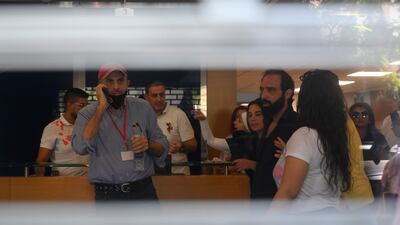
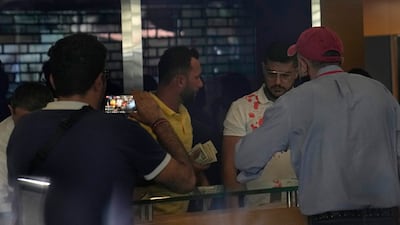
  • Lebanese depositors inside a Blom Bank branch in Beirut. A group of customers, at least one of whom was armed, took hostages in the bank, demanding access to their savings. They were reportedly able to withdraw $20,000 from an account of one of the depositors before they left. EPA
    Lebanese depositors inside a Blom Bank branch in Beirut. A group of customers, at least one of whom was armed, took hostages in the bank, demanding access to their savings. They were reportedly able to withdraw $20,000 from an account of one of the depositors before they left. EPA
  • An armed woman and a dozen activists reportedly broke into a Beirut bank branch to retrieve more than $13,000 from what she said were her trapped savings. Lebanon's cash-strapped banks since 2019 have imposed strict limits on withdrawals of foreign currency, tying up the savings of millions. AP Photo
    An armed woman and a dozen activists reportedly broke into a Beirut bank branch to retrieve more than $13,000 from what she said were her trapped savings. Lebanon's cash-strapped banks since 2019 have imposed strict limits on withdrawals of foreign currency, tying up the savings of millions. AP Photo
  • A woman, identified as Sally Hafez, appears to be carrying a gun at a Blom Bank branch in Beirut, in this screengrab taken from Al Jadeed footage. Reuters
    A woman, identified as Sally Hafez, appears to be carrying a gun at a Blom Bank branch in Beirut, in this screengrab taken from Al Jadeed footage. Reuters
  • A woman is comforted as she is seen through a shattered window of a Blom Bank branch after a hostage-taking incident. Reuters
    A woman is comforted as she is seen through a shattered window of a Blom Bank branch after a hostage-taking incident. Reuters
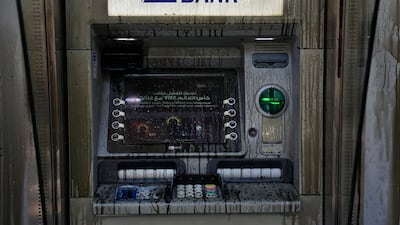
  • An ATM is covered with diesel fuel, vandalised by angry depositors. AP photo
    An ATM is covered with diesel fuel, vandalised by angry depositors. AP photo
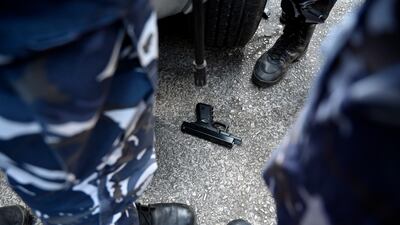
  • Members of the Lebanese security forces stand around a toy gun allegedly used by depositors in a hostage-taking situation, at a Blom Bank branch in Beirut. EPA
    Members of the Lebanese security forces stand around a toy gun allegedly used by depositors in a hostage-taking situation, at a Blom Bank branch in Beirut. EPA
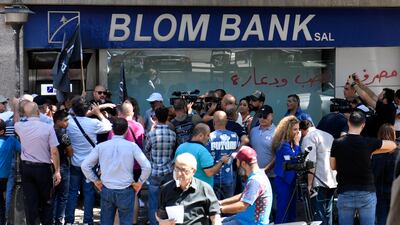
  • People gather near a Blom Bank branch during an hostage-taking situation in Beirut. EPA
    People gather near a Blom Bank branch during an hostage-taking situation in Beirut. EPA

Some, but not all, of the period covered by The National report relates to the years when the bank was facilitating El Chapo and other criminals. It was a time when the banking behemoth had grown massively and rapidly, when it had become more difficult to manage. That expansion, however, was not the concern of law enforcers or indeed the society and public they were responsible for protecting.

HSBC was assuring all and sundry that its checks and balances were sound, that it was a stickler for operating by the rules. The comfort it provided gave the company licence to pursue a relentless policy of growth – it wanted to become the biggest bank in the world – and to make acquisitions around the world. At every turn, country regulators were promised the bank would stick to the tightest controls and standards and permission to proceed was granted and renewed.

Some, but not all. HSBC was fined by the US in late 2012. Their inquiries centred on the period 2003 to 2010. The Lebanese laundering through the bank’s Swiss subsidiary took place from 2000 to 2015.

There were two aspects of the El Chapo story that were shocking. One was the brazen nature of his money-cleansing – ever the organiser, he went so far as to have special pouches made that exactly fitted the cashiers’ windows so the dollars from selling drugs on the streets of the US could be slid seamlessly through – and the other was how the American government was keen to jail those bankers and executives they deemed responsible but the British, in the form of the then UK chancellor, George Osborne, persuaded them otherwise.

HSBC was Britain’s largest bank and to do so risked bringing down not only British banking but that of Europe and the wider world – the entire financial edifice was said to be in danger.

Reluctantly, the US swallowed the line and chose to fine HSBC instead. No individual HSBC employee was pursued. While El Chapo and other cronies are serving lengthy prison terms, the banking legitimisers walk free.

A third, which is related to the second, is that no public inquiry has ever been held, the UK government and regulators failed to act – this, despite its biggest bank having been fined the largest amount in US history.

No senior banker was prosecuted for taking the world to the brink of financial meltdown in 2008, a crisis that required the injection of taxpayers’ funds and still depressed markets. Similarly, no senior banker has gone to jail for ignoring compliance procedures and helping criminals launder their cash.

Governments can huff and puff as much as they like and proclaim things are getting ever tighter, but until they do, until bankers’ personal reputations are ruined and the corporate brand is sullied, nothing will change. Sadly, there will be other cases like that of HSBC Geneva.

Chris Blackhurst is the author of Too Big To Jail – Inside HSBC, the Mexican Drug Cartels and the Greatest Banking Scandal of the Century (Macmillan)


Defence review at a glance

• Increase defence spending to 2.5% of GDP by 2027 but given “turbulent times it may be necessary to go faster”

• Prioritise a shift towards working with AI and autonomous systems

• Invest in the resilience of military space systems.

• Number of active reserves should be increased by 20%

• More F-35 fighter jets required in the next decade

• New “hybrid Navy” with AUKUS submarines and autonomous vessels

The five pillars of Islam
Avatar: Fire and Ash

Director: James Cameron

Starring: Sam Worthington, Sigourney Weaver, Zoe Saldana

Rating: 4.5/5

The Dictionary of Animal Languages
Heidi Sopinka
​​​​​​​Scribe

UAE v United States, T20 International Series

Both matches at ICC Academy, Dubai. Admission is free.

1st match: Friday, 2pm

2nd match: Saturday, 2pm

UAE squad: Mohammed Naveed (captain), Rohan Mustafa, Ashfaq Ahmed, Shaiman Anwar, Rameez Shahzad, Amjad Gul, CP Rizwan, Mohammed Boota, Abdul Shakoor, Ahmed Raza, Imran Haider, Sultan Ahmed, Zahoor Khan, Amir Hayat

USA squad: Saurabh Netravalkar (captain), Jaskaran Malhotra, Elmore Hutchinson, Aaron Jones, Nosthush Kenjige, Ali Khan, Jannisar Khan, Xavier Marshall, Monank Patel, Timil Patel, Roy Silva, Jessy Singh, Steven Taylor, Hayden Walsh

The specs: 2018 Nissan 370Z Nismo

The specs: 2018 Nissan 370Z Nismo
Price, base / as tested: Dh182,178
Engine: 3.7-litre V6
Power: 350hp @ 7,400rpm
Torque: 374Nm @ 5,200rpm
Transmission: Seven-speed automatic
​​​​​​​Fuel consumption, combined: 10.5L / 100km

Green ambitions
  • Trees: 1,500 to be planted, replacing 300 felled ones, with veteran oaks protected
  • Lake: Brown's centrepiece to be cleaned of silt that makes it as shallow as 2.5cm
  • Biodiversity: Bat cave to be added and habitats designed for kingfishers and little grebes
  • Flood risk: Longer grass, deeper lake, restored ponds and absorbent paths all meant to siphon off water 
Ferrari 12Cilindri specs

Engine: naturally aspirated 6.5-liter V12

Power: 819hp

Torque: 678Nm at 7,250rpm

Price: From Dh1,700,000

Available: Now

The biog

Name: Capt Shadia Khasif

Position: Head of the Criminal Registration Department at Hatta police

Family: Five sons and three daughters

The first female investigator in Hatta.

Role Model: Father

She believes that there is a solution to every problem


Scorline

Iraq 1-0 UAE

Iraq Hussein 28’

BIOSAFETY LABS SECURITY LEVELS

Biosafety Level 1

The lowest safety level. These labs work with viruses that are minimal risk to humans.

Hand washing is required on entry and exit and potentially infectious material decontaminated with bleach before thrown away.

Must have a lock. Access limited. Lab does not need to be isolated from other buildings.

Used as teaching spaces.

Study microorganisms such as Staphylococcus which causes food poisoning.

Biosafety Level 2

These labs deal with pathogens that can be harmful to people and the environment such as Hepatitis, HIV and salmonella.

Working in Level 2 requires special training in handling pathogenic agents.

Extra safety and security precautions are taken in addition to those at Level 1

Biosafety Level 3

These labs contain material that can be lethal if inhaled. This includes SARS coronavirus, MERS, and yellow fever.

Significant extra precautions are taken with staff given specific immunisations when dealing with certain diseases.

Infectious material is examined in a biological safety cabinet.

Personnel must wear protective gowns that must be discarded or decontaminated after use.

Strict safety and handling procedures are in place. There must be double entrances to the building and they must contain self-closing doors to reduce risk of pathogen aerosols escaping.

Windows must be sealed. Air from must be filtered before it can be recirculated.

Biosafety Level 4

The highest level for biosafety precautions. Scientist work with highly dangerous diseases that have no vaccine or cure.

All material must be decontaminated.

Personnel must wear a positive pressure suit for protection. On leaving the lab this must pass through decontamination shower before they have a personal shower.

Entry is severely restricted to trained and authorised personnel. All entries are recorded.

Entrance must be via airlocks.

Skoda Superb Specs

Engine: 2-litre TSI petrol

Power: 190hp

Torque: 320Nm

Price: From Dh147,000

Available: Now

Tonight's Chat on The National

Tonight's Chat is a series of online conversations on The National. The series features a diverse range of celebrities, politicians and business leaders from around the Arab world.

Tonight’s Chat host Ricardo Karam is a renowned author and broadcaster who has previously interviewed Bill Gates, Carlos Ghosn, Andre Agassi and the late Zaha Hadid, among others.

Intellectually curious and thought-provoking, Tonight’s Chat moves the conversation forward.

Facebook | Our website | Instagram

Mercer, the investment consulting arm of US services company Marsh & McLennan, expects its wealth division to at least double its assets under management (AUM) in the Middle East as wealth in the region continues to grow despite economic headwinds, a company official said.

Mercer Wealth, which globally has $160 billion in AUM, plans to boost its AUM in the region to $2-$3bn in the next 2-3 years from the present $1bn, said Yasir AbuShaban, a Dubai-based principal with Mercer Wealth.

Within the next two to three years, we are looking at reaching $2 to $3 billion as a conservative estimate and we do see an opportunity to do so,” said Mr AbuShaban.

Mercer does not directly make investments, but allocates clients’ money they have discretion to, to professional asset managers. They also provide advice to clients.

“We have buying power. We can negotiate on their (client’s) behalf with asset managers to provide them lower fees than they otherwise would have to get on their own,” he added.

Mercer Wealth’s clients include sovereign wealth funds, family offices, and insurance companies among others.

From its office in Dubai, Mercer also looks after Africa, India and Turkey, where they also see opportunity for growth.

Wealth creation in Middle East and Africa (MEA) grew 8.5 per cent to $8.1 trillion last year from $7.5tn in 2015, higher than last year’s global average of 6 per cent and the second-highest growth in a region after Asia-Pacific which grew 9.9 per cent, according to consultancy Boston Consulting Group (BCG). In the region, where wealth grew just 1.9 per cent in 2015 compared with 2014, a pickup in oil prices has helped in wealth generation.

BCG is forecasting MEA wealth will rise to $12tn by 2021, growing at an annual average of 8 per cent.

Drivers of wealth generation in the region will be split evenly between new wealth creation and growth of performance of existing assets, according to BCG.

Another general trend in the region is clients’ looking for a comprehensive approach to investing, according to Mr AbuShaban.

“Institutional investors or some of the families are seeing a slowdown in the available capital they have to invest and in that sense they are looking at optimizing the way they manage their portfolios and making sure they are not investing haphazardly and different parts of their investment are working together,” said Mr AbuShaban.

Some clients also have a higher appetite for risk, given the low interest-rate environment that does not provide enough yield for some institutional investors. These clients are keen to invest in illiquid assets, such as private equity and infrastructure.

“What we have seen is a desire for higher returns in what has been a low-return environment specifically in various fixed income or bonds,” he said.

“In this environment, we have seen a de facto increase in the risk that clients are taking in things like illiquid investments, private equity investments, infrastructure and private debt, those kind of investments were higher illiquidity results in incrementally higher returns.”

The Abu Dhabi Investment Authority, one of the largest sovereign wealth funds, said in its 2016 report that has gradually increased its exposure in direct private equity and private credit transactions, mainly in Asian markets and especially in China and India. The authority’s private equity department focused on structured equities owing to “their defensive characteristics.”

It Was Just an Accident

Director: Jafar Panahi

Stars: Vahid Mobasseri, Mariam Afshari, Ebrahim Azizi, Hadis Pakbaten, Majid Panahi, Mohamad Ali Elyasmehr

Rating: 4/5

How to wear a kandura

Dos

  • Wear the right fabric for the right season and occasion 
  • Always ask for the dress code if you don’t know
  • Wear a white kandura, white ghutra / shemagh (headwear) and black shoes for work 
  • Wear 100 per cent cotton under the kandura as most fabrics are polyester

Don’ts 

  • Wear hamdania for work, always wear a ghutra and agal 
  • Buy a kandura only based on how it feels; ask questions about the fabric and understand what you are buying
French business

France has organised a delegation of leading businesses to travel to Syria. The group was led by French shipping giant CMA CGM, which struck a 30-year contract in May with the Syrian government to develop and run Latakia port. Also present were water and waste management company Suez, defence multinational Thales, and Ellipse Group, which is currently looking into rehabilitating Syrian hospitals.

RESULTS

5pm: Maiden (PA) Dh80,000 1,600m
Winner: Raghida, Szczepan Mazur (jockey), Ibrahim Al Hadhrami (trainer)
5.30pm: Maiden (PA) Dh80,000 1,600m
Winner: AF Alareeq, Connor Beasley, Ahmed Al Mehairbi
6pm: Arabian Triple Crown Round-2 Group 3 (PA) Dh300,000 2,200m 
Winner: Basmah, Fabrice Veron, Eric Lemartinel
6.30pm: Liwa Oasis Group 2 (PA) Dh300,000 1,400m
Winner: AF Alwajel, Tadhg O’Shea, Ernst Oertel
7pm: Wathba Stallions Cup Handicap (PA) Dh70,000 1,600m
Winner: SS Jalmod, Richard Mullen, Satish Seemar
7.30pm: Handicap (TB) Dh100,000 1,600m
Winner: Trolius, Ryan Powell, Simon Crisford

Updated: April 17, 2025, 2:06 PM