


The Israeli government does its military no favours when it says that the goal of a ground invasion of Gaza is to “wipe out” or “destroy” Hamas. Such maximalist and eminently unrealistic objectives put the Israeli army in a bind: how to translate this political bluster into practical and achievable military objectives.
Israel’s generals are under no illusion that they can annihilate a deep-rooted movement like Hamas, which enjoys support from a high percentage of Palestinians in Gaza. Their focus will be to massively degrade the military capabilities of Hamas and ideally disarm it. The missile, rocket, and now armed drone arsenals will be a top priority for the army. But meeting that priority still presents a host of challenges, some strategic/political, some operational/tactical.
Strategically, there is an inherent tension in the Israeli military's overall warfighting approach to this crisis. Going hard against Hamas, which is necessary for the goal of degrading or disarming the group, could risk the lives of the more than 200 hostages held by Hamas. On the other hand, pursuing lighter and more surgical operations gives Hamas the chance to fight back and thus put the lives of Israeli soldiers at risk. A balance must be struck, and it won’t be easy.
-
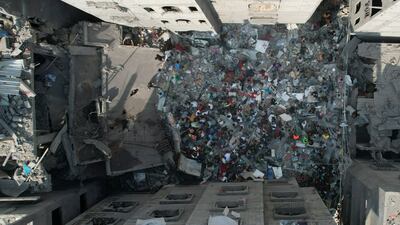
Palestinians look for survivors of Israeli bombardment of the Gaza Strip at Nusseirat refugee camp. AP -
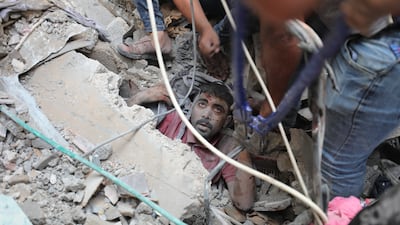
A survivor is found in the rubble in Nusseirat. AP -
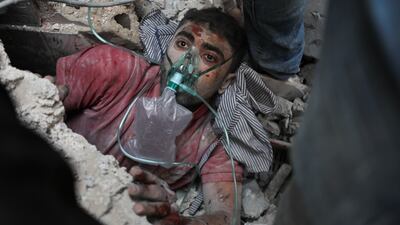
A man is given oxygen and pulled from the rubble in Nusseirat. AP -
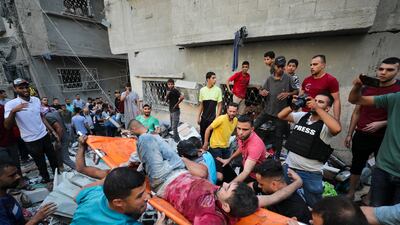
This desperate search for survivors is being replicated across the Gaza Strip. AP -

Yocheved Lifshitz speaks to the media outside a Tel Aviv hospital after being released by Hamas. EPA -
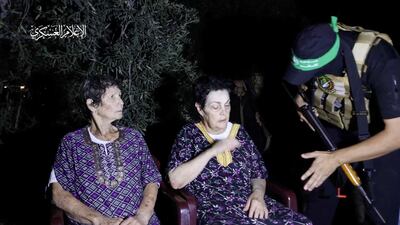
Israeli women who were held hostage by Palestinian Hamas militants, Yocheved Lifshitz and Nurit Cooper (also known as Nurit Yitzhak), are released by the militants. Reuters -

Israeli Prime Minister Benjamin Netanyahu, right, welcomes French President Emmanuel Macron before their talks in Jerusalem. AP -

Palestinians search for casualties at the site of an Israeli air strike on a house in Khan Younis, in the southern Gaza Strip. Reuters -

Palestinians inspect the damage of a destroyed house that was hit by an Israeli air strike in Khan Younis. AP -
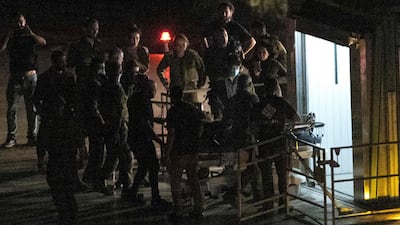
Ms Cooper and Ms Lifshitz arrive at the Tel Aviv Sourasky Medical Centre after being released by Hamas on Monday. AFP -
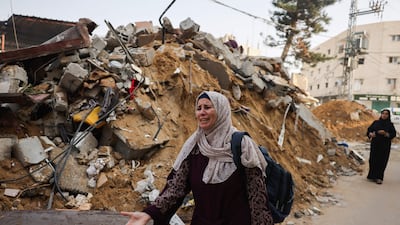
A woman cries next to the rubble of a building after Israeli strikes on Rafah in the south of the Gaza Strip. AFP -
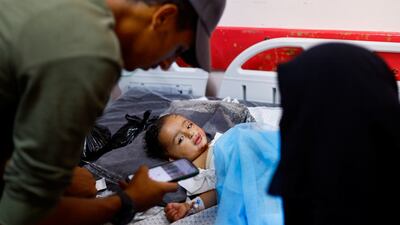
Wateen, a 14-month-old Palestinian baby, who was wounded in an Israeli strike that killed her mother and injured her twin brother Ahmed, recovers at Nasser hospital, in Khan Younis, Gaza Strip. Reuters -
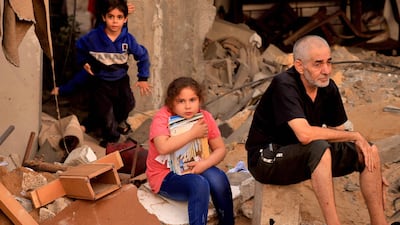
A Palestinian girl clutches salvaged books as people look for survivors in the rubble of a destroyed building hit in an Israeli strike in Khan Younis. AFP -
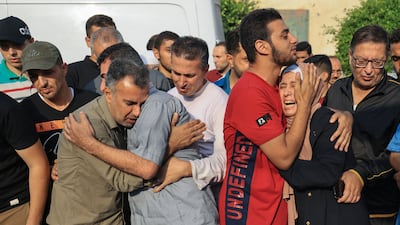
People mourn during the funeral of members of the Abu Morad family who died following Israeli strikes, in Khan Younis. AFP -
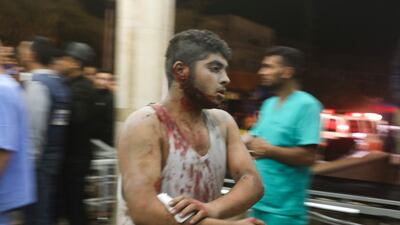
A wounded Palestinian man arrives at Nasser Medical Complex, following Israeli air strikes on the town of Khan Younis in the southern Gaza Strip. AP -
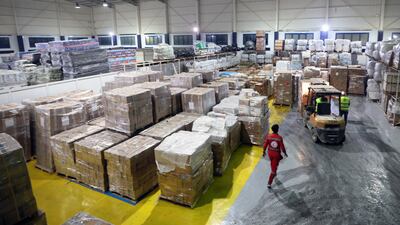
Red Crescent Society employees sort humanitarian aid bound for Palestinians in Gaza, at a warehouse in Arish, Egypt. EPA -

Ayman Abou Chamalah stands next to his daughter Mecca as she receives care inside an incubator at a hospital in Rafah. AFP -
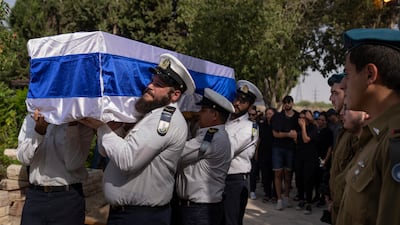
Israeli soldiers carry the coffin of Erik Kraunik, chief of security in the kibbutz of Be'eri, during his funeral at a cemetery in Yehud, Israel. AP -
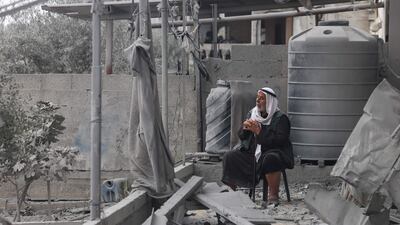
A man sits among the rubble of a building destroyed in Israel's bombardment of Rafah, in the southern Gaza Strip. AFP -
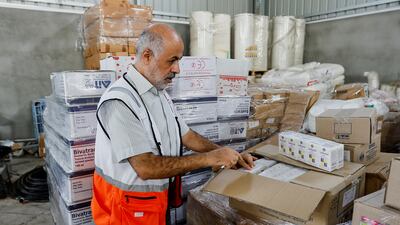
A Red Crescent worker sorts aid for Palestinians in Khan Younis, in the southern part of the blockaded enclave. Reuters -
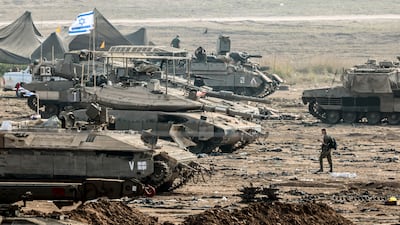
Israeli soldiers take part in a drill near the border with Gaza ahead of an expected ground invasion. EPA -
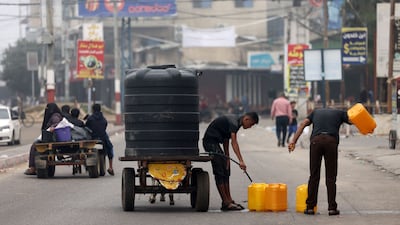
Men fill fuel containers with drinking water in Rafah. AFP -

Smoke billows over Gaza after an air strike, as seen from southern Israel. AP -
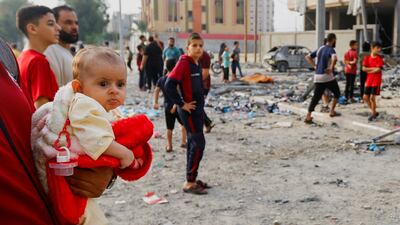
A person holds a child as Palestinians gather in Khan Younis at the site of a house destroyed during an Israeli bombardment. Reuters -
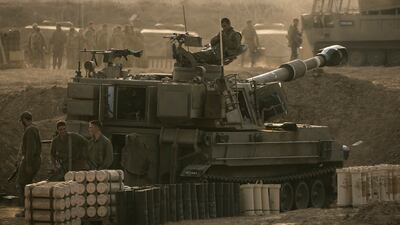
Israeli soldiers sit on top of a tank near the border with Gaza. Getty Images -
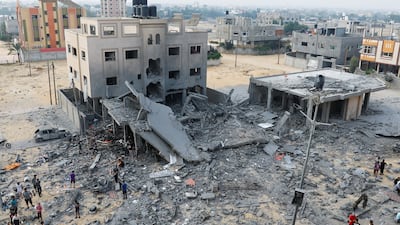
Buildings destroyed by Israeli air strikes in Khan Younis. Reuters -
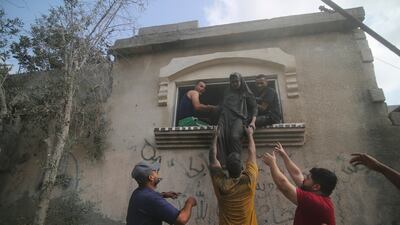
Palestinians are evacuated from a building in Rafah that was hit during Israel's bombardment. AP -

Shahar Idan, 9, mourns during the funeral of his brother Maayan, 18, who was killed by Hamas gunmen in the kibbutz of Nahal Oz. His father Tzahi is being held hostage in Gaza. Reuters -

Palestinian doctors treat a premature baby at Al Aqsa Hospital in Deir Al Balah, Gaza. AP -
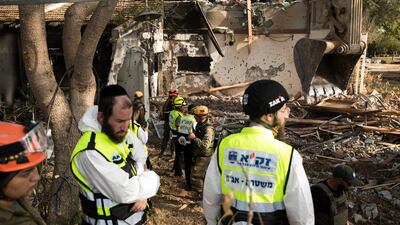
Rescue crews search for bodies after Hamas militants attacked the kibbutz of Be'eri in Israel. Getty Images -
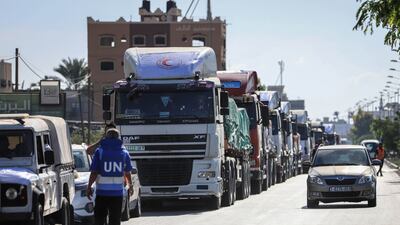
Lorries carrying humanitarian aid head to Deir Al Balah after crossing from Egypt through Rafah. Bloomberg -
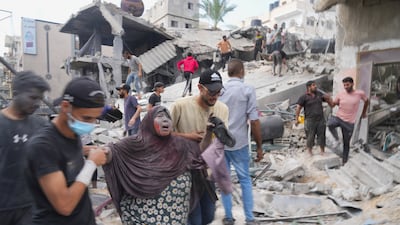
Palestinians evacuate survivors in Deir Al Balah after an Israeli bombardment. AP -
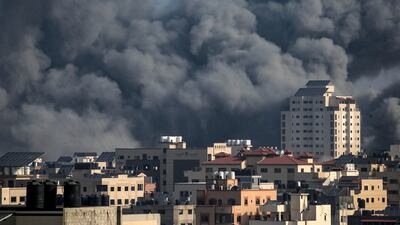
Smoke rises after Israeli air strikes on Gaza. EPA -
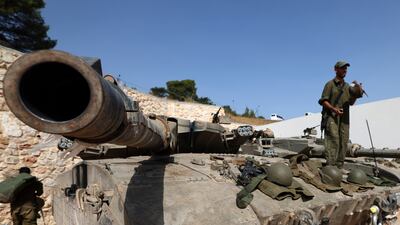
Israeli soldiers at a position along the border with Lebanon. EPA -

A woman leans against the window of an ambulance outside Kuwait Hospital after an Israeli strike in Rafah. AFP -
A Palestinian cries as the body of his daughter is recovered from beneath the rubble of a building destroyed during an Israeli air strike on Rafah. AFP -
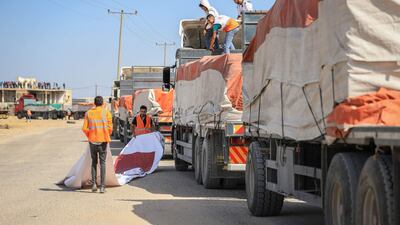
A convoy carrying humanitarian aid arrives in Rafah after crossing into the Gaza Strip from Egypt. Bloomberg -

The pictures of more than 1,000 people abducted or killed during the attack by Hamas militants are displayed on empty seats at Tel Aviv University. Getty -
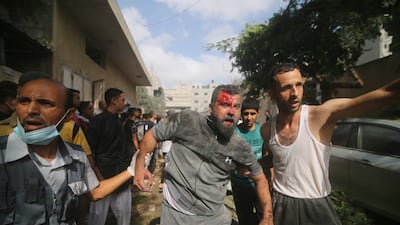
Palestinians are evacuated from buildings in Rafah after the bombardment of the Gaza Strip. AP -
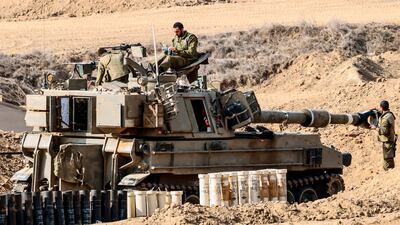
Israeli soldiers gather at an undisclosed location near the border with Gaza. EPA -
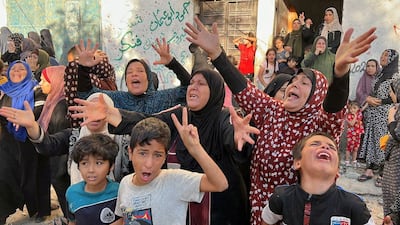
Palestinians mourn outside a house in Gaza struck by Israel. Reuters -
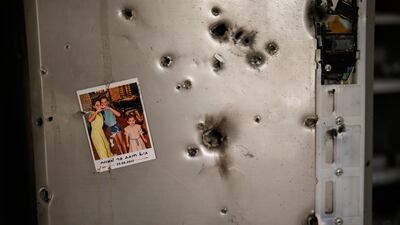
A bullet-riddled fridge in a house in the kibbutz of Kissufim in southern Israel, where 14 people were killed and four were abducted by Hamas militants on October 7. AP -
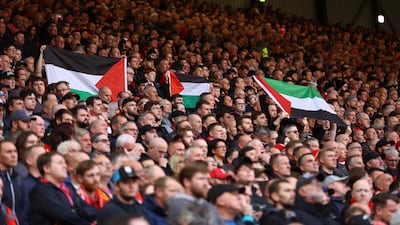
Football fans inside Anfield stadium hold up Palestine flags during the Liverpool-Everton derby on Saturday. Reuters -
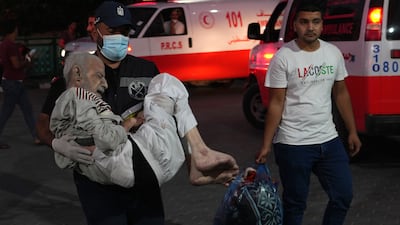
Palestinians wounded in the bombardment of Gaza are taken to Al Asa Hospital in Deir Al Balah. AP -
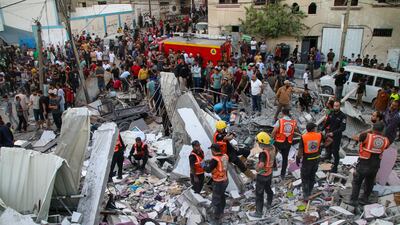
Rescuers search for victims and survivors in buildings destroyed by air strikes in Khan Younis, Gaza. Getty -

Residents of Tel Aviv show support for the families of hostages being held in Gaza by Hamas. Reuters


Hamas’s massive tunnel infrastructure adds a layer of complexity for Israel. These tunnels are long, deep and have multiple floors. Hamas fighters can live and find shelter there for an extended period of time. They can fight inside and from those tunnels. They can command and control their operations. This is where Hamas stores its strategic weapons and most likely is keeping all its hostages. The tunnels are not a tactical feature of Hamas’s war-fighting strategy. Rather, they are a core element of it. They provide Hamas with operational and tactical flexibility the group wouldn’t have above ground. The tunnels make it easier for Hamas to conduct hit and run operations, which is most likely what they will do against the Israeli army.
The Israeli military is trained for both urban and subterranean warfare. It has specialised units not only for those distinct kinds of warfare but also specialised equipment, some locally produced, some provided by the US. But until it sends its units below the surface and engages in close combat, Israeli soldiers won't know what awaits. All that specialised subterranean equipment – for breathing, for seeing, for navigating, for shooting, for communicating – could very easily malfunction. And that’s not even factoring in Hamas’s potential counter measures. Just like the Israelis prepared for such a fight, Hamas has prepared, too, and for many years.
That’s all assuming Israel has perfect intelligence on the whereabouts of the hostages, which it likely doesn’t. The Israeli army can’t pursue surgical operations if it doesn’t have enough accurate intelligence. And given the historic intelligence failure the country is emerging from, confidence in Israeli intelligence capabilities is not very high right now.
The existence of that kind of intelligence will also shape the decision of how the Israeli military will engage Hamas. Does it clear the tunnels of militants as much as possible so it can proceed to release the hostages and then it destroys the tunnels? Or is the script reversed? If destruction precedes clearance, that brings us back to the critical issue of hostage safety.
Last but not least, the possibility of another front opening up, be it from Lebanon or Syria, will incredibly complicate operations for Israel. The government can say all it wants that it is ready for another front against Hezbollah along its northern border should the Lebanese group enter the fight. But in reality, a two-or-multiple-front confrontation will greatly strain the capabilities of the Israeli military and create immense political pressure on the Israeli government. Hezbollah is much more powerful today than in 2006 when it fought Israel to a standstill for 34 days. It may not be able to deter Israel from invading Gaza, but it will do everything it can to influence the manner with which Israeli troops enter Gaza and fight Hamas.
Neither Hezbollah nor Iran wants a war with Israel, but it’s hard to imagine them watching their Palestinian partner get pummelled or about to get disarmed and do nothing about it. This isn’t necessarily out of love for Hamas. This is because the Iran-led axis views the Palestinian theatre as core to the struggle against Israel. It has immense religious significance. If Hamas goes, so does a major Palestinian means to stand up to Israel.
Israel has the ability to seriously damage Hamas, but the key questions are what is the military risk it is willing to accept and what is the political price it is willing to tolerate? Entering the tunnels will no doubt be perilous. But causing a high degree of collateral damage while doing so – which is virtually inevitable given the densely populated urban terrain and Hamas’s tactics of placing its military facilities under hospitals, schools and residential buildings – will be far worse. It's a cliche to say that there is no military solution to the Hamas problem. But it doesn't make it any less true.
Live updates: Follow the latest news on Israel-Gaza

