


Visitors to the British pavilion at Expo 2020 Dubai receive a striking, unique welcome that mixes symbolism and technology. At the centre of the building is an interactive poem, where visitors enter words into an electronic tablet that are shaped into an ever-changing poem using artificial intelligence. It is a symbol of a country in flux, which is embracing great changes, both politically and economically, without losing sight of its deeper, cultural identity.
Ever the strong partner for the UK, the UAE is a country also combining modernity and culture as it progresses through the 21st century. Relations between both countries, which are constantly modernising, take on this deep cultural aspect, understandable given the UK has been by the Emirates' side since its foundation 50 years ago.
In a sign of deep, old and new relations between both countries, Prince William, who will one day be Britain's monarch, yesterday arrived in the UAE for his first official visit to the country. It is a moment for him to present how he plans to progress bilateral relations. His itinerary gives clues as to the nature of his priorities. A passionate conservationist, like his father Prince Charles, the Duke of Cambridge visited Abu Dhabi’s unique environmental heritage at the Jubail Mangrove Park with Sheikh Khaled bin Mohamed bin Zayed, member of the Abu Dhabi Executive Council and Chairman of the Abu Dhabi Executive Office. There Prince William learned about efforts to protect regional flora and fauna in the million-square-metre area that is home not just to the precious plants, but also unique bird and marine species. Readers interested in this fragile biome would do well to read The National's own Peter Hellyer.
-
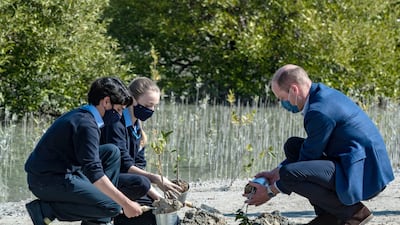
Prince William plants mangrove seedlings with pupils. Victor Besa / The National -
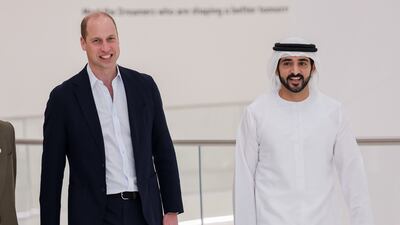
Sheikh Hamdan bin Mohammed, Crown Prince of Dubai, and Prince William, Duke of Cambridge, visit the UAE pavilion at Expo 2020 Dubai. After the tour, they were due to hold a private bilateral meeting. Getty -
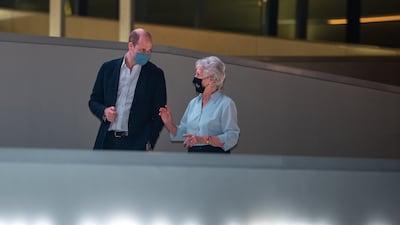
Prince William visits the UK Pavilion at Expo 2020 Dubai. Victor Besa / The National -
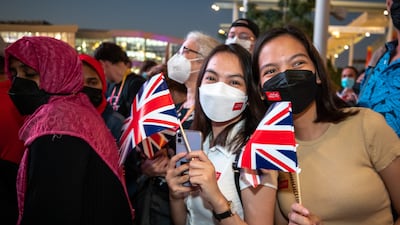
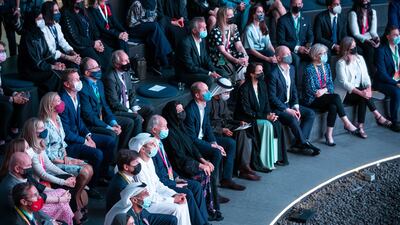
Visitors outside the UK Pavilion at Expo 2020 Dubai. Victor Besa / The National -
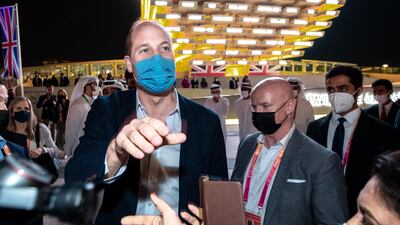
Prince William greets Expo visitors outside the UK Pavilion. Victor Besa / The National -
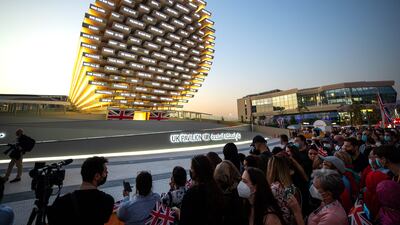
The UK Pavilion at Expo 2020 Dubai. Victor Besa / The National -
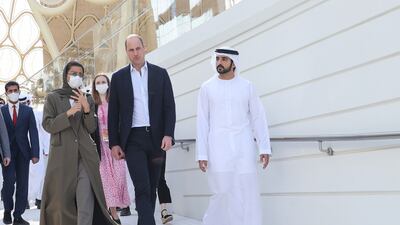
Sheikh Hamdan bin Mohammed, right, and Noura Al Kaabi, Minister of Culture and Youth, accompany Prince William on the tour. Getty -
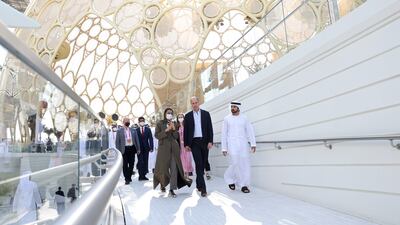
Sheikh Hamdan bin Mohammed, right, and Noura Al Kaabi, Minister of Culture and Youth, accompany Prince William on the tour. Getty -

Sheikh Hamdan bin Mohammed and Prince William chat inside the UAE pavilion. Getty -
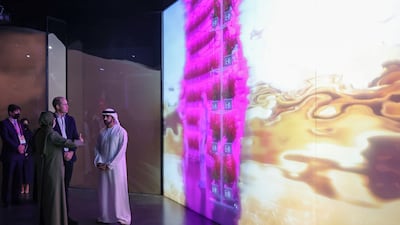
Prince William watches a display inside the UAE Pavilion, accompanied by Sheikh Hamdan bin Mohammed and Noura Al Kaabi. Getty -
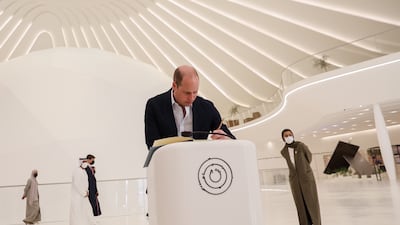
The Duke of Cambridge signs the pavilion guestbook. Getty -
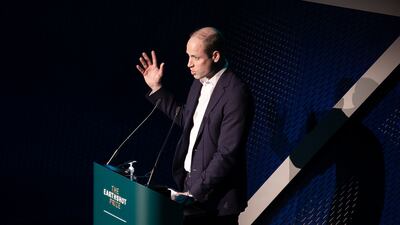
Prince William speaking in the DP World Pavilion, EXPO 2020 Dubai. Victor Besa / The National -
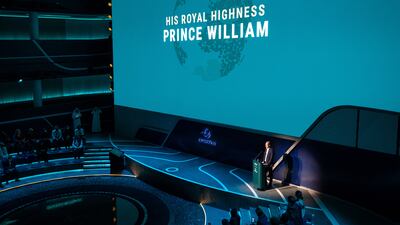
Prince William speaking in the DP World Pavilion, EXPO 2020 Dubai. Victor Besa / The National -
Prince William speaking in the DP World Pavilion, EXPO 2020 Dubai. Victor Besa / The National -
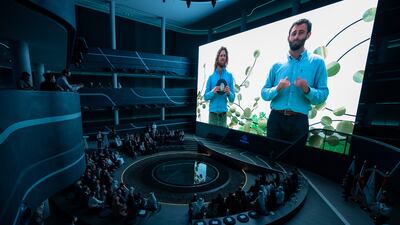
Prince William speaking in the DP World Pavilion, EXPO 2020 Dubai. Victor Besa / The National -
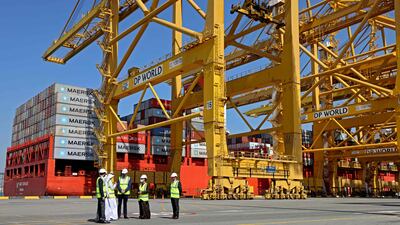
Prince William, centre, visits Jebel Ali Port in Dubai. AFP -
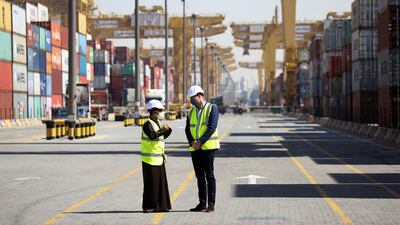
Sultan Ahmed bin Sulayem, chairman and chief executive of DP World, speaks to the prince about work to tackle the illegal wildlife trade. Getty -
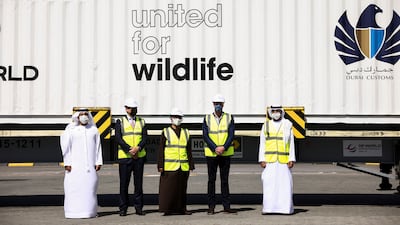
The duke’s visit to the port is part of a busy tour of the UAE. Getty -
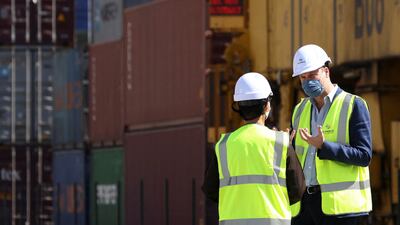
Prince William's visit will build on the strong bond between the UK and the UAE. Getty -
The duke travelled from Abu Dhabi to Dubai to visit one of the world’s busiest ports. John Dennehy / The National -
Prince William sees how goods are monitored in and out of the port. John Dennehy / The National -
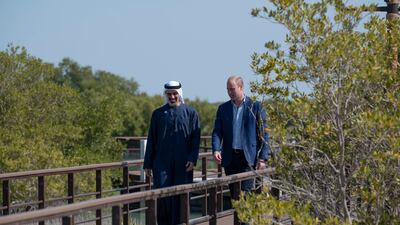
Sheikh Khaled bin Mohamed, member of Abu Dhabi Executive Council and chairman of Abu Dhabi Executive Office, visits Jubail Mangrove Park with the prince. Photo: Abu Dhabi Media Office -
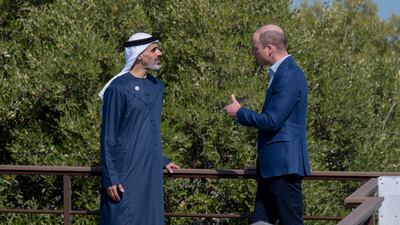
Sheikh Khaled bin Mohamed and Prince William at the mangrove park in Abu Dhabi. Photo: Abu Dhabi Media Office -
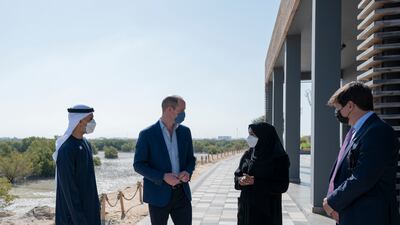
Sheikh Khaled bin Mohamed with Prince William. Photo: Abu Dhabi Media Office -
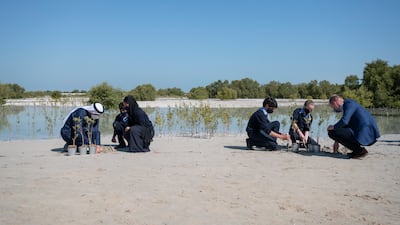
Sheikh Khaled bin Mohamed with Prince William and pupils at Jubail Mangrove Park. Photo: Abu Dhabi Media Office -
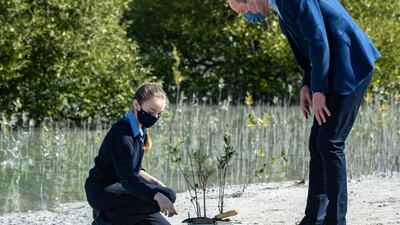
The prince and companies in the UAE are working together to protect flora and fauna. Victor Besa / The National -
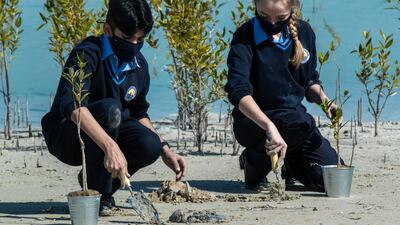
Children tend to seedlings after meeting Prince William. Victor Besa / The National -

The seedlings were planted at Jubail Mangrove Park in Abu Dhabi. Victor Besa / The National -
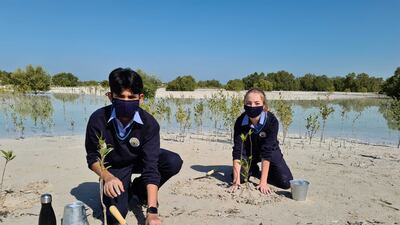
Lilly-Rose Mayall and Amaan Haider of the British School Al Khubairat plant mangrove seedlings. Victor Besa / The National -
The view from Prince William's plane as he arrives in Dubai. Photo: Kensington Royal -
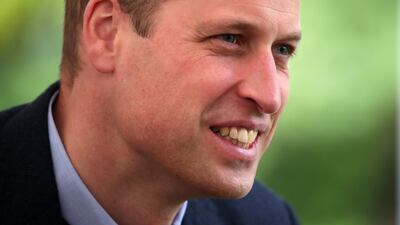
Prince William during a visit to Edinburgh, Scotland, last year. The Duke of Cambridge is visiting the UAE for his first official trip to the Emirates. Getty -
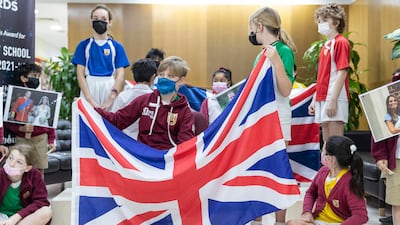
Pupils at Victory Heights Primary school thought of some burning questions for Prince William before his visit to Dubai. Antonie Robertson / The National -
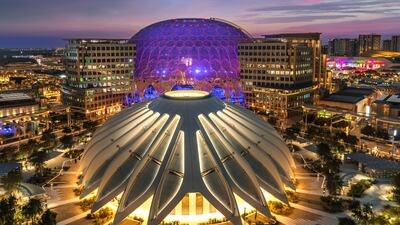
Prince William visited Expo 2020 Dubai. Photo: Expo 2020 Dubai


Back at Expo 2020, the Duke of Cambridge turned his mind to modern priorities, basing himself at the UK's pavilion, a focal point for the country's trade and tourism ambitions. On Wednesday, Britain unveiled a £10 million global tourism campaign there, as it seeks to strengthen close trade ties with the UAE, which is a key market for the country, and an important voice in efforts to cement a trade deal with the wider GCC region.
He also carried out the softer side of diplomacy too, interacting at Expo 2020 with the country's diverse residents, presenting a British monarchy that is open and connected to its citizens, many of whom live in the UAE, as well as Emiratis and people from around the world. He did so in the company of Sheikh Hamdan bin Mohammed, Crown Prince of Dubai, another future monarch who is known for his engagement with the everyday events and affairs of the country, regularly being photographed with people from all walks of life around the country.
The trip is a sign that however much Britain, the UAE and the world might be changing, friendships can endure. Royal families are able to forge uniquely symbolic relations between countries.
In 1979, Queen Elizabeth II opened Dubai's Jebel Ali Port on her landmark trip to the Middle East. Yesterday, almost 50 years on, the next generation of Britain's Royal Family was back there, observing its culmination into one of the world's most important shipping locations, but also an important donor to the Prince's conservation work. Writing in The National, the Duke of Cambridge praised the port's owner, DP World, for "their unwavering commitment to this work". He went on to call it "a tremendous example of the impact private companies can have in the global effort to protect the planet".
Contrasting pictures from the two visits, the first ones in black and white, today's showing the site's huge expansion, observers can see that however much the world is changing, Emirati-British ties are as close as ever.

