
The Houthis’ latest advances along Yemen’s Red Sea coast mark a significant escalation amid the war with Iran, but US President Donald Trump has so far resisted greater military involvement in the region.
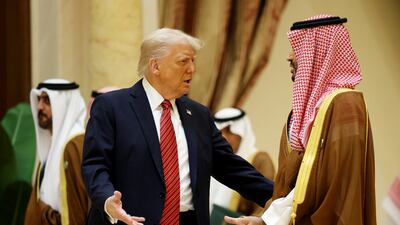
After the Iran-backed group seized the strategic port city of Mokha last week and launched missiles and drones at Saudi Arabia, Mr Trump declined Saudi requests to conduct strikes against the Houthis, even after Crown Prince Mohammed bin Salman urged him to intervene. Washington instead offered intelligence support, according to reports.
“We’ve had discussions. The Houthis called us and they don’t want to fight with us,” Mr Trump said over the weekend, adding that they “don’t want us to go after them” and “would much prefer not having us involved".
He said that Prince Mohammed is “a good friend of mine and it’s going to — I can just say everything’s going to work out fine and dandy. It’s going to be very good".
Vice President JD Vance said the administration was in “constant contact” with Saudi Arabia, the UAE and other regional partners, while also holding direct conversations with the Houthis.
“We actually feel like we are on top of the situation, it’s a very fluid and dynamic thing,” he said. “We want to keep on monitoring it.”

The situation reflects the administration’s reluctance to open another military front while US forces remain focused on Iran and the Strait of Hormuz.
The US faces difficult choices as the war with Iran continues and the crisis around the Strait of Hormuz remains unresolved. Mr Trump is also facing pressure from higher energy prices, which are adding to the cost of living for Americans before November’s midterm elections.
Mr Trump has also struggled to contain questions over the goals and duration of the conflict, which he launched alongside Israel on February 28. He initially said the military action would last only a few weeks and was aimed at regime change in Iran.
More than six months later, the conflict continues, with reopening the Strait of Hormuz, through which a fifth of global energy supplies once flowed, emerging as a central US objective.
Mr Trump has long highlighted his close ties with the Gulf states, particularly Saudi Arabia. His first foreign trip after returning to office took him to the kingdom, Qatar and the UAE.
But there have been signs of strain. The US decision to launch the war with Iran without prior consultation with Gulf states has left regional countries dealing with the economic and security consequences of a conflict they did not initiate.
The Trump administration has made a civilian nuclear programme pact with Saudi conditional on the establishment of official ties with Israel.
But in a gesture probably meant to reassure Riyadh, he nominated a new ambassador to Saudi Arabia on Monday, for a post that had been vacant for more than a year and a half. The administration has yet to name ambassadors to the UAE, Qatar or Kuwait.
For Gulf states that have spent decades deepening their security and economic ties with Washington, the conflict has exposed the limits of their ability to protect their economies from regional instability – and of their influence in Washington.
“The Gulf states are rightly angry, and they should be, because they have become victims of something that was not their doing,” said Alex Vatanka, a senior fellow at the Middle East Institute.
“They don’t see any solutions coming out of Washington, so they’re accepting the geography and the basic realities of this war having become a war of attrition, in which the Gulf states are among the biggest victims.”
The Houthis’ capture of Mokha, on Yemen’s western coast, brings them closer to the Bab Al Mandeb strait, a key global shipping artery connecting the Red Sea and Gulf of Aden.
The waterway has taken on added strategic importance as traffic through the Strait of Hormuz has been severely disrupted during the war. Bab Al Mandeb is one of the few remaining major maritime routes connecting the Gulf to the Red Sea and Gulf of Aden.

The capture represents a significant strategic gain for the Houthis, giving them greater control over a vital alternative shipping route.
Iran also stands to benefit from the instability in Yemen, as disruptions there could inflict further economic pressure and create another political challenge for Mr Trump. But while Iran and the Houthis have clear shared interests, it does not necessarily mean Tehran controls Houthi decision-making.
A senior US administration official said Washington remained focused on protecting its “core national security interests”, including freedom of navigation in the Red Sea, while seeking to empower regional partners to address security challenges.
“We are in continuous dialogue with Saudi Arabia and the Republic of Yemen government regarding regional stability,” the official said.
The administration has also warned the Houthis against resuming attacks on shipping, saying the US would take “necessary action” to protect freedom of navigation and its commercial shipping.

