


The UN Security Council unanimously approved a resolution on Thursday to extend for “a final time” the mandate of the UN Interim Force in Lebanon, the decades-old peacekeeping mission in the country.
The resolution states that the Unifil mandate will be extended until December 31, 2026, with the withdrawal process starting immediately.
The mandate's renewal comes at a time of heightened tension at the Lebanon-Israel border. The withdrawal process for Unifil's 10,800 military and civilian personnel and related equipment will be co-ordinated with the Lebanese government and is set to conclude within a year.

France welcomed the extension, calling the additional time “precious” and supporting efforts to bolster the Lebanese army’s capabilities.
“Although the situation remains precarious, these dynamics imply that the Lebanese state will be the only one upholding security and extending sovereignty,” French deputy ambassador Jay Dharmadhikari told Security Council members.
Dorothy Shea, acting US ambassador to the UN, stressed that this would be Washington’s last renewal of the mission. “The security environment in Lebanon is radically different than just one year ago, creating the space for Lebanon to assume greater responsibility,” she told the council.
Ms Shea urged the international community to use the extension to “bolster the Lebanese armed forces as we work towards the shared objective. We must use this time to set Lebanon up for success.”
-
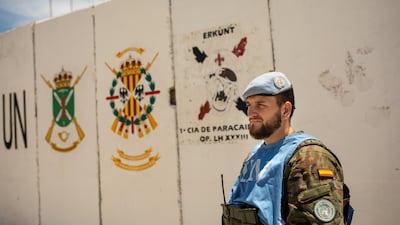
A soldier of the Spanish contingent of Unifil stands in front of the ensign of his regiment on a Unifil base close to Ghajar on the Blue Line separating Israel from Lebanon in southern Lebanon. All photos: Oliver Marsden for The National -
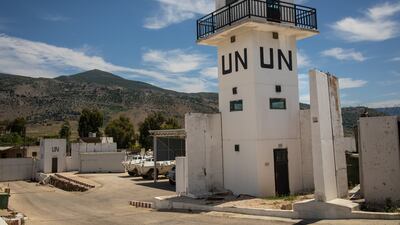
The Unifil base -
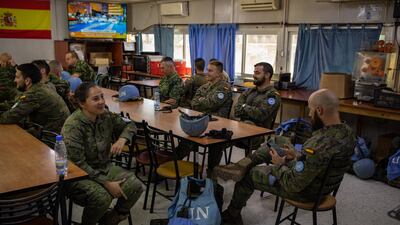
Unifil soldiers relax in the canteen -
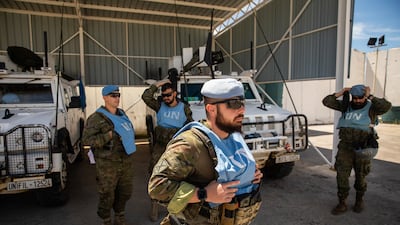
Soldiers exit their UN-marked vehicles -
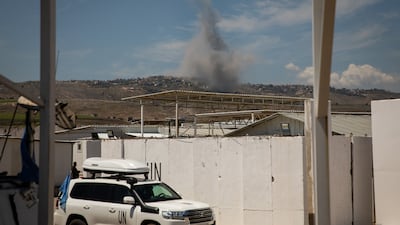
An Israeli missile strikes the town of Khaim, close to the Unifil base -
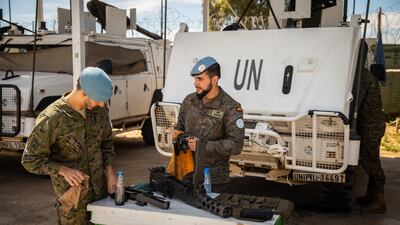
Soldiers service their weapons -
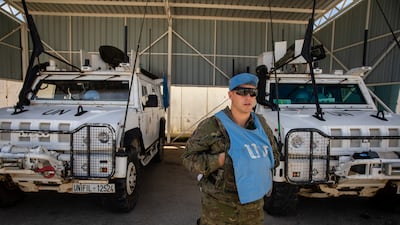
A soldier stands in front of UN-marked vehicles -
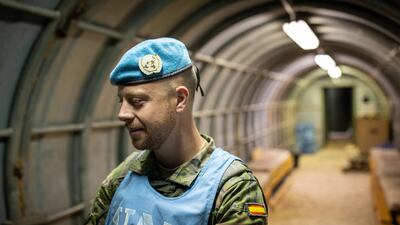
Captain Hector Alonso, 31 -
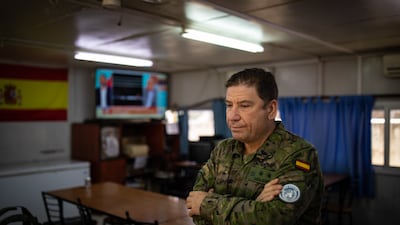
Colonel Juan Garcia Antonio Martinez, 50 -

A soldier exercises in the gym -
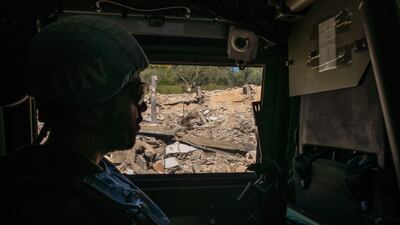
A soldier patrols the town of Aadysit Marjaayoun in southern Lebanon


Lebanon called on the council to “shoulder” its legal responsibility to prevent Israeli violations of Lebanese sovereignty and to support the country’s reconstruction efforts.
“The international community must accompany the tremendous efforts made by the Lebanese government and the Lebanese army to build a strong, sovereign and capable state and to support them through all possible means, and without any delay,” ambassador Ahmad Arafa said.
Israel’s UN envoy, Danny Danon, said the vote presented “a unique opportunity” for Lebanon to assert control.
“Lebanese leaders have spoken positively about restoring sovereignty," he said. "Now those words must translate into real action, beginning with dismantling Hezbollah's military infrastructure."
He warned that Hezbollah continues to rearm despite the ceasefire. “It smuggles weapons across the Syrian border, transfers funds through Beirut International Airport, operates weapons factories and deploys UAVs against Israel,” he said.
“Hezbollah fighters remain south of the Litani River in direct violation of these very conscious resolutions. These actions are not isolated incidents. They are part of a systematic effort to prepare for the next bloody conflict, and Israel will not stand idly by.”
Unifil was created to oversee the withdrawal of Israeli troops from southern Lebanon after the 1978 invasion. Its mission was expanded after the month-long 2006 war between Israel and Iran-backed Hezbollah.
The Lebanese Cabinet this month charged the army with developing a plan to disarm Hezbollah by the end of the year, a move the group has resisted. The issue of Hezbollah’s weapons has long divided Lebanese politics and created tension with Israel.
Under the ceasefire between Israel and Hezbollah, Israel was meant to withdraw fully from Lebanon but has kept troops in several areas it considers strategic. It has also continued air strikes across Lebanon, including one on Monday, claiming ceasefire breaches.
Israeli Prime Minister Benjamin Netanyahu’s office said the country was “ready to support” Lebanon’s efforts to disarm Hezbollah and would implement a phased reduction of its military presence in Lebanon as a “reciprocal measure”.


