

US President Joe Biden on Tuesday welcomed Nato heads of state in Washington, where he announced a "historic donation" of long-range air defence systems for Ukraine.
Mr Biden, who is trying to make the case to US audiences and to allies abroad that he can still lead for another term, promised five additional strategic defence systems to Kyiv.
"In the coming months, the United States and our partners intend to provide Ukraine with dozens of additional tactical air defences," he added during remarks heralding Nato's 75th anniversary.
Ukrainian President Volodymyr Zelenskyy, who will meet Mr Biden on Thursday, has been pressing Nato for more weapons and equipment as it continues its fight against the Russian invasion.
The announcement comes after Ukraine reported that Russia had attacked a children's hospital in Kyiv amid a series of bombings across the capital that left more than 30 dead.
The President spoke alongside Nato Secretary General Jens Stoltenberg, who reminded members that "there are no cost-free options with an aggressive Russia as a neighbour".
"There are no risk-free options in a war, and remember the biggest cost and the greatest risk would be if Russia wins in Ukraine. We cannot let that happen."
Earlier in the day, Mr Stoltenberg said that the military alliance would focus on increasing defence spending and "spending better by spending more together".
Ahead of the summit, he touted how 23 allies are now spending at least 2 per cent of their gross domestic product on defence. Guidelines for the alliance state that members should aim to allocate at least 2 per cent of their gross domestic product towards defence.
"Nato is the most successful alliance in history, because we have been able to unite around our core paths to protect and defend each other, but also because Nato has always been able to adapt and change when the world is changing," he said. "Now the world is changing."
Change could also be in the air in the US, with the possibility of another term in office for Nato-sceptic Donald Trump.
A defiant Mr Biden has been insisting in pressing ahead with challenging his Republican predecessor in this year's presidential election, despite concerns from his own Democratic Party.
The winner of the elections in November is likely to have a deep impact on Nato and US engagement with the alliance.
Mr Biden, 81, has made restoring alliances abroad a centrepiece of his international agenda, four years after his predecessor, Trump, adopted an “America First” approach.
If he wins, Trump has said that he would not defend Nato members who come under attack if they did not meet the group’s 2 per cent defence spending target. He has also pushed back against continued US military support to Ukraine.
But the Biden administration has shown it is committed to continuing to back Ukraine, with a large defence package pushed through Congress in April.
Weapons wanted by Ukraine - in pictures
-
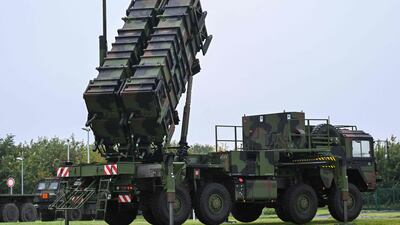
Air defence: Ukraine’s air defence largely depends on the Patriot system. AFP -
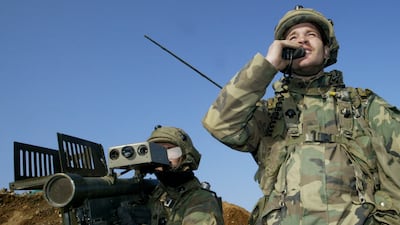
Air: Stinger short-range surface-to-air missile. Reuters -
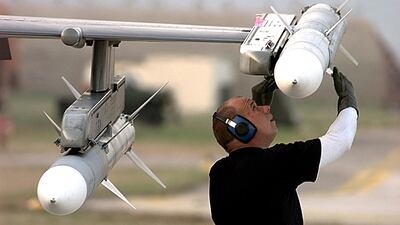
Air: Aim-120 air-to-air missiles. More than 14,000 of the missiles, that have a range exceeding 120km, have been produced with their accuracy so good that they have been nicknamed “Slammer”. Getty Images -
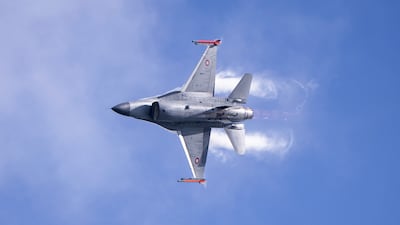
Air: F-16s will provide greater surveillance and the ability to attack high-value targets behind Russian lines in occupied Ukraine. EPA -
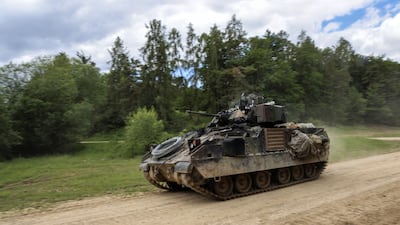
Armour: Bradley IFV. The Ukrainians have found the Bradley infantry fighting vehicle, with its 25mm cannon, very useful in protecting troops and providing decent firepower. Bloomberg -
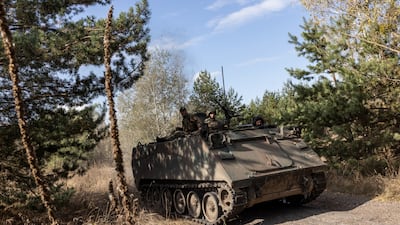
Armour: M113. The 1960s-designed versatile M113 armoured personnel carrier has proven effective in protecting troops against minefields. Getty Images -
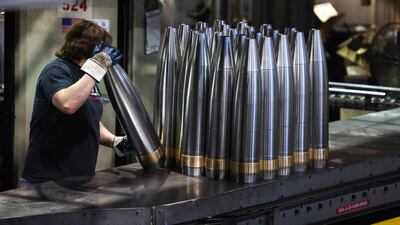
Artillery: 155mm artillery rounds. A massive delivery of 155mm rounds could prove crucial in preventing further Russian advances, particularly in its expected summer offensive. AFP -
Artillery: ATACMs long-range precision missiles. The ATACMS have a range of 300km with the ability to land within a few metres of a target. Getty Images -
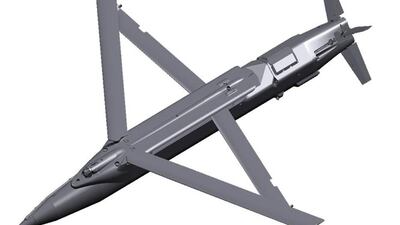
Artillery: Ground-Launched Small Diameter Bomb (GLSDB). It can be fired from the HIMARS system. Photo: Wikimedia Commons -

Artillery: M777 guns and replacement barrels. The Ukrainians need many M777 howitzer barrels to replace those worn down by extensive use. Getty Images


As the summit got under way, Secretary of State Antony Blinken met separately with Ukraine’s Foreign Minister Dmytro Kuleba and Mr Stoltenberg.
Mr Blinken and Mr Kuleba discussed a wide arrange of issues including Washington’s “commitment” to helping Ukraine defend itself against Russian aggression and efforts to “bring Ukraine closer to Nato membership” - something the besieged country desperately wants.
Speaking to the press before his meeting with Mr Stoltenberg, Mr Blinken praised the alliance and what it represents.
“The secret of Nato's success has been the commitment that those 12 countries made to each other, and that now 32 countries have made to each other and that is an attack on one is an attack on all,” Mr Blinken said.
He added that at its core the alliance was “about preventing wars, it's about deterring conflict, it's about making our people more safe and secure".

