


Sudan will face famine by “default” without more international attention and support, the US special envoy, Tom Perriello, said on Wednesday as a potential battle over the key city of El Fasher looms.
Mr Perriello told the Senate foreign relations committee that food insecurity and malnutrition in the country has reached “alarming rates”.
“I do want to be absolutely clear that the default trajectory is towards famine, an increasingly factionalised state that brings in regional actors and presents enormous and unconscionable humanitarian costs,” he said.
“Driven by the conflict, the destruction of harvest, food shortages and the block of aid, nearly 80 million people now face food insecurity.”
The threat of violence coming to El Fasher could exacerbate efforts to deliver desperately needed aid into a large bloc of Sudan.
The city has, for years, been a centre for aid groups operating in the country's western region, and a key transit stop for shipments from neighbouring Chad or Port Sudan on the Red Sea.
It is also the only one of Darfur’s five state capitals not controlled by the paramilitary Rapid Support Forces, which is at war with the Sudanese military.
A lack of international attention to the devastating civil war, which has displaced more than 10 million people, is also exacerbating the suffering.
“I've heard over and over again, the re-traumatisation of getting outside and realising the world didn't even know what was going on,” Mr Perriello told the committee.
-

Rapid Support Forces commander Gen Mohamed Dagalo, then deputy head of Sudan's sovereign council, gives a media briefing in Khartoum in February last year. Reuters -
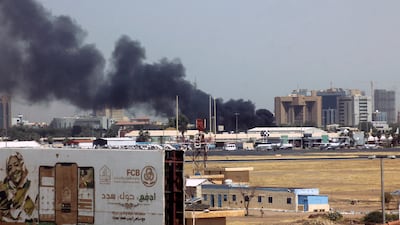
Smoke rises after blasts in Khartoum amid clashes between the Sudanese Army and the Rapid Support Forces paramilitary on April 15 last year. AFP -
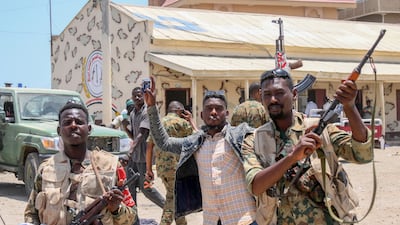
Sudanese Army soldiers at the Rapid Support Forces base in Port Sudan on April 16 last year. AFP -

Black smoke covers the sky over Khartoum as clashes continued on April 19. AFP -
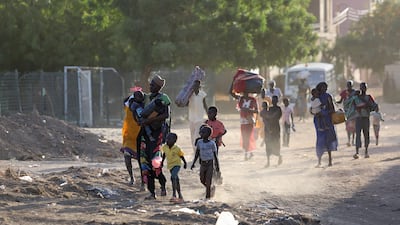
Displaced Khartoum residents flee the city after a 24-hour truce collapsed on April 19. AFP -
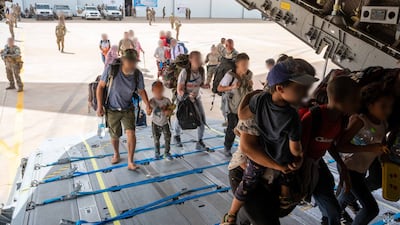
Foreign citizens board a plane at a French military air base in Khartoum to leave Sudan on April 23. AFP -
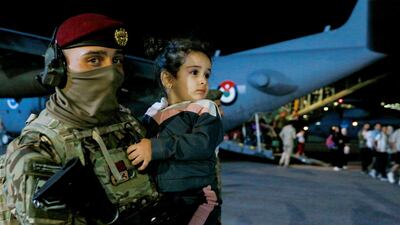
A soldier carries a child as people evacuated from Sudan disembark from a plain at a military airport in Amman on April 24. AFP -

Evacuees from Sudan sit in a military plane as they wait to be processed by Kenyan troops in Nairobi on April 24. Reuters -

Sudanese refugees gather to receive humanitarian aid in Koufroun, Chad, on April 30. AFP -
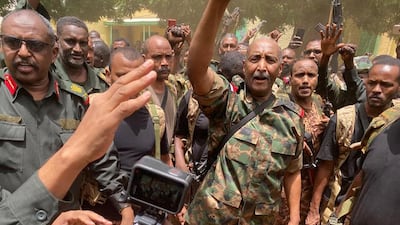
Sudanese Army chief Gen Abdel Fattah Al Burhan visits troop positions in Khartoum on May 30. AFP -
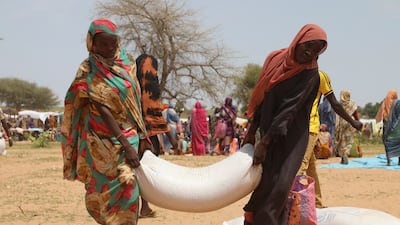
Sudanese refugees at the Zabout camp in Goz Beida, Chad, on July 1. AP -

Smoke rises from a fire at a lumber warehouse in southern Khartoum on June 7. AFP -
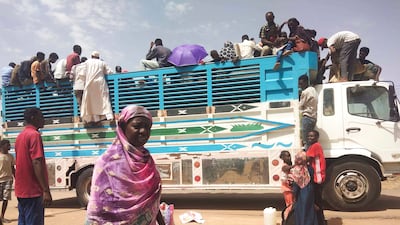
People prepare to leave Khartoum during a ceasefire on June 19. AP -

People sit on top of a lorry carrying furniture on the road between Khartoum and Wad Madani, Al Gezirah state, on July 18. AFP -
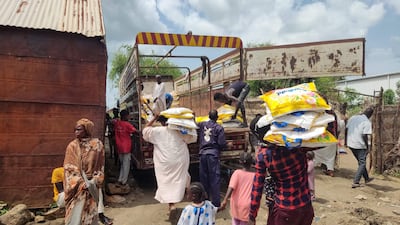
Men load goods from Ethiopia on to a lorry in the border town of Gallabat on August 2. AFP -
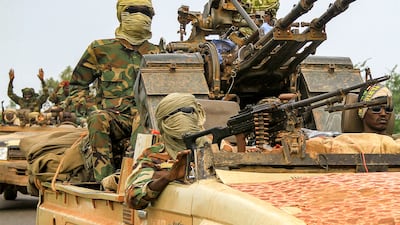
Sudanese Army troops ride in a military convoy accompanying the governor of Darfur State in the eastern city of Gedaref on August 30. AFP -
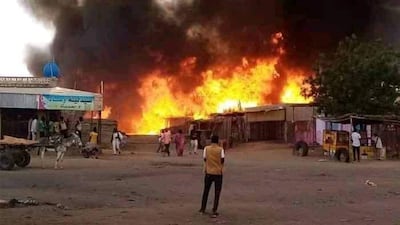
A fire rages at a livestock market after RSF bombardment in Al Fasher, the capital of North Darfur state, on September 1. AFP -

People cook on a campfire at a school that has been turned into a shelter for displaced Sudanese in the northern border town of Wadi Halfa, near Egypt, on September 11. AFP -
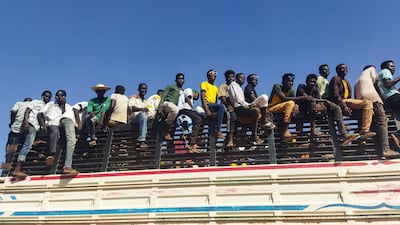
Displaced Sudanese ride on top of a lorry in Wad Madani on December 16. AFP -
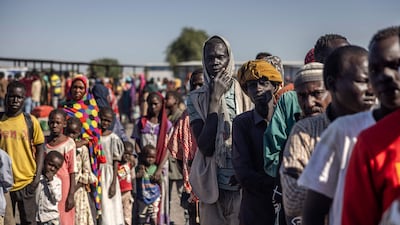
Sudanese refugees queue to board a lorry to go to a transit centre after crossing the border into South Sudan on February 14. AFP -
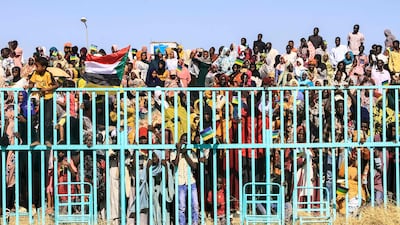
People watch as fighters from the army-aligned Sudan Liberation Movement attend a graduation ceremony in the south-eastern Gedaref state on March 28. AFP -

Fighters from the SLM attend a graduation ceremony in Gedaref state on March 28. AFP


Democratic Senator Cory Booker, who recently returned from a trip to the region with Mr Perriello, condemned the approach of western and wealthy nations to Sudan.
“When you see press story after press story about so many other areas in the world but a lack of [coverage] for this crisis, its enormity, the millions of lives affected, you see a poverty of attention … what we're seeing towards the people of Sudan is a poverty of empathy,” Mr Booker said.
Congress last week passed a massive foreign aid supplemental funding bill that included Sudan, “which is having an immediate effect on the ability … to save lives”, Mr Perriello said.
He said external regional actors are complicating the war, including Iran, Saudi Arabia and the UAE.
The UAE recently rejected claims from Sudan at the UN that it was supporting the RSF.
Lana Nusseibeh, Assistant Minister for Political Affairs at the Ministry of Foreign Affairs, said the UAE had submitted a letter to the UN Security Council stressing the spread of “disinformation and false narratives” undermining efforts to address Sudan's humanitarian crisis.
Washington is appealing for more countries to engage in building an international sanctions regime against those responsible for war crimes on both sides.
Republican committee ranking member Jim Risch sounded sceptical that President Joe Biden's administration was on a path to success with the state of current peace negotiations in Jeddah.
“Emergency diplomacy with Saudi Arabia in Jeddah has repeatedly failed, but you're recommending another round of talks," Mr Risch said.
"Talks can be important. This committee needs to know why these talks will be different."

