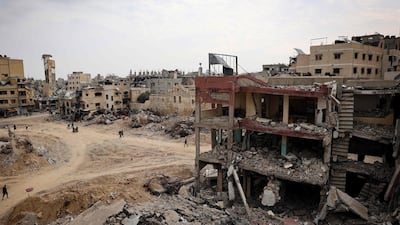
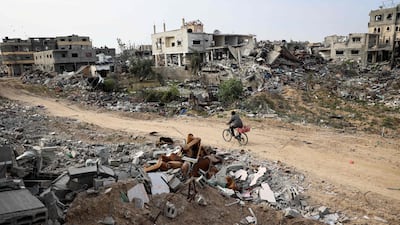
Live updates: Follow the latest on Israel-Gaza
The White House on Monday said a ceasefire proposal had been presented to Hamas at the weekend after a “serious round” of negotiations.
National Security Council spokesman John Kirby added that aid lorries have been getting into Gaza at a faster rate after President Joe Biden warned Israeli Prime Minister Benjamin Netanyahu to address the humanitarian crisis.
Mr Kirby told reporters that CIA director William Burns had participated in talks in Cairo aimed at securing a six-week ceasefire deal that would include the release of hostages held by Hamas and more humanitarian aid for the Gaza Strip.
“At the end of the weekend, a proposal was submitted to Hamas and now it's going to be up to Hamas to come through,” Mr Kirby said.
“We're taking this very, very seriously,” he added, noting that a response from Hamas could take days.
Mr Kirby also said the Biden administration would press Israel to allow for 300-350 aid lorries to enter Gaza every day, a significant increase from where things stood recently.
Up until Mr Biden called Mr Netanyahu last week to demand that Israel address Gaza’s humanitarian crisis and work for a ceasefire, Israel would typically only let about 100-200 lorries through daily.
Lorries are often blocked from entering Gaza altogether and forced to wait outside the enclave for day sat a time.
Mr Kirby called the increased aid flow “a good start” but noted it was “still not up to the upper range of 350, and what matters is how it can be sustained over time”.
The State Department said 304 aid lorries entered Gaza on Sunday – more than on any day since the war began on October 7.
“That number represents a significant improvement, but it is important not just that we see the daily number continue to grow, but that it'd be sustained over time,” State Department spokesman Matthew Miller told reporters.
“Our hope is that by later this week, 350 trucks will enter Gaza each day, and we are working hard across the United States government to make that happen.”
Mr Miller said the Israeli cabinet had agreed to open a new crossing into northern Gaza for the delivery of aid, which could be operational this week, and also approved the use of the port in Ashdod, to the north of the enclave.
He added that aid convoys would also move from Jordan through Israel into Gaza.
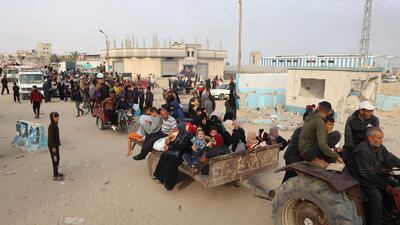
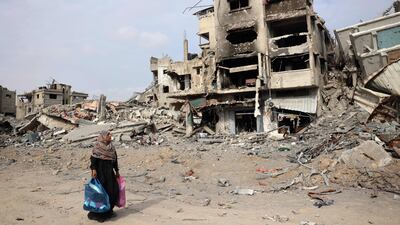
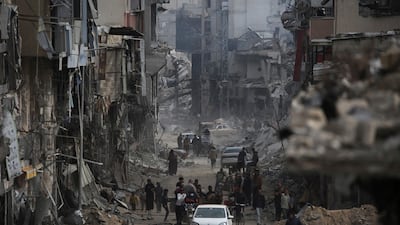
Israel's military campaign in Gaza, which was triggered by the Hamas attack that Israel says killed nearly 1,200 people, has killed more than 33,000 Palestinians, according to authorities in Gaza, the majority of them women and children.

How to join and use Abu Dhabi’s public libraries
• There are six libraries in Abu Dhabi emirate run by the Department of Culture and Tourism, including one in Al Ain and Al Dhafra.
• Libraries are free to visit and visitors can consult books, use online resources and study there. Most are open from 8am to 8pm on weekdays, closed on Fridays and have variable hours on Saturdays, except for Qasr Al Watan which is open from 10am to 8pm every day.
• In order to borrow books, visitors must join the service by providing a passport photograph, Emirates ID and a refundable deposit of Dh400. Members can borrow five books for three weeks, all of which are renewable up to two times online.
• If users do not wish to pay the fee, they can still use the library’s electronic resources for free by simply registering on the website. Once registered, a username and password is provided, allowing remote access.
• For more information visit the library network's website.
Rebel%20Moon%20%E2%80%93%20Part%20Two%3A%20The%20Scargiver%20review%20
%3Cp%3E%3Cstrong%3EDirector%3A%3C%2Fstrong%3E%20Zack%20Snyder%3Cbr%3E%3Cstrong%3EStarring%3A%3C%2Fstrong%3E%20Sofia%20Boutella%2C%20Charlie%20Hunnam%2C%20Ed%20Skrein%2C%20Sir%20Anthony%20Hopkins%3Cbr%3E%3Cstrong%3ERating%3A%3C%2Fstrong%3E%202%2F5%3Cbr%3E%3Cbr%3E%3C%2Fp%3E%0A
COMPANY%20PROFILE%20
%3Cp%3E%3Cstrong%3ECompany%20name%3A%20%3C%2Fstrong%3ENomad%20Homes%3Cbr%3E%3Cstrong%3EStarted%3A%20%3C%2Fstrong%3E2020%3Cbr%3E%3Cstrong%3EFounders%3A%20%3C%2Fstrong%3EHelen%20Chen%2C%20Damien%20Drap%2C%20and%20Dan%20Piehler%3Cbr%3E%3Cstrong%3EBased%3A%3C%2Fstrong%3E%20UAE%20and%20Europe%3Cbr%3E%3Cstrong%3EIndustry%3C%2Fstrong%3E%3A%20PropTech%3Cbr%3E%3Cstrong%3EFunds%20raised%20so%20far%3A%3C%2Fstrong%3E%20%2444m%3Cbr%3E%3Cstrong%3EInvestors%3A%3C%2Fstrong%3E%20Acrew%20Capital%2C%2001%20Advisors%2C%20HighSage%20Ventures%2C%20Abstract%20Ventures%2C%20Partech%2C%20Precursor%20Ventures%2C%20Potluck%20Ventures%2C%20Knollwood%20and%20several%20undisclosed%20hedge%20funds%3C%2Fp%3E%0A
COMPANY%20PROFILE
%3Cp%3E%3Cstrong%3ECompany%20name%3C%2Fstrong%3E%3A%20ASI%20(formerly%20DigestAI)%3C%2Fp%3E%0A%3Cp%3E%3Cstrong%3EStarted%3A%3C%2Fstrong%3E%202017%3C%2Fp%3E%0A%3Cp%3E%3Cstrong%3EFounders%3A%3C%2Fstrong%3E%20Quddus%20Pativada%3C%2Fp%3E%0A%3Cp%3E%3Cstrong%3EBased%3A%3C%2Fstrong%3E%20Dubai%2C%20UAE%3C%2Fp%3E%0A%3Cp%3E%3Cstrong%3EIndustry%3A%3C%2Fstrong%3E%20Artificial%20intelligence%2C%20education%20technology%3C%2Fp%3E%0A%3Cp%3E%3Cstrong%3EFunding%3A%3C%2Fstrong%3E%20%243%20million-plus%3C%2Fp%3E%0A%3Cp%3E%3Cstrong%3EInvestors%3A%3C%2Fstrong%3E%20GSV%20Ventures%2C%20Character%2C%20Mark%20Cuban%3C%2Fp%3E%0A
Mercer, the investment consulting arm of US services company Marsh & McLennan, expects its wealth division to at least double its assets under management (AUM) in the Middle East as wealth in the region continues to grow despite economic headwinds, a company official said.
Mercer Wealth, which globally has $160 billion in AUM, plans to boost its AUM in the region to $2-$3bn in the next 2-3 years from the present $1bn, said Yasir AbuShaban, a Dubai-based principal with Mercer Wealth.
“Within the next two to three years, we are looking at reaching $2 to $3 billion as a conservative estimate and we do see an opportunity to do so,” said Mr AbuShaban.
Mercer does not directly make investments, but allocates clients’ money they have discretion to, to professional asset managers. They also provide advice to clients.
“We have buying power. We can negotiate on their (client’s) behalf with asset managers to provide them lower fees than they otherwise would have to get on their own,” he added.
Mercer Wealth’s clients include sovereign wealth funds, family offices, and insurance companies among others.
From its office in Dubai, Mercer also looks after Africa, India and Turkey, where they also see opportunity for growth.
Wealth creation in Middle East and Africa (MEA) grew 8.5 per cent to $8.1 trillion last year from $7.5tn in 2015, higher than last year’s global average of 6 per cent and the second-highest growth in a region after Asia-Pacific which grew 9.9 per cent, according to consultancy Boston Consulting Group (BCG). In the region, where wealth grew just 1.9 per cent in 2015 compared with 2014, a pickup in oil prices has helped in wealth generation.
BCG is forecasting MEA wealth will rise to $12tn by 2021, growing at an annual average of 8 per cent.
Drivers of wealth generation in the region will be split evenly between new wealth creation and growth of performance of existing assets, according to BCG.
Another general trend in the region is clients’ looking for a comprehensive approach to investing, according to Mr AbuShaban.
“Institutional investors or some of the families are seeing a slowdown in the available capital they have to invest and in that sense they are looking at optimizing the way they manage their portfolios and making sure they are not investing haphazardly and different parts of their investment are working together,” said Mr AbuShaban.
Some clients also have a higher appetite for risk, given the low interest-rate environment that does not provide enough yield for some institutional investors. These clients are keen to invest in illiquid assets, such as private equity and infrastructure.
“What we have seen is a desire for higher returns in what has been a low-return environment specifically in various fixed income or bonds,” he said.
“In this environment, we have seen a de facto increase in the risk that clients are taking in things like illiquid investments, private equity investments, infrastructure and private debt, those kind of investments were higher illiquidity results in incrementally higher returns.”
The Abu Dhabi Investment Authority, one of the largest sovereign wealth funds, said in its 2016 report that has gradually increased its exposure in direct private equity and private credit transactions, mainly in Asian markets and especially in China and India. The authority’s private equity department focused on structured equities owing to “their defensive characteristics.”
%3Cp%3EMATA%0D%3Cbr%3EArtist%3A%20M.I.A%0D%3Cbr%3ELabel%3A%20Island%0D%3Cbr%3ERating%3A%203.5%2F5%3C%2Fp%3E%0A
COMPANY%20PROFILE
%3Cp%3E%3Cstrong%3ECompany%3A%20%3C%2Fstrong%3EGrowdash%0D%3Cbr%3E%3Cstrong%3EStarted%3A%20%3C%2Fstrong%3EJuly%202022%0D%3Cbr%3E%3Cstrong%3EFounders%3A%20%3C%2Fstrong%3ESean%20Trevaskis%20and%20Enver%20Sorkun%0D%3Cbr%3E%3Cstrong%3EBased%3A%20%3C%2Fstrong%3EDubai%2C%20UAE%0D%3Cbr%3E%3Cstrong%3EIndustry%3A%20%3C%2Fstrong%3ERestaurant%20technology%0D%3Cbr%3E%3Cstrong%3EFunding%20so%20far%3A%3C%2Fstrong%3E%20%24750%2C000%0D%3Cbr%3E%3Cstrong%3EInvestors%3A%20%3C%2Fstrong%3EFlat6Labs%2C%20Plus%20VC%2C%20Judah%20VC%2C%20TPN%20Investments%20and%20angel%20investors%2C%20including%20former%20Talabat%20chief%20executive%20Abdulhamid%20Alomar%2C%20and%20entrepreneur%20Zeid%20Husban%3C%2Fp%3E%0A