Solar eclipse in the US - in pictures
-
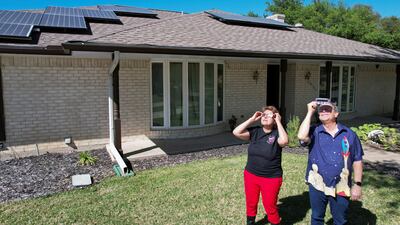
A couple observe the sun through eclipse glasses in front of their home in Dallas, Texas. Reuters -

A placard invites people to a solar eclipse party in Dripping Springs, Texas. EPA -

The US path of totality. AP -

Eclipse glasses are offered at a Warby Parker store in Brooklyn, New York. Getty Images / AFP -
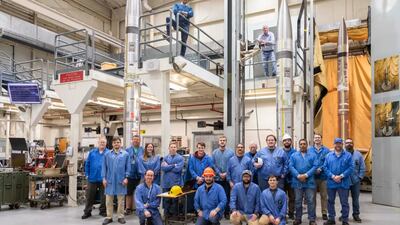
Engineers take a photo in front of the sounding rockets for the Atmospheric Perturbations around Eclipse Path (APEP) mission. Photo: Nasa -

Pupils try out eclipse-viewing glasses at a school in Cleveland, Ohio. AP -
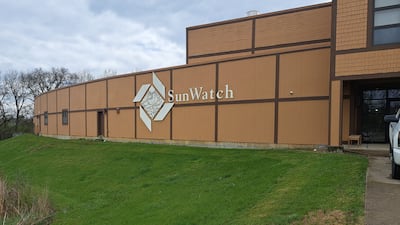
Dozens of people are expected at the SunWatch Indian Village in Ohio to celebrate the solar eclipse on Monday. Stephen Starr / The National -

With the cedar pole in the background, every January 21 morning, the sun passes through the door of the solstice hut at the SunWatch Indian Village in Ohio. Stephen Starr / The National -
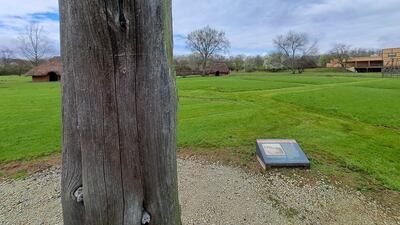
The SunWatch site was last occupied about 800 years ago. This cedar pole was used to measure seasonal change, thus enabling communities to know when to plant and harvest crops. Stephen Starr / The National -

Taylor Hoffman, director of operations at SunWatch Indian Village, stands in front of the 800-year-old cedar pole that give this historical site its name. Stephen Starr / The National -
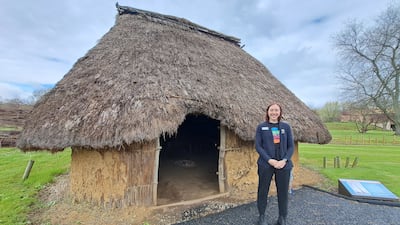
'They knew that the sun was going to come back and they could start planting,' says Ms Hoffman. Stephen Starr / The National


Most popular today

