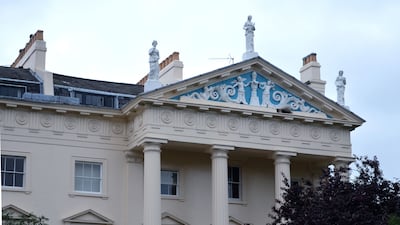

The founder of London taxi company Addison Lee has sold a mansion overlooking London’s Regent’s Park for little more than half the price he paid 13 years ago, as prime London property sales dry up.
John Griffin, who sold his business to the Carlyle Group for about £300 million ($464 million) in 2013, offloaded the property on the park’s western perimeter for £11.5 million at the beginning of October, people with knowledge of the transaction told Bloomberg.
Mr Griffin, who last month lost a drawn-out battle with UK tax authorities, paid £20.7 million for the property in 2013, filings show.

The six-bedroom home, part of a Regency-era terrace designed by architect John Nash, has repeatedly been offered for sale in recent years. A 2021 listing, describing the home as among the grandest and most prestigious in London, priced the property at £32 million.
Following a series of reductions, the property was subsequently withdrawn from the market before being re-listed this year for £13.5 million, Bloomberg's sources said.
Earlier this year, the mystery owner of another grand property in Regent's Park, The Holme, sold it for a profit of about £56 million ($75 million) less than two years after bringing it out of receivership for £139 million.
However, that “flip” was at odds with the rest of the UK capital's prime market.

The cut-price sale of Mr Griffin's property is the latest sign of the malaise gripping prime London real estate, which has seen the city’s priciest properties buffeted by a series of tax changes, and economic and political shocks.
The recovery of nominal price growth for London’s most expensive properties is not expected to take place until 2028, according to a forecast by Savills.
Estate agent JLL’s residential research data showed that between July and September, 457 homes worth more than £5 million were sold in central London, 11 per cent fewer than in the previous quarter.
It found that the prime London sales market remained subdued, with prices declining 7.2 per cent over the past 12 months. It said that the UK capital’s prime houses had lost a quarter of their value since a peak in 2014.

Property analysts LonRes found there had been a summer slowdown in the prime London market, with average sale prices 7.9 per cent lower in July than the previous year and 5.7 per cent lower than the pre-Covid period.
Transactions in the market above £5 million were 20 per cent lower in July than the same month last year. New instructions in this market decreased by 30.3 per cent over the same period, with the number of prime homes on the market 5.2 per cent lower than a year earlier.
LonRes said standout property sales over the summer included a £40 million five-bedroom home in Belgravia and a £25.9 million six-bedroom property in Notting Hill.
Nick Gregori, head of research at LonRes, said July’s activity was low even for the time of year.
“Adding a new prime minister and continuing global uncertainty to the mix has resulted in a subdued prime London market, with the super-prime segment particularly affected,” he said.
“The key indicator is simply the number of transactions relative to new instructions, under offers and existing stock – it remains stubbornly low. Uncertainty and a lack of urgency, driven in part by low expectations of future price growth, continue to hinder any potential recovery.
“At the top end of the market fewer people need to buy or sell so the issues are amplified. Last year we saw a prolonged slowdown as pre-budget tax speculation started in the summer and carried on all the way to the end of the year.
“This year, new PM Andy Burnham has attempted to quash speculation around property tax reforms, but it may not be enough to boost sentiment in the super-prime market.”

Mr Griffin has been in a long-running battle with His Majesty’s Revenue and Customs over his tax residency, with the entrepreneur arguing he should qualify for non-domiciled status between 2013-2020 that would have exempted overseas earnings. Non-dom status has since been scrapped by the government.
A provisional agreement was reached with the buyer of the Regent’s Park property this summer, before the tribunal ruling in September, one of the people familiar with the process said.
The sale eventually closed less than a month after the tribunal’s verdict. It is not clear whether the decision to accept the cut-price offer was linked to the tax ruling. A representative for Mr Griffin declined to comment.

