In a different epoch the Greens were seen as sandal-wearing, slightly hippie-like environmental warriors with wild economic policies. Not any more.
Their victory over Labour in the Gorton and Denton by-election heralds a potential seismic change in British politics that shows it is fragmentating at speed.
There had been some debate about the collapse in the centre of politics dominated for decades by Labour and Conservatives but this result is empirical evidence of that implosion.

With Gorton’s new MP Hannah Spencer winning 41 per cent of the vote and far-right Reform coming second on 28 per cent there were few votes left over for Labour (25 per cent) and far fewer for the Conservatives and Lib Dems.
Worryingly for Labour is that Ms Spencer, 34, is from the traditional working-class cohort of voters it could previously have guaranteed would vote red: a plumber and plasterer who left school at 16 and whose mother was a nurse.
The result is important as, aside from tripling their vote share in the last election, if repeated across the country in a general election the Greens could win up to 100 seats, making them the kingmakers in any future coalition government.
Leftward tilt?
While by-elections often reflect a protest vote against the incumbent party, the scale of the Greens' victory will cause a considerable rethink in Labour over its policy direction. A leftward tilt becomes likely.
The growing disillusionment with traditional parties is reflected in research by Apella Advisors, which shows that 41 per cent of Green supporters voted for Labour in the 2024 general election.
“Today’s Greens are much more likely to favour higher taxes and higher spending,” said the strategic communication firm’s James Kirkup. “They are also, most intriguingly of all, more likely to prioritise the cost of living over measures to address climate change. In effect, the Green Party, as it has become more popular has become less green.”
He added that the “key question now” was “what will Labour do to win back all those voters?” with the Green surge driven by deep economic discontent.
The Greens believe that the UK’s economic system should be replaced and argue that no matter how hard people work they cannot get ahead in Britain today, a sentiment raised by Ms Spencer in her victory speech.
This could lead to a radical rethink by Labour.
Since taking office Keir Starmer’s party has been more concerned with leaking voters to Nigel Farage’s right-wing Reform but will now have to considerably rethink that position, having lost a seat they had held for almost a century. Mr Starmer's position as prime minister is also under threat given his deep unpopularity among voters.
They will also have to address the charismatic leadership of the “eco-populist” Green leader Zack Polanski, who has overseen a surge in membership and polling support, shaping their message to appeal to a broad spread of people frustrated by high living costs, climate inaction and lack of democratic reforms.
Ms Spencer, in a constituency which is 25 per cent Muslim, had also highlighted Labour’s approach to the Israel-Gaza conflict and distributed leaflets in Urdu in the largely Pakistani community with her posing in front of a mosque wearing a keffiyeh urging voters to “make Labour pay”.
Her message that “politicians aren’t working for us,” clearly had cut-through as did her attack on Reform “fuelling the flames of Islamophobia”.
-
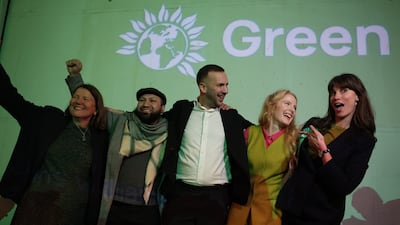
Green Party leader Zack Polanski and Green Party winning candidate Hannah Spencer celebrate after the vote count for the Gorton and Denton by-election in Manchester. EPA -
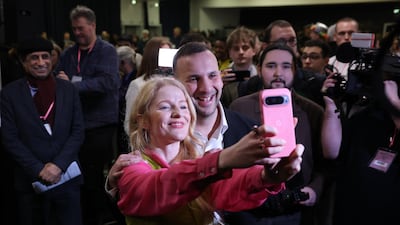
Ms Spencer and Mr Polanski take a selfie. EPA -
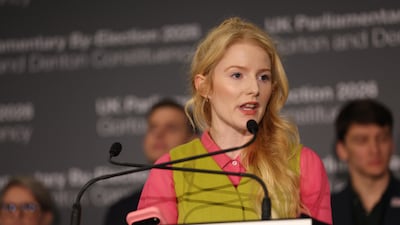
Ms Spencer speaks after the vote count. Getty Images -
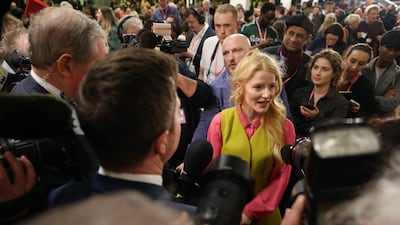
Ms Spencer speaks to the gathered media. Getty Images -
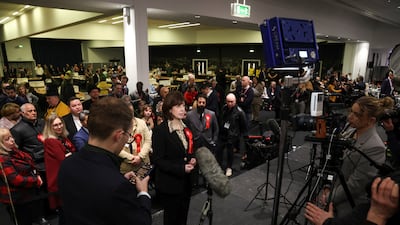
Deputy Labour Party leader Lucy Powell speaks to the media. Reuters -
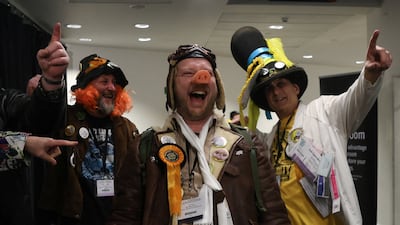
The Official Monster Raving Loony Party candidate Sir Oink A Lot attends. Reuters -
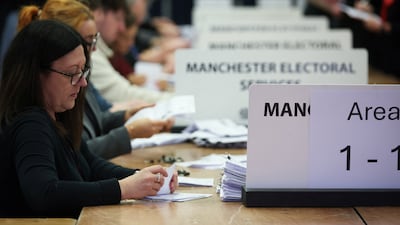
Votes are counted. Reuters


People and planet
Key to the Greens' philosophy is that politics should serve people and the planet before profit.
Its economic policies call for rapid decarbonisation, renewable energy investment and are very much against fossil fuels with a dramatic shift to wind, solar and tidal renewables while phasing out nuclear power.
Economically, they want a wealth tax on assets over £10 million, higher income tax rates for top earners, plus a £15 minimum wage ($20) and a shorter working week.
However, their foreign policy raises eyebrows with withdrawal from Nato and ending UK’s nuclear deterrence as well as rejoining the EU as the headlines. They also promise to abolish the British monarchy.
What now, Starmer?
The result draws even greater attention to the usually mundane local elections in May, asking the question of can the Green repeat the performance in taking London, given the party is more popular in the south than the north?
In what has been arguably the most significant by-election in decades, it should not be forgotten that the initial political intensity came from Mr Starmer blocking the popular Manchester Mayor Andy Burnham from standing for Labour.
As an MP he would have been a clear challenger for the Labour leadership but the now unanswerable question will be, would Mr Burnham have been able to hold back the Gorton Green tide?