British MPs are facing calls to remove Andrew Mountbatten-Windsor from the line of succession to the throne following his arrest for alleged misconduct in public office.
He is currently eighth in line to the British crown but some MPs have called for his succession rights to be revoked and for him to become just “a citizen”.
The king's brother was taken into custody on Wednesday on suspicion of misconduct in public office, then released, following allegations that he shared sensitive information with convicted paedophile Jeffrey Epstein during his time as the UK’s trade envoy.
Mr Mountbatten-Windsor, who is the first senior royal in modern history to be arrested, was held for around 11 hours on his 66th birthday before he was released under investigation by Thames Valley Police. He was later pictured looking drained and exhausted, slouched in the back of a vehicle leaving Aylsham police station.
Searches of his former home in Berkshire are continuing.
On Friday, detectives urged his former close protection officers to “consider carefully whether anything they saw or heard” is relevant to their investigation into paedophile financier Jeffrey Epstein and his associates. The Metropolitan Police said it was also working with counterparts in the US to establish whether London airports had been used to “facilitate human trafficking and sexual exploitation”.
Mr Mountbatten-Windsor's place in the line of succession is something Parliament “is going to have to consider when the time is right”, Sir Ed Davey has said.
The Liberal Democrat leader said the monarchy will want to ensure the former prince cannot become king.
An Act of Parliament would be required to remove Mr Mountbatten-Windsor from the line of succession.
“The most important thing right now is that the police be allowed to get on with their job, acting without fear or favour,” Sir Ed said.
“But clearly this is an issue that Parliament is going to have to consider when the time is right, naturally the monarchy will want to make sure he can never become king.”
Rachael Maskell, the Labour MP for York, said that “time and time again, we have seen that Andrew has been conservative with the truth”.
She argued that his role as a Counsellor of State should also be reconsidered as, in the absence of the monarch, they are empowered to carry out certain official functions on the sovereign’s behalf.
“All of these titles and positions need to be addressed, so we are just left with Andrew the citizen, and a citizen that is fully accountable,” she said.
Green Party leader Zack Polanski described the situation as “pretty awful” and called for a full statutory inquiry “into public figures from institutions, where crimes have been committed – if they’ve been committed – what we knew, what other people in those institutions knew and, where necessary, to make sure that the appropriate people are removed”.
Mr Polanski said he did not believe the country should have a monarchy.
It is understood the Crown Prosecution Service (CPS) are yet to provide any “early investigative advice” to the force. On Friday, a helicopter circled Royal Lodge in Windsor and unmarked vans, believed to be police vehicles, entered the grounds throughout the morning.
A police presence remained at the Sandringham Estate but searches of the former prince's Norfolk home concluded on Thursday.
He became the UK’s special representative for international trade and investment in 2001. He stepped down in 2011 amid the furore over his friendship with paedophile Epstein.
Mr Mountbatten-Windsor was born second in line to the throne, but has fallen behind Prince William and his three children and Prince Harry along with his two children. His daughters, Princess Beatrice and Princess Eugenie, are currently ninth and 12th in line, respectively.

Removing him from the succession would require a formal act of parliament similar to the process used by King Edward VIII in the Declaration of Abdication Act 1936.
A bill would be introduced to amend the line of succession, probably specifically naming him, and potentially his descendants, for removal.
The government has not said it has any immediate plans to introduce such legislation.
-
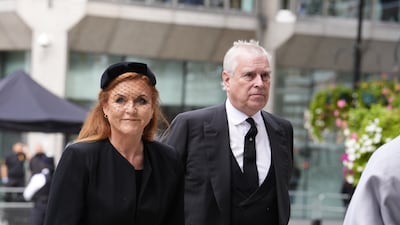
Sarah, Duchess of York, and the then-Prince Andrew, Duke of York, arrive for a service at Westminster Cathedral, London, in 2025. All photos: Getty Images -
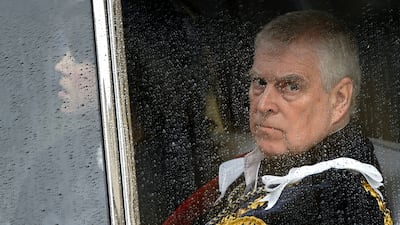
Prince Andrew leaves Westminster Abbey after the coronation of King Charles III and Queen Camilla in 2023 -
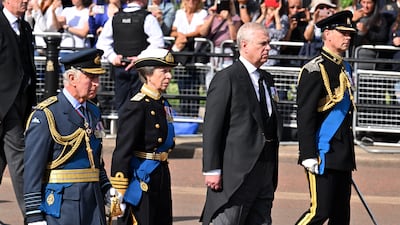
From left, King Charles, Princess Anne, Prince Andrew and Prince Edward walk behind the coffin during the procession for the lying-in-state of Queen Elizabeth II in London in 2022 -
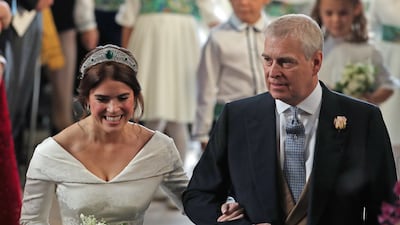
Princess Eugenie walks down the aisle with her father for her wedding to Jack Brooksbank at St George's Chapel, Windsor Castle, in 2018 -
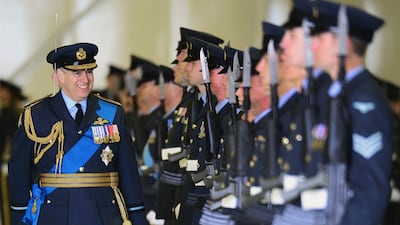
Prince Andrew inspects Royal Air Force personnel from 617 squadron the Dambusters at the RAF Lossiemouth base in Scotland in 2014 -
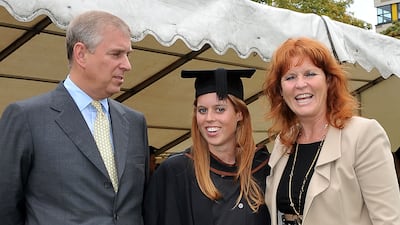
Prince Andrew and Sarah with their daughter, Princess Beatrice, following her graduation ceremony at Goldsmiths College, London, in 2011 -
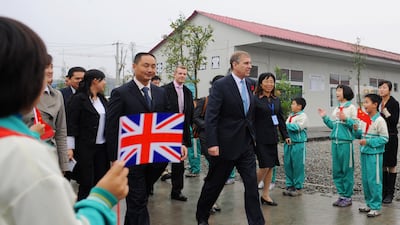
Prince Andrew during a visit to China in 2008 -
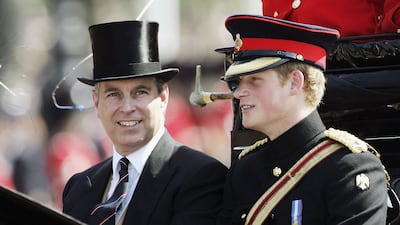
Prince Andrew and his nephew, Prince Harry, leave Buckingham Palace by carriage for the annual Trooping of the Colour ceremony at Horse Guards Parade, central London, in 2006 -
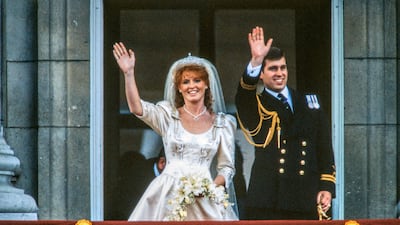
The just-married royal couple Sarah Ferguson and Prince Andrew wave from the balcony of Buckingham Palace, London, in 1986 -
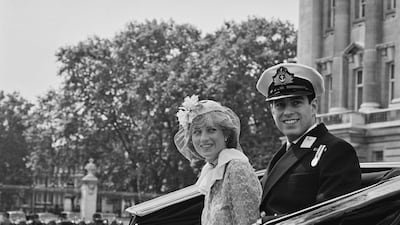
Lady Diana Spencer, who was engaged to Prince Charles at the time, and Prince Andrew in a carriage during the Trooping The Colour ceremony at Buckingham Palace in 1981 -
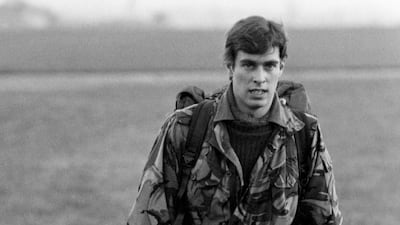
Prince Andrew during parachute jump practice at Brize Norton in 1978 -
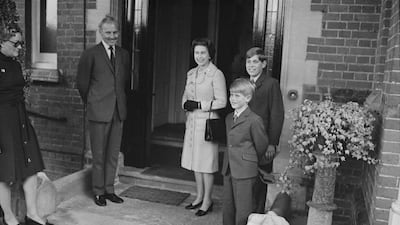
Queen Elizabeth II with her sons Prince Andrew and Prince Edward on the latter's first day at Heatherdown Preparatory School, near Ascot, in 1972 -
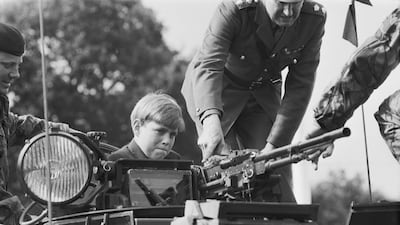
Prince Andrew attends a Battle Royal review of the troops of the Household Division, in Aldershot, 1971 -
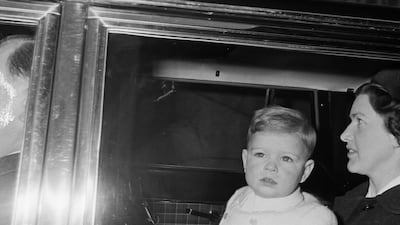
Prince Andrew and his nanny in a car at Liverpool Street Station, London, 1962


Last year, Ms Maskell proposed a legislative change that would give King Charles III the power to remove titles either following a recommendation from parliament or at the request of the title holder. Her motion stalled after the government declined to allocate time for debate in the House of Commons.
The former duke of York stepped back from royal duties and relinquished his military affiliations and royal patronages following long-standing controversy over his association with Epstein. He has consistently denied any wrongdoing.
According to documents released by the US Department of Justice, Mr Mountbatten-Windsor appeared to forward reports of official visits to Hong Kong, Vietnam and Singapore to Epstein.
One email from November 2010 was allegedly forwarded to Epstein minutes after it was sent to Andrew by his then special adviser, Amir Patel. Another message the following month appeared to show that a confidential investment brief concerning reconstruction efforts in Afghanistan’s Helmand province had also been shared.

US attorney Gloria Allred, who has represented many survivors of Epstein’s abuse, noted the speed with which authorities appeared to act on allegations concerning state or financial matters compared with claims of sexual abuse.
“The state is acting quickly,” she said, “but there still has not been any action on the part of the police on allegations that Andrew has committed crimes against women.”
However, she added that Britain had shown greater willingness than the United States to pursue accountability among powerful figures linked to Epstein.