The British Museum has contacted Palestine’s ambassador to the UK to reassure him that the word Palestine had not been expunged from the museum, a source told The National.
The museum’s executive director Nick Cullinan spoke with ambassador Husam Zomlot on the phone on Monday after reports circulated that the Palestine labels for artefacts had been removed following pressure from the British charity UK Lawyers for Israel (UKLFI).
Some labels and maps in the Middle East galleries have been amended to show ancient cultural regions, and use terms such as "Canaan" which the Museum believes are more relevant for the southern Levant in the later second millennium BC. The labels were replaced throughout the past year, following a decision made more than a year ago with focus groups, The National understands.

The term Canaan refers to the ancient region. The people who lived there are known as Canaanites.

A British Museum representative rejected claims that the changes were made in response to a letter from UKLFI, which was sent to the museum last week.
"It has been reported that the British Museum has removed the term Palestine from displays," the representative said. "It is simply not true. We continue to use Palestine across a series of galleries, both contemporary and historic."

The museum uses UN terminology on maps that show modern boundaries, for example those of Gaza, the West Bank, Israel and Jordan, and refers to "Palestinian" as a cultural or ethnographic identifier where appropriate.
In the Ancient Levant gallery, a pair of dolls in traditional embroidered garments and headwear refers to their "Palestinian traditional dress" and to "rural Palestine of the mid-19th and 20th centuries". The gallery also has a collection of Middle Bronze Age gold jewellery from Tell Al Ajjul, an archaeological site in modern-day Gaza.
It is understood Mr Zomlot has accepted the museum's explanation. The embassy had previously expressed "serious concern" over the reports that the museum had been "pressured into removing, questioning, or restricting the use of the term 'Palestine'".
"Attempts to cast the very name 'Palestine' as controversial risk contributing to a broader climate that normalises the denial of Palestinian existence," it said in a statement. Mr Zomlot had said that “cultural institutions must not become arenas for political campaigns. Palestine exists. It has always existed. And it always will.”
British Museum through the years – in pictures
-
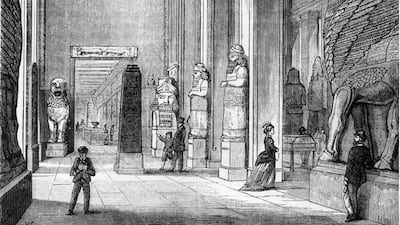
The Nineveh Gallery at the British Museum in London in 1852. All photos: Getty Images -
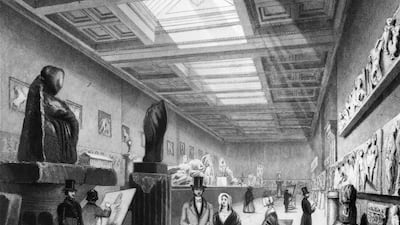
The Elgin Room at the British Museum in 1840 -
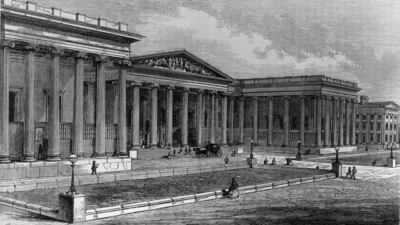
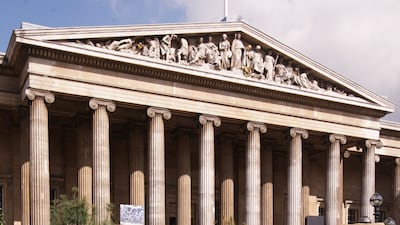
The neo-classical exterior of the British Museum in 1865 -
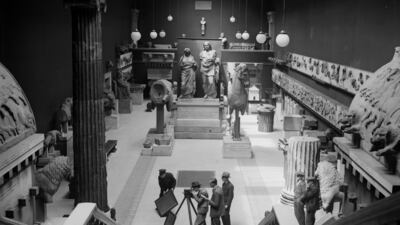
Filming takes place in the British Museum in 1928 -
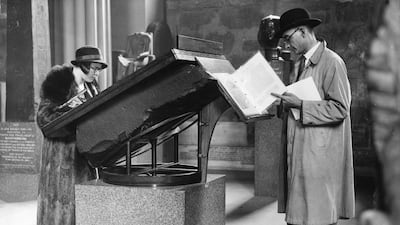
Visitors reading information concerning the Rosetta Stone, from the top of the stone itself, in the Egyptian Gallery in 1932 -
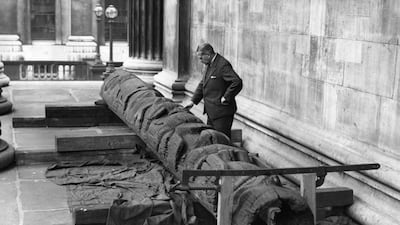
A man examines a totem pole which was purchased from a village in British Columbia and brought to the museum in 1933 -
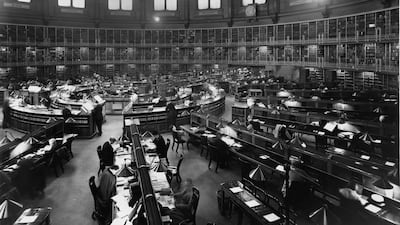
The Reading Room in 1937 -
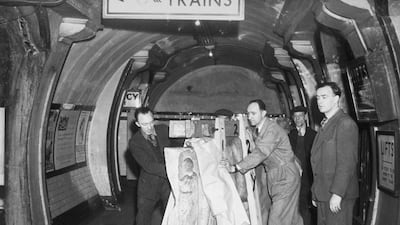
'Operation Elgin' is carried out in 1945, when 100 tonnes of priceless Elgin Marbles were moved from their wartime hideout in Aldwych Tube station to the British Museum -
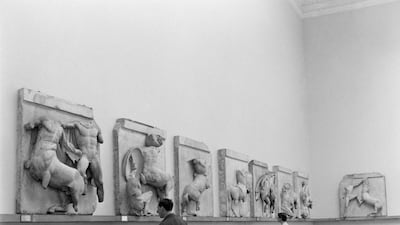
Visitors viewing the Parthenon Sculptures, also known as the Elgin Marbles, in the Egyptian Galleries in 1954 -
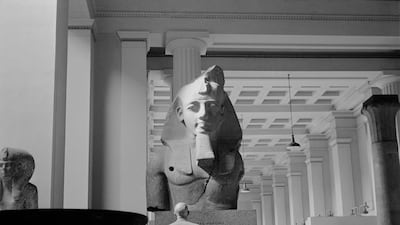
A statue of Egyptian pharaoh Rameses II in 1954 -
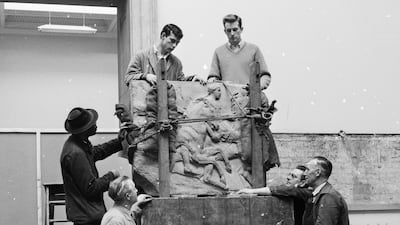
Workmen unload a portion of the Parthenon frieze before affixing it to the wall in the new Elgin Marbles room in 1961 -
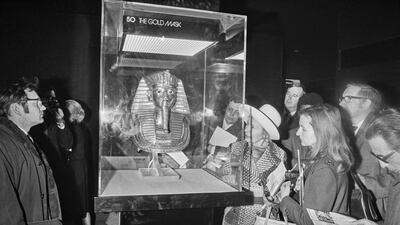
The gold death mask of Egyptian pharaoh Tutankhamun on display in 1972 -
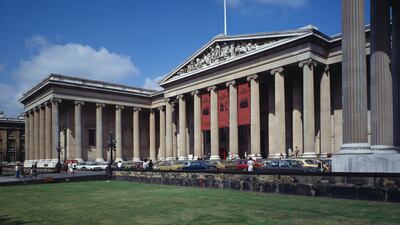
The exterior of the museum in 1980 -
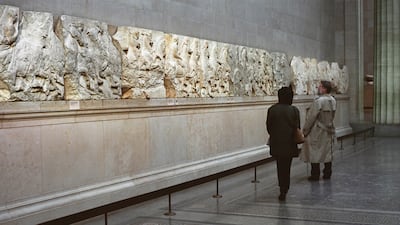
A frieze which forms part of the Elgin Marbles, taken from the Parthenon in Athens almost 200 years ago, on display in 2002 -
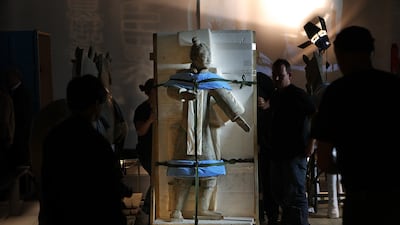
A Terracotta Warrior statue, wrapped in protective foam, is moved into place in the Reading Room in 2007 -
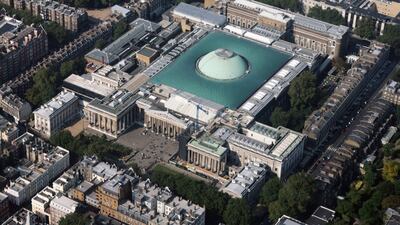
An aerial view in 2008 -
Gardeners from the Royal Botanic Gardens at Kew prune the foliage in an Indian-themed garden on the west lawn of the British Museum in 2009 -
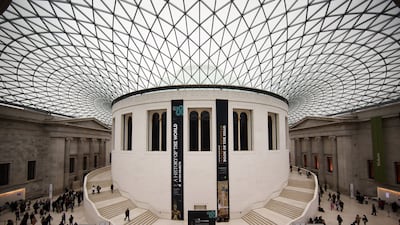
Visitors walk in The Great Court of the museum in 2011 -
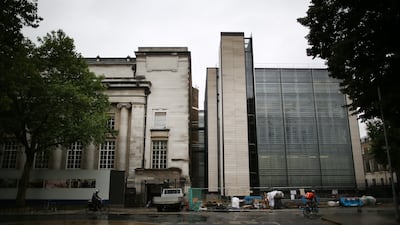
The British Museum's new World Conservation and Exhibitions Centre, right, adjoining the original building, in 2014 -
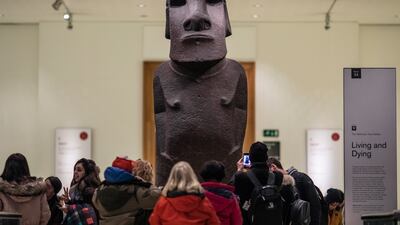
A basalt Easter Island Head figure, known as Hoa Hakananai'a, on display in 2018 -
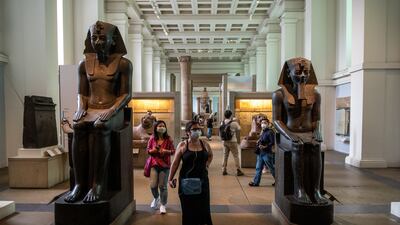
Visitors wearing face masks walk through the Egyptian exhibition as the museum reopened to the public after being closed for 163 days due to Covid lockdowns -
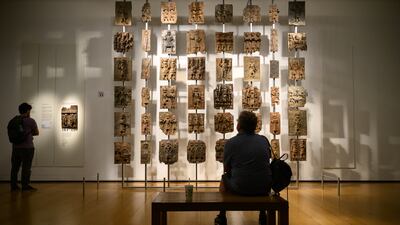
Items from a collection of metal plaques and sculptures taken from modern-day Nigeria in 1897, commonly referred to as the Benin Bronzes, are seen in a gallery of African relics in 2023


The historian William Dalrymple said he had spoken to Mr Cullinan and was "relieved" by what he was told about the changes, which have been made to two labels.
"I've just been chatting with Nick Cullinan, the excellent new director of the British Museum, and I'm very relieved to say that the story ... about the BM cancelling the name 'Palestine' is a complete misrepresentation of the facts," he wrote on X.
Mr Cullinan reportedly told Mr Dalrymple that curators had thought "long and hard" about the decision to amend the two labels, and added that he had been "disgusted" by the false claims.
UKLFI said last week it had "requested that the Museum review its collections and revise terminology so regions are referred to by historically accurate names such as Canaan, the Kingdoms of Israel and Judah, or Judea, depending on the period being described."
"Responding to the concerns, the British Museum’s spokesperson confirmed that the Museum was in the processes of reviewing and updating panels and labels on a case-by-case basis."
UKLFI acknowledged in its statement that some of the revised texts had been installed a year ago.