


An Indian-born businessman is going up against Heathrow Airport in the battle to develop a third runaway and new terminals at the UK's main hub.
Plans submitted on Thursday mean Surinder Arora's £25bn plan could go head to head with Heathrow's own grander £33bn scheme to develop a longer runaway that goes under the M25 motorway.
Transport Secretary Heidi Alexander welcomed the new proposals as part of the government's plan to boost economic growth with large scale infrastructure projects.
To support the decade-long plan, the government is expected to announce an overhaul of the air traffic pathways to eliminate inefficiencies in stacking and flight path patterns.
Officials are reportedly ready to launch an Airspace Design Service to redraw corridors that allow the planes to queue for landing. The corridors were first outlined in the 1950s and there has been a more than 10 fold rise in traffic since that era.
Arora Group said its shorter runway length of 2.8km would deliver a “primary benefit” of avoiding the costly and disruptive need to divert the M25 motorway. It would also challenge the existing operator by constructing and running a new modernised terminal, Terminal Six, located west of the existing Terminal Five.
“Our Heathrow West proposal, which directly meets and supports the United Kingdom’s primary objective of unlocking economic growth at the UK’s only hub airport, with a strong commitment of doing so on-budget and on-time,” Mr Arora said. “The Arora Group has a proven track record of delivering.”
Heathrow Airport has countered with its own proposals and said its expansion would eventually amount to a £49bn investment plan that would see the runways, terminals and transport infrastructure undergoing an upgrade. “We are uniquely placed to do this for the country,” said chief executive Thomas Woldbye. “It is time to clear the way for take-off.”

Its plan promises to deliver an annual passenger footfall of 150m from 84m last year. It said its 3.5km runway would run to the north-west of the existing airport.
It said it would expand Terminal Five to two new arms to the west and north. It would also demolish terminals one and three and redesign three.
Ahead of an official review it offered to discuss with its airlines how a shorter runway would deliver the same benefits as its plan.
Arora has worked with leading engineer Bechtel for a cost estimate of under £25 billion and says its reduced land footprint will lessen disruption to local residents and businesses.
Arora says there would be 276,000 new flights annually to boost the daily traffic to 756,000 aircraft. Under its blueprint the new runway could be fully operational by 2035 and its new Terminal Six would open in two phases, in 2036 and 2040.
-
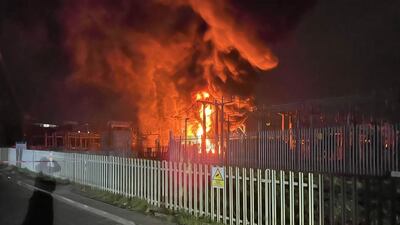
London Heathrow Airport will be closed throughout Friday after an enormous fire at the nearby Hayes electricity substation caused a power failure. PA -

'Heathrow is experiencing a significant power cut,' the airport said on X on Friday. AFP -
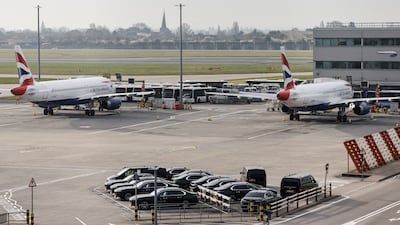
British Airways planes on the tarmac as Heathrow is shut. Reuters -
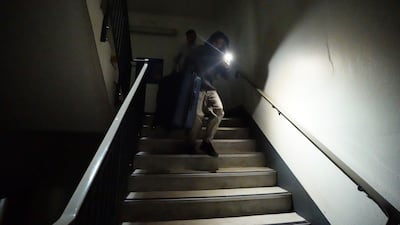
Passengers whose flights were cancelled find their way out of the airport, through unlit stairs with the elevators not working, at Heathrow Terminal 4. AP -
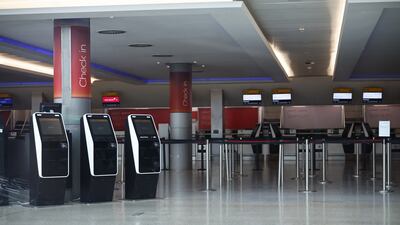
An empty check-in hall at Heathrow. EPA -
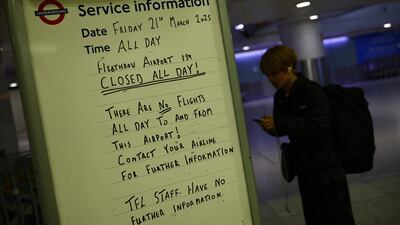
A notice in the London Underground station at Terminal 5. EPA -
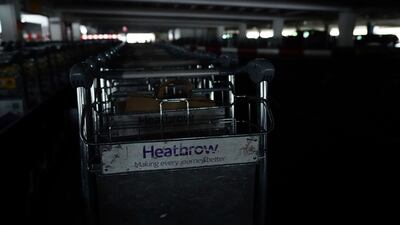
Trollies in the unlit car park at Heathrow. AP -
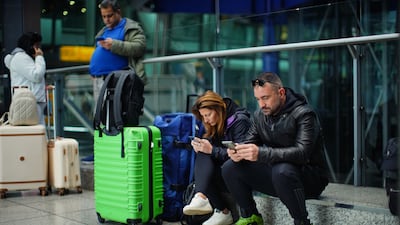
Stranded passengers at Heathrow. PA -
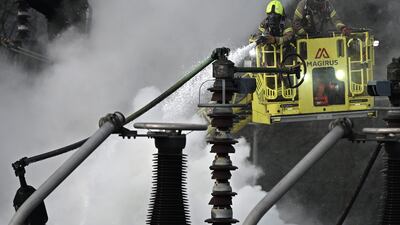
Firefighters attend the scene at the electric substation in Hayes. Getty Images -
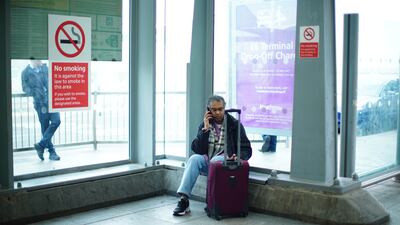
A stranded passenger at Terminal 5 of Heathrow. PA -
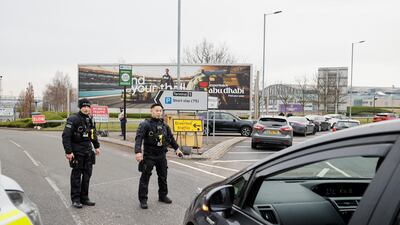
Traffic is diverted outside Terminal 5 at Heathrow. Reuters -

A motorway sign shows that the UK's busiest airport is closed. AP -
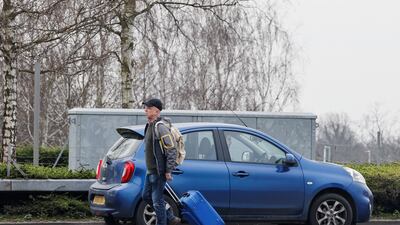
A traveller continues his journey on foot near Terminal 5. Reuters -
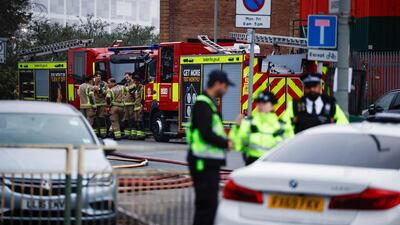
Police officers and firefighters near the scene at the substation in Hayes. AFP -
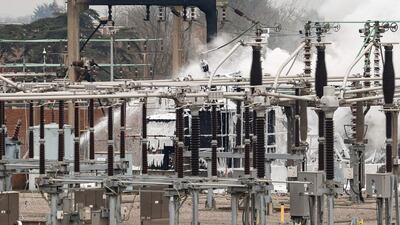
Firefighters douse the flames at the substation. AFP -
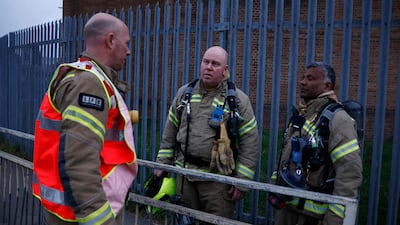
Firefighters in Hayes. AFP -
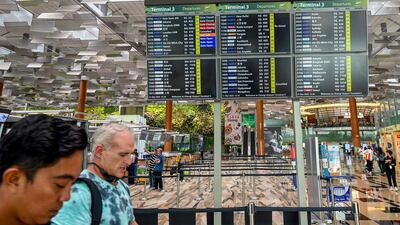
A departure board shows a Singapore Airlines flight to Heathrow as cancelled, at Singapore Changi Airport. AFP -
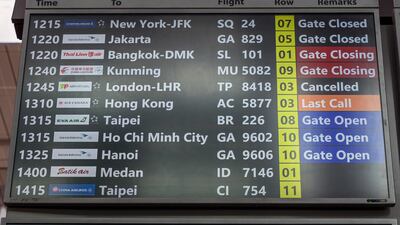
A departure board shows an Air Portugal flight to Heathrow as cancelled, at Singapore Changi Airport. AFP -
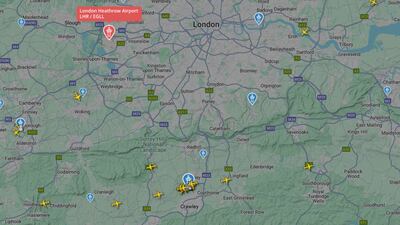
A screenshot showing Heathrow Airport and aircraft clustered at Gatwick Airport, to the south of London. Photo: Flightradar24


Heathrow has suggested that, despite government promises of a revamped planning process, its rival would face judicial review and other time consuming legal hurdles. The government’s ambition of securing planning consent by 2029 and a new runway being operational within a decade is a key factor in the bidding process.
It has also joined with airlines outside its current customer pool like easyJet to suggest new providers would operate from Heathrow for the first time.
-
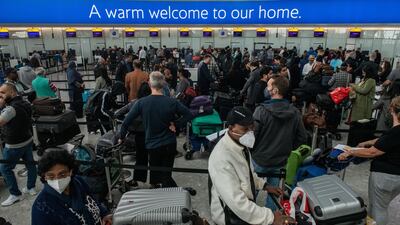
Long queues, cancellations and luggage problems have plagued Heathrow Airport since the travel sector’s comeback from coronavirus restrictions. Bloomberg -

The airport has struggled to cope with a volume of more than 100,000 departing passengers a day, with bags arriving late, queues snaking through terminals and flights being cancelled at the 11th hour. Reuters -
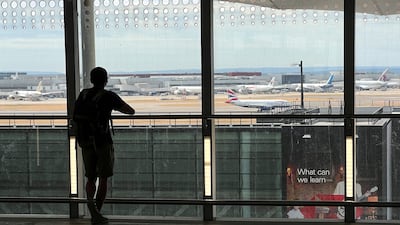
Travelling through Heathrow has been a dire experience for some of late. AP -
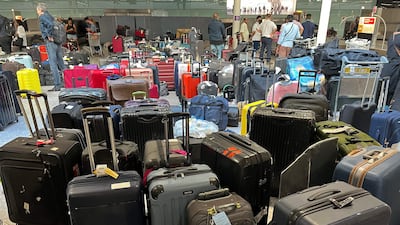
Suitcases uncollected at Heathrow's Terminal 3 baggage reclaim. AFP -
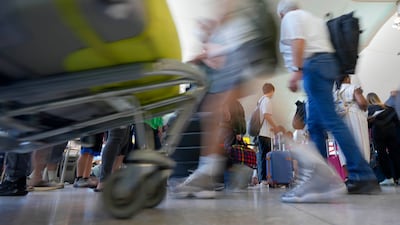
There is a shortage of staff after many people were laid off during the pandemic. AP -
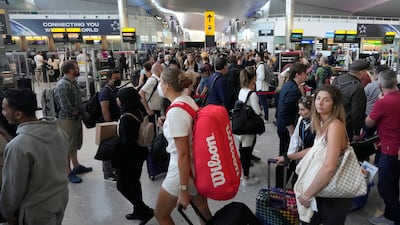
Heathrow rejects the accusation of having failed to prepare, saying it started recruiting extra staff last November. AP -
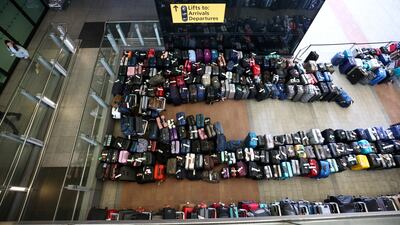
Baggage piles up outside Terminal 2 at Heathrow in June. Baggage issues have bedevilled the airport, with a combination of staff shortages and malfunctioning automated baggage handling systems contributing to the mayhem. Reuters -
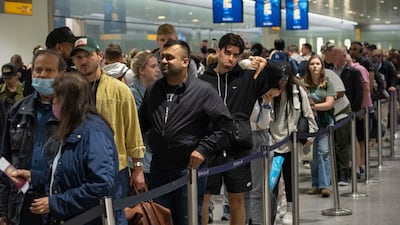
One traveller shows his disappointment while waiting in a long queue to pass through a security check in June. Getty Images -
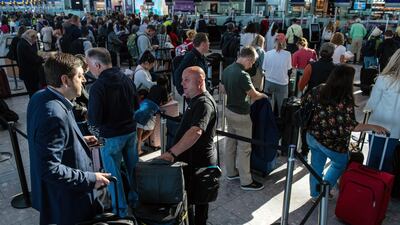
Passengers queue to check in at Terminal 5. Bloomberg -
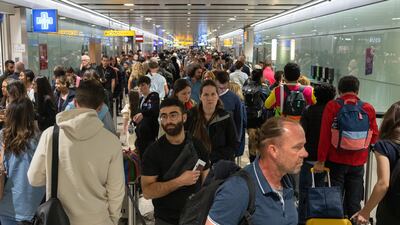
A queue snakes through the airport. Getty Images -
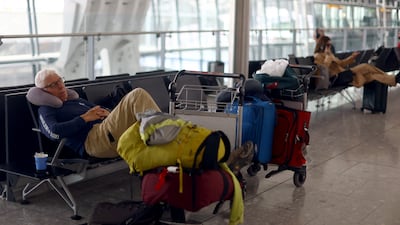
A waiting passenger decides to get some sleep in Terminal 5. Reuters -
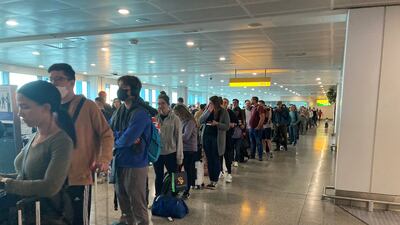
Long queues form through a terminal. PA -
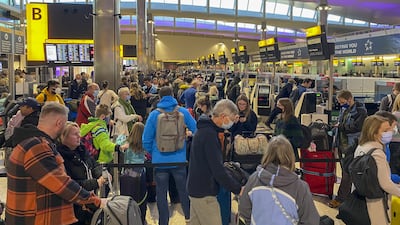
A crowded check in area in Terminal 2 in April. Heathrow rejects the accusation of having failed to prepare, saying it started recruiting months ago. PA -
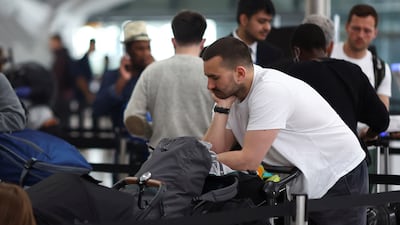
A dejected looking passenger queues for check-in ahead of the Easter Bank Holiday weekend at Heathrow in April. Reuters -
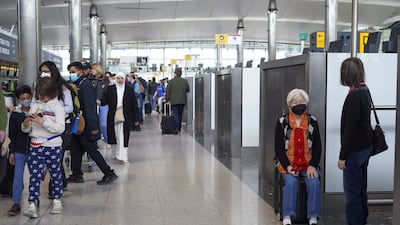
People queuing to go through security at Heathrow. PA -
Queues at arrivals in Heathrow in March. Photo: Sven Kili / Twitter


It has also said it will try to match its connections to UK destinations to that at Amsterdam, which it currently lags by ratio of 23:13.
Other promises include a 50 per cent increase in cargo capacity plus 30 plus new daily flight routes to add to the 230 destinations to over 85 countries.

