


Former UK special forces troops have given accounts for the first time of seeing colleagues commit alleged war crimes in Afghanistan.
More than 30 veterans have given witness accounts to the BBC’s Panorama programme, in which they say members of the SAS, the British Army’s special forces regiment, and its Royal Navy equivalent the SBS, shot unarmed civilians.
It is the first time former members of the armed forces have spoken directly about the allegations, which first emerged in a report by The Sunday Times in 2017.
Panorama also claimed David Cameron, who was UK prime minister at the time some of the war crimes are alleged to have happened, was repeatedly warned by then-president of Afghanistan Ahmed Karzai that British special forces were killing civilians.
One veteran who served with the SAS said killing prisoners "became routine" and described how “they'd search someone, handcuff them, then shoot them" before cutting off the plastic cuffs used to restrain people and "planting a pistol" by the body.
In one instance, he said: "They handcuffed a young boy and shot him. He was clearly a child, not even close to fighting age."

The allegations stretch over more than a decade across the conflicts in Iraq and Afghanistan, far longer than the three years being examined by the public inquiry into alleged war crimes.
For the first time, the SBS is implicated in the most serious allegations, the executions of unarmed and wounded people, with one veteran describing a “mob mentality” and “serious psychopathic traits”.
Another soldier, who served with the SAS, said that if an individual target had been identified after previously being released, “then we'd go in with the intention of killing them, there was no attempt to capture them”.
"Sometimes we'd check we'd identified the target, confirm their ID, then shoot them," he said. "Often the squadron would just go and kill all the men they found there."
The BBC was also told of efforts made by the SBS and SAS to plant weapons on the bodies of people they had killed, which were then photographed. Officers would then help to falsify reports, including false details of how detainees may have posed a threat, to avoid scrutiny.
Mike Martin, a Liberal Democrat MP who served with the British Army in Afghanistan, told the BBC the allegations raised serious questions.
“When we all joined the army and went overseas to serve the Crown, we did it because we were exercising legal judgment and using legal force in a legal way," he said.
-
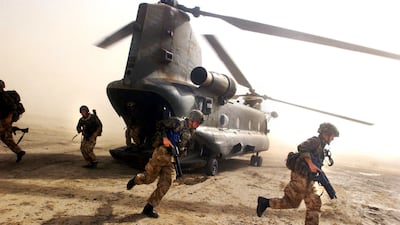
British Royal Marines scramble out of a Chinook helicopter in south-eastern Afghanistan in 2002. All photos: Getty Images -

Royal Marines from Arbroath, Scotland patrol south-eastern Afghanistan in 2002 -
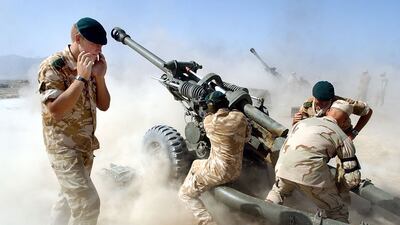
British and US forces fire 105mm artillery rounds at Bagram Airbase in 2002 -

British Royal Marine Commandos at Bagram Airbase in 2002 -
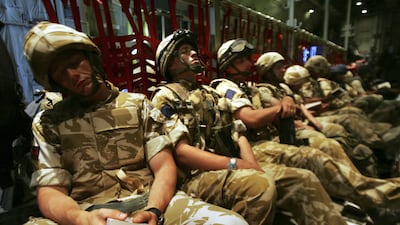
British soldiers rest while arriving for their deployment to Camp Bastion in Helmand province in 2006 -
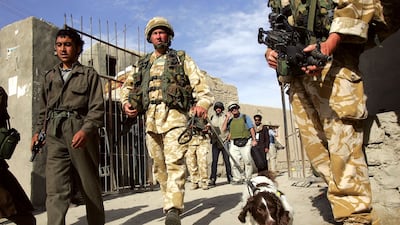
British troops look for explosives with a sniffer dog in Musa Qala in the southern Afghan province of Helmand in 2006 -

Cpt Alex Corbet Burcher patrols with Afghan National Army soldiers in 2007 in Sangin Valley, Helmand -
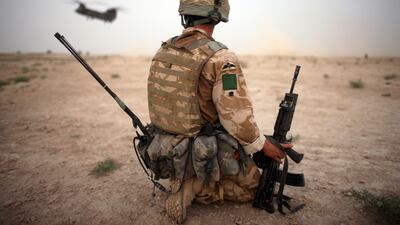
A British Army soldier secures a helicopter landing strip during operation Southern Beast in Maywand District in Kandahar in 2008 -

British soldiers and the Afghan National Police secure the site of a suicide bomb blast in 2009 in Kabul -

A sea of crosses bearing pictures of soldiers killed in Afghanistan is placed in the Royal British Legion Field of Remembrance at Westminster Abbey, London in 2012 -
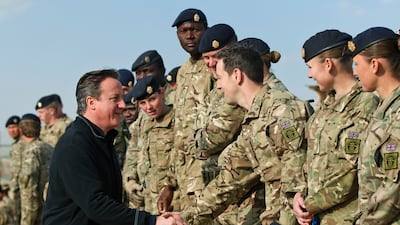
Then-prime minister David Cameron talks to British soldiers during a visit to Camp Bastion in 2013 -
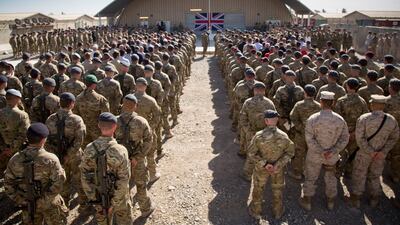
The UK national flag is displayed as British troops gather for a Remembrance Sunday service at Kandahar airfield in 2014 -
British troops attend a sunset flag-lowering and end-of-mission ceremony at Kandahar airfield in 2014


Mr Martin said the elite troops “were casting aside those rules deliberately” and had a “psychotic bloodlust” which, as a former soldier, “lets us down and damages our relationship with the British public, who ultimately want us to exercise legal lethal force in their name”.
Former Afghan national security adviser Dr Rangin Dadfar Spanta told the programme Mr Karzai had “consistently, repeatedly mentioned this issue” to Mr Cameron during his seven visits to Afghanistan from 2010 to 2013.
The role of UK Special Forces Afghanistan was to protect British troops from Taliban fighters and bombmakers. The conflict cost the lives of 457 members of Britain’s armed forces.
Gen Douglas Lute, a former US ambassador to Nato, said Mr Karzai “was consistent with his complaints about night raids, civilian casualties and detentions". He added that it would be "extraordinarily unusual if there were a claim against British forces that the British chain of command was not aware of".
A representative for the former prime minister said "to the best of Lord Cameron's recollection" the issues raised by Mr Karzai were about Nato forces in general, and "specific incidents with respect to UK Special Forces were not raised".
They added that "any suggestion that Lord Cameron colluded in covering up allegations of serious criminal wrongdoing is total nonsense”.
The UK’s Ministry of Defence said it was "fully committed" to supporting the continuing public inquiry into the alleged war crimes.
It urged all veterans with relevant information to come forward but said it was "not appropriate for the MoD to comment on allegations" that may be in the inquiry's scope.

