More than 2.7 billion people globally live in areas vulnerable to coastal or inland flooding, research by risk analysis group Moody’s has found.
The proportion of people exposed to flood risk has also steadily increased since 1975, driven in part by climate change and urbanisation, the research said. The Middle East and South Asia, researched together as one region, was found to be at most risk for floods.
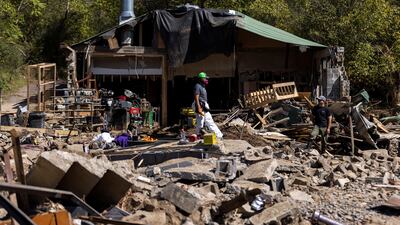
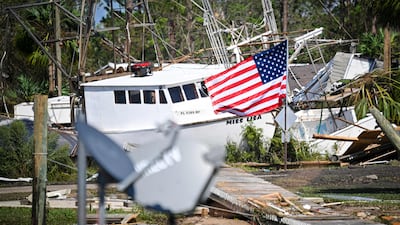
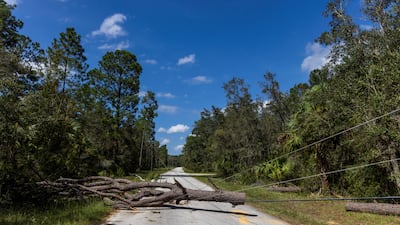
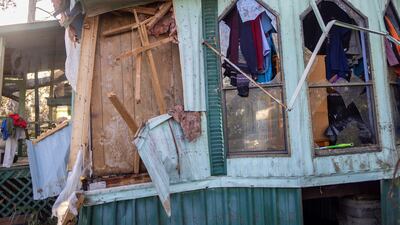
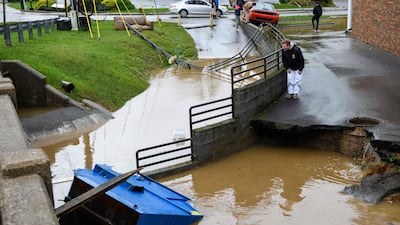
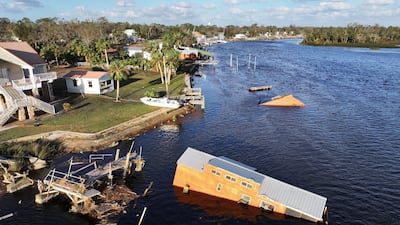
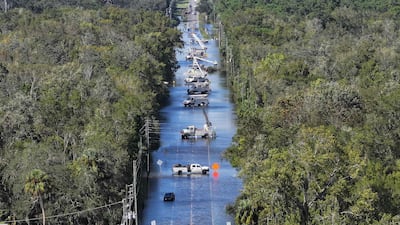
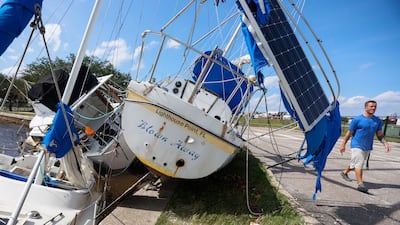
The Moody’s RMS study was published as central Europe reels from floods that caused billions of dollars worth of damage and the US recovers from Hurricane Helene, which spread destruction far inland.
The report took current population numbers and looked at projections for 10, 30, 50 and 100 years. More than one third of the global population live in areas vulnerable to inland or coastal flooding, Moody’s said.
Of those, 2.3 billion people are at risk from more than 10cm of inland flooding according to the 100-year forecast, and 240 million from coastal flooding.
“Flooding is a pervasive and recurrent natural hazard that has far-reaching consequences for both human communities and the environment,” Moody’s said.
“As flooding continues to pose a growing threat, understanding the populations most vulnerable to its effects is paramount for effective disaster management and mitigation efforts.”
More than 70 per cent of the people exposed to coastal flooding risks over the next 100 years are in five countries – India, China, Pakistan, Bangladesh and Indonesia.
“South Asia stands out as the most flood-prone region, with almost 40 per cent of its inhabitants susceptible to inland flooding at the 100-year return period level.” Moody's said. “South Asia also tops the list when it comes to coastal flooding with just over five per cent of its population at risk at the same return period.”
In the 100-year forecast, 25 per cent of the global population exposed to inland floods will be protected by flood defences, and 36 per cent for coastal floods.
Hurricane Helene showed the risk of flooding from major storms hundreds of kilometres away from the point where they first strike land.
Hurricane Helene leaves path of destruction – in pictures
Despite the storm coming ashore in Florida and travelling across all of Georgia – over land that slowed winds speeds – it still hit North Carolina with heavy rain and strong, but not hurricane strength, winds.
The storm dumped more than 35cm of rain over three days on to the western North Carolina, transforming mountainsides into mudslides and creeks into torrents.
Insured losses from floods in central Europe – areas of the Czech Republic, Austria, Poland, Slovakia, Hungary, Germany, and Italy – are could reach $3.9 billion, Moody's estimates. The widespread flooding was triggered by heavy and persistent rainfall which exceeded 40cm in places.

Groom and Two Brides
Director: Elie Semaan
Starring: Abdullah Boushehri, Laila Abdallah, Lulwa Almulla
Rating: 3/5
What vitamins do we know are beneficial for living in the UAE
Vitamin D: Highly relevant in the UAE due to limited sun exposure; supports bone health, immunity and mood.
Vitamin B12: Important for nerve health and energy production, especially for vegetarians, vegans and individuals with absorption issues.
Iron: Useful only when deficiency or anaemia is confirmed; helps reduce fatigue and support immunity.
Omega-3 (EPA/DHA): Supports heart health and reduces inflammation, especially for those who consume little fish.
GAC GS8 Specs
Engine: 2.0-litre 4cyl turbo
Power: 248hp at 5,200rpm
Torque: 400Nm at 1,750-4,000rpm
Transmission: 8-speed auto
Fuel consumption: 9.1L/100km
On sale: Now
Price: From Dh149,900
BMW M5 specs
Engine: 4.4-litre twin-turbo V-8 petrol enging with additional electric motor
Power: 727hp
Torque: 1,000Nm
Transmission: 8-speed auto
Fuel consumption: 10.6L/100km
On sale: Now
Price: From Dh650,000
Mercer, the investment consulting arm of US services company Marsh & McLennan, expects its wealth division to at least double its assets under management (AUM) in the Middle East as wealth in the region continues to grow despite economic headwinds, a company official said.
Mercer Wealth, which globally has $160 billion in AUM, plans to boost its AUM in the region to $2-$3bn in the next 2-3 years from the present $1bn, said Yasir AbuShaban, a Dubai-based principal with Mercer Wealth.
“Within the next two to three years, we are looking at reaching $2 to $3 billion as a conservative estimate and we do see an opportunity to do so,” said Mr AbuShaban.
Mercer does not directly make investments, but allocates clients’ money they have discretion to, to professional asset managers. They also provide advice to clients.
“We have buying power. We can negotiate on their (client’s) behalf with asset managers to provide them lower fees than they otherwise would have to get on their own,” he added.
Mercer Wealth’s clients include sovereign wealth funds, family offices, and insurance companies among others.
From its office in Dubai, Mercer also looks after Africa, India and Turkey, where they also see opportunity for growth.
Wealth creation in Middle East and Africa (MEA) grew 8.5 per cent to $8.1 trillion last year from $7.5tn in 2015, higher than last year’s global average of 6 per cent and the second-highest growth in a region after Asia-Pacific which grew 9.9 per cent, according to consultancy Boston Consulting Group (BCG). In the region, where wealth grew just 1.9 per cent in 2015 compared with 2014, a pickup in oil prices has helped in wealth generation.
BCG is forecasting MEA wealth will rise to $12tn by 2021, growing at an annual average of 8 per cent.
Drivers of wealth generation in the region will be split evenly between new wealth creation and growth of performance of existing assets, according to BCG.
Another general trend in the region is clients’ looking for a comprehensive approach to investing, according to Mr AbuShaban.
“Institutional investors or some of the families are seeing a slowdown in the available capital they have to invest and in that sense they are looking at optimizing the way they manage their portfolios and making sure they are not investing haphazardly and different parts of their investment are working together,” said Mr AbuShaban.
Some clients also have a higher appetite for risk, given the low interest-rate environment that does not provide enough yield for some institutional investors. These clients are keen to invest in illiquid assets, such as private equity and infrastructure.
“What we have seen is a desire for higher returns in what has been a low-return environment specifically in various fixed income or bonds,” he said.
“In this environment, we have seen a de facto increase in the risk that clients are taking in things like illiquid investments, private equity investments, infrastructure and private debt, those kind of investments were higher illiquidity results in incrementally higher returns.”
The Abu Dhabi Investment Authority, one of the largest sovereign wealth funds, said in its 2016 report that has gradually increased its exposure in direct private equity and private credit transactions, mainly in Asian markets and especially in China and India. The authority’s private equity department focused on structured equities owing to “their defensive characteristics.”
The%20Genius%20of%20Their%20Age
%3Cp%3EAuthor%3A%20S%20Frederick%20Starr%3Cbr%3EPublisher%3A%20Oxford%20University%20Press%3Cbr%3EPages%3A%20290%3Cbr%3EAvailable%3A%20January%2024%3C%2Fp%3E%0A
The Matrix Resurrections
Director: Lana Wachowski
Stars: Keanu Reeves, Carrie-Anne Moss, Jessica Henwick
Rating:****
The National's picks
4.35pm: Tilal Al Khalediah
5.10pm: Continous
5.45pm: Raging Torrent
6.20pm: West Acre
7pm: Flood Zone
7.40pm: Straight No Chaser
8.15pm: Romantic Warrior
8.50pm: Calandogan
9.30pm: Forever Young
The%20Mother%20
%3Cp%3E%3Cstrong%3EDirector%3A%3C%2Fstrong%3E%20Niki%20Caro%26nbsp%3B%3C%2Fp%3E%0A%3Cp%3E%3Cstrong%3EStars%3A%3C%2Fstrong%3E%20Jennifer%20Lopez%2C%20Joseph%20Fiennes%2C%20Gael%20Garcia%20Bernal%2C%20Omari%20Hardwick%20and%20Lucy%20Paez%3C%2Fp%3E%0A%3Cp%3E%3Cstrong%3ERating%3A%3C%2Fstrong%3E%203%2F5%3C%2Fp%3E%0A
You might also like to read
Why it pays to compare
A comparison of sending Dh20,000 from the UAE using two different routes at the same time - the first direct from a UAE bank to a bank in Germany, and the second from the same UAE bank via an online platform to Germany - found key differences in cost and speed. The transfers were both initiated on January 30.
Route 1: bank transfer
The UAE bank charged Dh152.25 for the Dh20,000 transfer. On top of that, their exchange rate margin added a difference of around Dh415, compared with the mid-market rate.
Total cost: Dh567.25 - around 2.9 per cent of the total amount
Total received: €4,670.30
Route 2: online platform
The UAE bank’s charge for sending Dh20,000 to a UK dirham-denominated account was Dh2.10. The exchange rate margin cost was Dh60, plus a Dh12 fee.
Total cost: Dh74.10, around 0.4 per cent of the transaction
Total received: €4,756
The UAE bank transfer was far quicker – around two to three working days, while the online platform took around four to five days, but was considerably cheaper. In the online platform transfer, the funds were also exposed to currency risk during the period it took for them to arrive.
Our family matters legal consultant
Name: Hassan Mohsen Elhais
Position: legal consultant with Al Rowaad Advocates and Legal Consultants.
If you go
The flights
There are direct flights from Dubai to Sofia with FlyDubai (www.flydubai.com) and Wizz Air (www.wizzair.com), from Dh1,164 and Dh822 return including taxes, respectively.
The trip
Plovdiv is 150km from Sofia, with an hourly bus service taking around 2 hours and costing $16 (Dh58). The Rhodopes can be reached from Sofia in between 2-4hours.
The trip was organised by Bulguides (www.bulguides.com), which organises guided trips throughout Bulgaria. Guiding, accommodation, food and transfers from Plovdiv to the mountains and back costs around 170 USD for a four-day, three-night trip.
More from Neighbourhood Watch:
How it works
A $10 hand-powered LED light and battery bank
Device is operated by hand cranking it at any time during the day or night
The charge is stored inside a battery
The ratio is that for every minute you crank, it provides 10 minutes light on the brightest mode
A full hand wound charge is of 16.5minutes
This gives 1.1 hours of light on high mode or 2.5 hours of light on low mode
When more light is needed, it can be recharged by winding again
The larger version costs between $18-20 and generates more than 15 hours of light with a 45-minute charge
No limit on how many times you can charge