

Apart from a couple of moments when the accents of Scottish taxi drivers proved too much even for her excellent English, Zahra Hussaini is slowly getting to grips with her new life in Britain.
The 19-year-old arrived from Afghanistan on Monday to resume her medical studies after the Taliban banned women from attending university and secondary school in 2022.
Thanks to the Linda Norgrove Foundation charity, Ms Hussaini is among a group of 19 women medical students who have come to Scotland to resume their studies.
For the next seven years she will be studying at the University of Glasgow, and she told The National she cannot wait to get going.
Speaking outside Parliament in central London, on a day trip to the capital, surrounded by throngs of tourists, cars honking their horns, and red buses driving past, she smiles and admits to culture shock.
“It has been! The way people dress, the cars, the food that people eat,” she said.

The locals in Glasgow have been friendly and she is more or less getting used to the way people speak.
“Two or three times I have heard some, you know, Scottish accents from taxi drivers, and I understood very little,” she said.
From braving attacks on her school, to the crushing disappointment of having the dream of becoming a doctor snatched from her, Ms Hussaini’s road to Scotland has been a hard one.
She explained that her interest in science and also working a local clinic fired her interest in becoming a doctor.
Her hard work paid off and she was able get into university, but that coincided with the Taliban’s takeover and their introduction of repressive measures against women and girls.
Just two terms into her course, she received the devastating news she would have to leave university.
“I remember it was at the end of our second term and we had our final exams and that day I had a very difficult exam so I was studying very hard for it,” Ms Hussaini said.
“I wanted to leave the home to go to university but I received a call from my friend that she was already at the university, and she told me not to come because the door was shut.
“I heard the news at night from social media but I couldn't believe it. At first I was in shock and after that, gradually I came to believe that it is the reality of Afghanistan.”

Ms Hussaini said her situation left her “pretty sad and anxious” but above all “disappointed when I looked at my past and how hard I had worked to improve my English and to study at school”.
Even before the Taliban took over, she said that it was still a struggle to get an education as schools came under attack from the extremists.
She said “we accepted the danger, and we put our life in danger to go to school and study” but “in spite of all the sacrifices that all girls have made there seemed to be no good future”.
Afghan families flee as Taliban takes control - in pictures
-
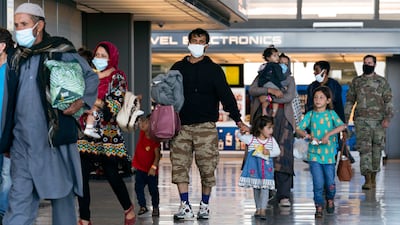
Families who made it out of Kabul walk through the terminal of Washington Dulles International Airport after arriving in the US. AP -
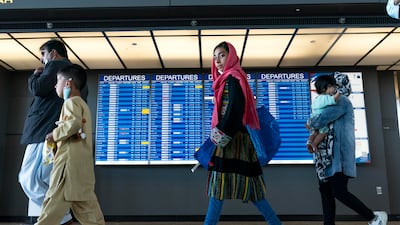
Families who made it out of Kabul arrive at Washington Dulles International Airport in the US. AP -
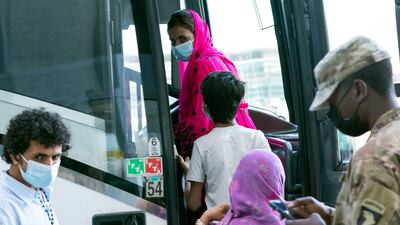
People who fled the Taliban in Afghanistan board a bus outside Washington Dulles International Airport in the US. AP -
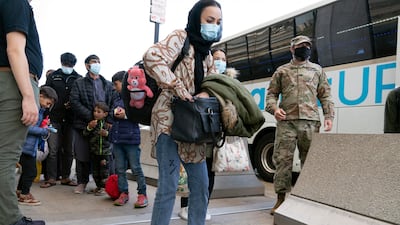
People who successfully escaped the Taliban's capture of Kabul arrive in the US, near Washington DC. AP -
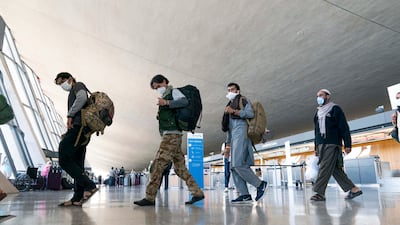
People who fled the Taliban in Afghanistan arrive at Washington Dulles International Airport in the US. AP -
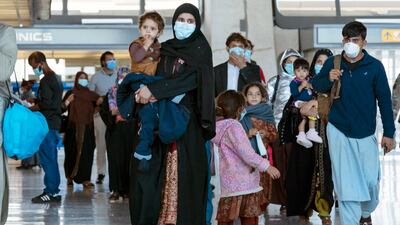
Families who fled the Taliban arrive in the US, near Washington DC. AP -
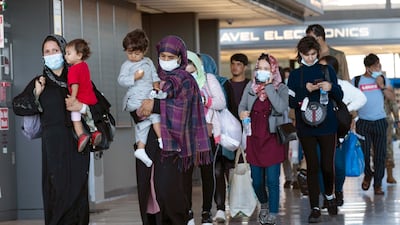
Families flown out of Kabul walk through Washington Dulles International Airport after arriving in the US. AP -

Taliban fighters, wearing the uniform of the former Afghan army, stand guard at a checkpoint in Kabul. EPA -
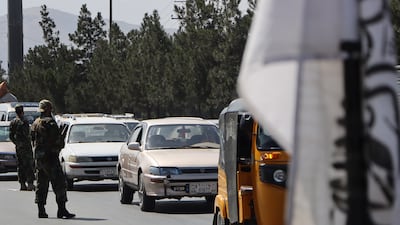
Taliban militants stop traffic at a roadside checkpoint in Kabul. EPA -
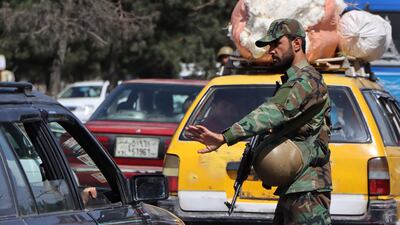
Taliban fighters, wearing the uniform of the former Afghan army, check drivers in Kabul. EPA -
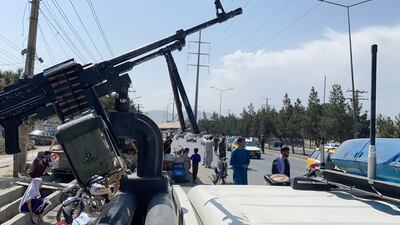
Taliban forces stand guard at a Kabul checkpoint. EPA -
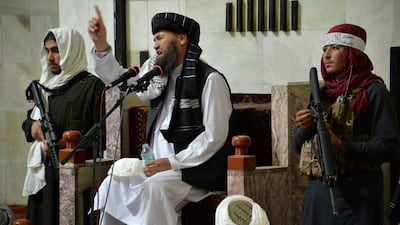
Armed Taliban fighters stand next to a religious leader, speaking during Friday prayers at the Pul-e Khishti Mosque in Kabul. EPA


But a week after the disappointment, she heard that the Linda Norgrove Foundation, named after a Scottish aid worker killed in Afghanistan, was looking for applications from women medical students to continue their education in the UK.
There was still a hard road ahead, though, and Ms Hussaini's initial application was rejected. However, when another student was forced to drop out, she was finally chosen.
She described her parents as people who do not let themselves get excited, but when they heard the news they were “happy, proud and anxious”.
“I was very happy I could not express my feeling with words,” she said. But she misses her parents who have been supportive “and helped me a lot on the journey”.

Meeting other overseas students, from Pakistan and Bangladesh, has helped Ms Hussaini settle in. She has been in touch with fellow medical students and is already a convert to Glasgow, saying “it is much more fun” and a better place to study than the cities where the others are.
However, she has missed the food she is used to, especially her mother's cooking.
Meanwhile, she is looking ahead to a medical career and is thinking about specialising as a surgeon.
“The future is completely unpredictable, and everything might happen, but first graduating from a medical school will be a very long and tough journey, ” Ms Hussaini said.

