

Prostate cancer cases are expected to double between 2020 and 2040, as populations age and life expectancy increases worldwide, a study found.
Annual cases are projected to reach 2.9 million in 2040, up from 1.4 million in 2020, with deaths rising by 85 per cent over the period to almost 700,000 each year.
Low and middle-income countries are expected to experience the highest increase in cases and deaths, due to rising mortality rates compared with most high-income countries, where deaths from the disease have fallen since the mid-1990s.
And because the main risks for the cancer – ageing and a family history of the disease – are unavoidable, researchers warn it will not be possible to avoid the coming surge.
“As more and more men around the world live to middle and old age, there will be an inevitable rise in the number of prostate cancer cases,” said Prof Nick James, lead author of the study, who specialises in prostate and bladder cancer research at the Institute of Cancer Research, London.
“We know this surge in cases is coming, so we need to start planning and take action now.
"Evidence-based interventions, such as improved early detection and education programmes, will help to save lives and prevent ill health from prostate cancer in the years to come. This is especially true for low- and middle-income countries, which will bear the overwhelming brunt of future cases.”
The research was carried out by the Lancet Commission on prostate cancer and will be launched by a presentation at the European Association of Urology Congress, which runs from April 5 to 8.
Prostate cancer is the second most commonly diagnosed cancer in men. According to the NHS, symptoms do not usually appear until the prostate is large enough to affect the tube that carries urine from the bladder. They include an increased need to urinate, straining when passing urine and a feeling that your bladder has not been fully emptied.
However, symptoms of an enlarged prostate do not necessarily mean cancer is present.
Screening for the condition is commonly done by a PSA test, a blood test that measures levels of a protein called prostate-specific antigen (PSA). However, the test often detects prostate cancer that may never cause symptoms and does not need treatment.
There is currently no screening programme for prostate cancer in the UK because the NHS says the benefits have not been proven and the PSA test is often unreliable.
Screening instead relies on "informed choice" PSA testing, which means it is only carried out following a discussion of risks and benefits with a doctor.
The study authors recommend the use of MRI scans in combination with PSA testing to screen men at high risk of the disease, such as those who are of African origin, carry a BRACA2 mutation or have a family history of the cancer in high-income countries.
They say the approach would detect potentially deadly disease while reducing over-diagnosis and over-treatment. However, they caution that MRI scans should not be used alone, since biopsies are the most effective way of identifying aggressive cancers.
The commission said more research was needed into prostate cancer in non-white European men to improve detection and treatment.
Research tends to focus on white European men, despite the risk being higher for black men, particularly those of west African descent. Statistics show they also suffer a higher death rate.
The researchers said cancer screening trials were needed urgently in low and middle-income countries to enable earlier diagnosis, because most men there present with an advanced form.
Low and middle-income countries also require more awareness about the symptoms of metastatic cancer, which can include bone pain, caused by metastatic disease.
The authors suggest that programmes should involve new technology and channels including smartphones, social media and influencers.
“As well as the obvious direct effects on individual men’s health, rising numbers of cases and deaths from prostate cancer could have huge economic and social impacts on families in low-and middle-income countries," said Prof James N’Dow, chairman in surgery at the University of Aberdeen and founder of Horizons Trust and Horizons Clinic in Gambia.
“Men in these countries are very often a family’s main breadwinner, so if they die or become seriously ill, this can lead to families facing major economic hardship.
“By preparing now for the upcoming surge in prostate cancer cases, with a particular emphasis on improved education and earlier diagnosis programmes, many of these harms could be reduced substantially.”
The NHS through the decades - in pictures
-
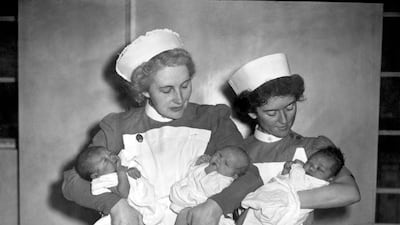
The first babies born on July 5, 1948, the day the NHS was launched in the UK. Getty Images -

People take part in a doorstep survey about the need for a National Health Service in 1944. Getty Images -

The sorting of ballot papers in the British Medical Association to ascertain doctors' views on joining the National Health Service scheme, in April 1948. Getty Images -
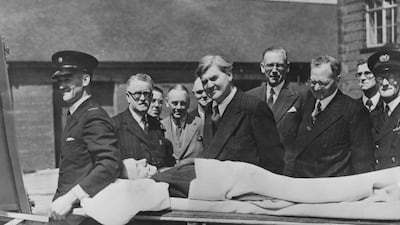
Minister for health Aneurin Bevan watches a demonstration of a new stretcher in Preston, on the first day of the new National Health Service. Getty Images -
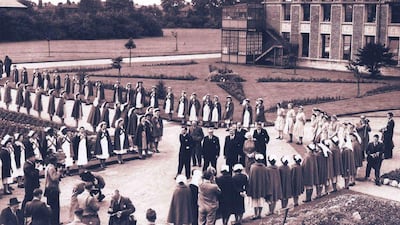
Mr Bevan's visit to Park Hospital, Manchester, now named Trafford General Hospital, on July 5, 1948. PA -

Nurses of Whipps Cross Hospital, in London, singing Christmas carols to one of the patients in bed in 1952. Getty Images -

NHS patients queuing in the rain outside a mobile X-ray unit parked in a street in New Cross, London in 1954. Getty Images -
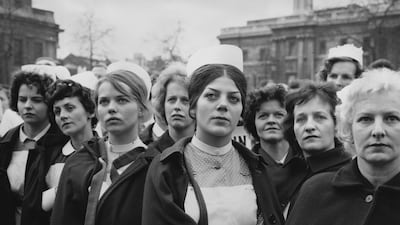
Some of the 8,000 nurses attending a protest meeting at Trafalgar Square, London, in support of their pay claim in 1952. Getty Images -

A nurse in the operating theatre of St Bartholomew's Hospital, London, in 1968. Getty Images -
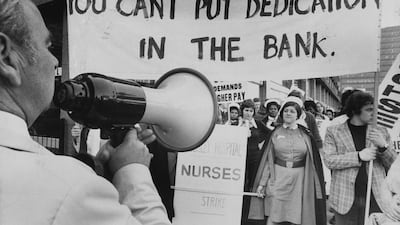
Nurses demonstrating outside the Ministry of Health, London, in 1974. Getty Images -

Demonstrators protesting in London against proposed NHS funding cuts in 1984. Getty Images -
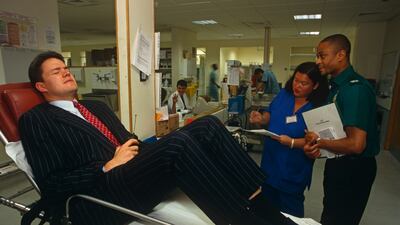
A busy Friday night in the A&E section of the Royal London Hospital in 1998. Getty Images -
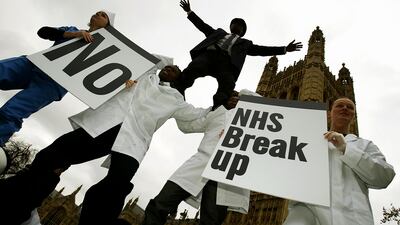
Unison members protest in front of the British Parliament to protest against conditions which will turn the NHS into a two-tier system in 2003. Getty Images -

Work during the construction of Birmingham's Queen Elizabeth Hospital, in 2007. Getty Images -

Performers dance in a scene in tribute of the NHS during the Opening Ceremony of the London 2012 Olympic Games. Getty Images -
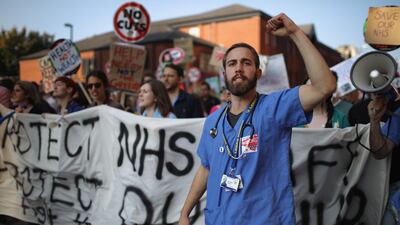
NHS workers take part in an anti-austerity protest during the first day of the 2015 Conservative Party Autumn Conference in Manchester. Getty Images -
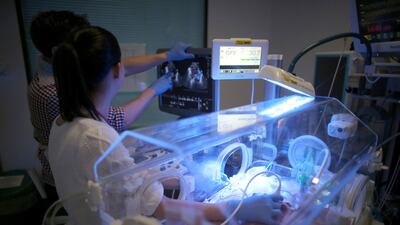
Doctors treat a baby, receiving light therapy, inside an incubator in the Birmingham Women's Hospital in 2015. Getty Images -
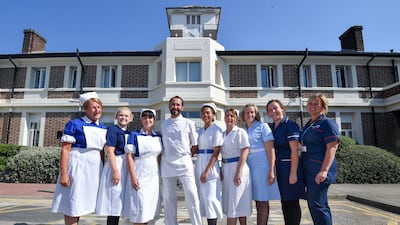
Nurses in uniforms from each decade of the NHS celebrate the 70th birthday of the NHS in 2018. Getty Images -

A nurse enters the Covid-19 Red Zone at Glan Clwyd Hospital in Wales in 2020. Getty Images -

NHS staff applaud at the entrance of the Royal Liverpool Hospital as part of the "Clap For Our Carers" campaign in April 2020. Getty Images -
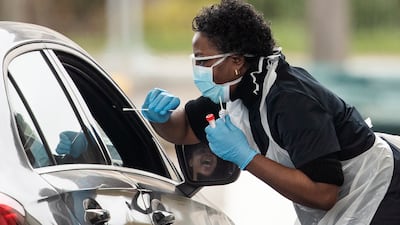
A nurse takes a swab at a Covid-19 drive-through testing station for NHS staff in Chessington in 2020. Getty Images -
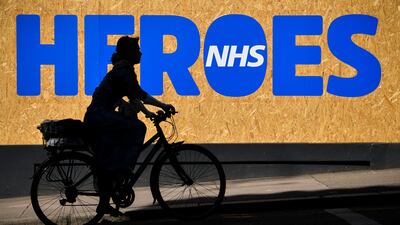
A sign of support for the NHS during the coronavirus lockdown in 2020 in Glasgow. Getty Images -

Domestic caretaker Jim Johnson outside Blackpool Victoria Hospital during the coronavirus pandemic in 2020. Getty Images -
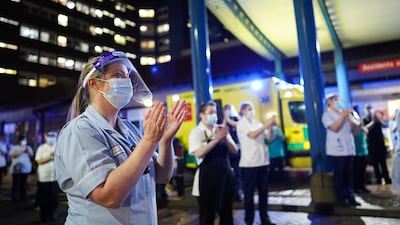
NHS staff members gather outside the University Hospital of North Tees to show their respects and applaud Captain Sir Tom Moore. Getty Images -

NHS staff and key workers queue in the Louisa Jordan Hospital before receiving the coronavirus vaccine in 2021 in Glasgow, Scotland. Getty Images -

NHS staff administer the AstraZeneca Covid-19 vaccine in 2021 in St Helens. Getty Images -

An ambulance paramedic speaks as NHS workers and supporters gather outside Downing Street during strike action in 2022. Getty Images -
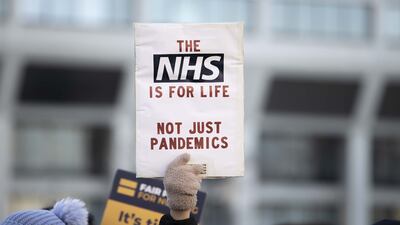
Demonstrators, holding placards and banners, during a strike by NHS nursing staff outside St. Thomas' Hospital in London, in 2022. Getty Images -

Ambulance workers on a picket line during strike action at Chorley Ambulance Station in 2023. Bloomberg -
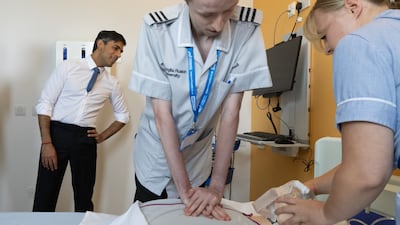
Prime Minister Rishi Sunak is given a demonstration of CPR while visiting the NHS's Addenbrooke's Hospital in 2023. Getty Images



