The head of the UAE's media watchdog has warned of the dangers of making “fear and anger profitable” as authorities grapple with a surge in online misinformation.
Abdulla Al Hamed, chairman of the National Media Authority, said the growing use of artificial intelligence to generate fake videos and images was making it increasingly difficult to separate fact and fiction.
He pointed to the issue being magnified at the height of the Iran war, when members of the public desperate for verified information were met with doctored or misleading footage purporting to show UAE landmarks and residential areas under attack.

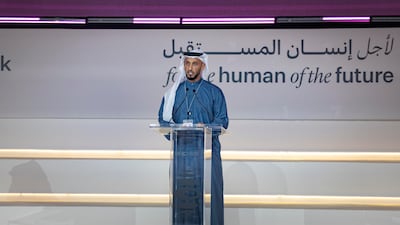
“Videos like this were circulated. Why would somebody create something like this? The motive can be political, but it can be also commercial,” Mr Al Hamed said during an address at the Dubai Future Week event on Thursday.
“If we make fear and anger profitable, we should not be surprised when people find increasingly sophisticated ways to manufacture them.”
He warned that the problem was exacerbated by social media platforms that reward content based on how much attention it attracts, even when it causes fear or spreads false information.
He said it was “easy to blame” the creators of misleading content but we cannot ignore the system that makes it profitable.
He referred to a 2025 investigation into a network of 128 Facebook pages and groups that reached more than 1.6 million people.
The pages shared content about sensitive political and social issues in another country. Although the posts appeared politically motivated, the operation was believed to be driven mainly by money.
Being held to account
Mr Al Hamed questioned how someone living thousands of kilometres away could profit from creating content about issues affecting another community, while facing none of the consequences.
“Today, a single piece of content can cross borders, reach millions of people and generate revenue for someone who remains unknown,” he said.
He said ordinary people were often left dealing with the effects, including parents frightened by what they see online and communities divided by misleading information.
“We have built a system in which profit travels in one direction, while consequences travel in another,” he said.
Digital distortion of the truth
During a keynote address titled The Bermuda Triangle of Media, Mr Al Hamed said three changes were putting public trust in information at risk.
The first was the ease with which anyone could now create realistic content using AI, including videos of people saying or doing things that never happened.
The second was the sheer amount of information available online. When thousands of different versions of the same event appear at once, people can struggle to separate facts from rumours.

“The challenge is no longer finding information, but separating what happened from what people believe happened,” he said.
The third was the way social media companies make money from attention.
Mr Al Hamed said content that makes people angry or afraid often attracts more attention, giving creators a financial reason to produce more of it.
The combination of these three changes was eroding trust, he said.
Who should be held responsible?
Mr Al Hamed said social media companies could not avoid responsibility by blaming users for the content they publish.
He pointed to comments made by Meta chief executive Mark Zuckerberg in 2018 about how posts that came close to breaking Facebook's rules could receive more engagement.
Changes to how platforms promote content could reduce its reach, Mr Al Hamed said.
“Amplification is a decision,” he said.
The algorithms that decide which videos and posts people see are created by companies, he added, and those companies have the power to change them.
He called on social media platforms to stop financially rewarding misleading content and urged advertisers to consider the kind of material their money was supporting.
News organisations also have a responsibility to check information before publishing it.
Mr Al Hamed said the UAE had placed responsibility at the centre of its approach to media, but governments alone could not solve the problem.
“Responsibility cannot belong to governments alone. It belongs to everyone who creates, distributes, finances and governs media,” he said.
The aim was not to stop people from disagreeing or expressing different views, but to ensure that the information reaching the public could be trusted, he added.
He also warned that future generations would have more powerful tools to create content and would need to learn how to distinguish between real and fabricated events.
“Because we are not simply passengers travelling through the Bermuda Triangle of media, we are its architects,” he said.
“The future of media will be determined by what we choose to reward.”

