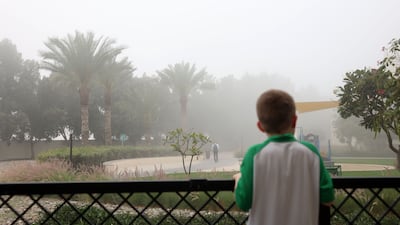

The end of summer is near and the UAE will enter autumn this week, with the September equinox falling on Wednesday. It marks the start of a new season in the UAE and other regions north of the equator.
“The autumn equinox is an astronomical event that marks the moment when the sun crosses the equator,” said Ibrahim Ghonaimat, from the International Astronomical Centre. “At this time, the sun’s rays fall directly over the earth’s equator. It marks the beginning of autumn in the northern hemisphere and spring in the southern hemisphere.”
Day and night are almost equal in length around the equinox.

Cooler in the UAE?
Temperatures do not change suddenly at the autumn equinox, Mr Ghonaimat said. In the UAE, people typically notice more comfortable weather around mid-October, particularly at night and in the early morning.
“In September, we begin to see a gradual seasonal change, with temperatures slowly declining as daylight hours become shorter,” he added.
Nights gradually cool but high humidity can keep conditions warm and uncomfortable, which may continue into November.
The appearance of the Suhail star in UAE skies on August 24 signalled the end of high summer. However, since the star was spotted, the National Centre of Meteorology has reported temperatures consistently above 45°C, along with foggy, humid mornings.
Why is September humid?
The UAE experiences frequent foggy mornings and high humidity during September. This is because the sea remains extremely warm after the long summer, causing large amounts of water to evaporate.
Seasonal winds bring additional moisture from nearby seas, while nights begin to cool slightly, allowing humidity to build up near the ground. This combination creates the sticky, uncomfortable conditions and early morning fog common across Abu Dhabi, Dubai and other coastal areas in September.
Rainy autumn?
“The autumn equinox itself does not directly cause the rainy season” Mr Ghonaimat said. “Rainfall depends on several other complex atmospheric and climatic factors. However, looking at the UAE's climate records from previous years, rainfall events generally occur between November and April.”
Winter clouds are set to arrive in mid-October, with the chance of rain increasing after the middle of autumn, according to Ibrahim Al Jarwan, chairman of the board of directors of the Emirates Astronomical Society and a member of the Arab Union for Astronomy and Space Sciences.
The National Centre of Meteorology reported that a strong El Nino is expected to persist through to February, bringing largely average temperatures and an increased likelihood of rain across the UAE, extending into April 2027.
The average high temperature at the beginning of autumn will be 39°C, dropping to 26°C at night. By mid-autumn, around early November, highs will reach 31°C with lows of 18°C. By the end of the season, highs will fall to 25°C and lows to 13°C, coinciding with the winter solstice on December 22.

