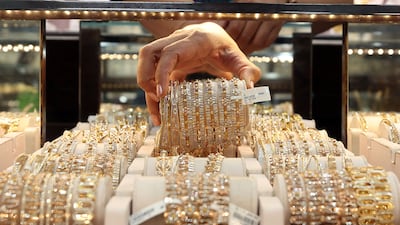

For generations, gold has represented more than jewellery for families in the UAE. It serves as a gift, inheritance and, for many women, a future investment.
However, younger buyers’ relationship with gold is evolving. Though it remains significant, millennials and Gen Z focus less on quantity and more on wearability.
Retailers in the UAE say heavy traditional pieces still have their place, particularly at weddings and other special occasions, but for everyday use, younger customers favour lighter, contemporary pieces that fit their wardrobes, budgets and lifestyles.

Maha Ali, 27, an Emirati citizen in Dubai, purchases gold every few months. She occasionally invests in heavier designs but generally prefers smaller pieces for daily wear.
She learnt the value of investing in gold from her family. "It's something I was taught to do by my family and my mother," she said. "When I think about the different ways I could invest my money, gold is the one that makes the most sense to me. I also like that I can actually wear and enjoy it while still seeing it as an investment for the future."
Amreen Iqbal, founder and creative director of Piece of You in Dubai, has noted a clear increase in younger customers selecting lighter, more wearable pieces. She said that trend extended beyond Gen Z.
"We’re seeing women across generations move towards pieces they can wear daily, layered and styled in different ways,” she said. “Gold is becoming less about something you keep for occasions and more about something you actually live in.”

Lighter chains, rings, bracelets and pendants favoured by younger customers retain gold’s financial and emotional value, while being easier to wear for work, social events and travel.
“I love gold and see value in owning it, but I don’t want my jewellery sitting in a box waiting for an occasion," said Emirati citizen Budoor Almuhairi.
For her, choosing lighter jewellery is not about owning less gold. “It’s about wanting to enjoy the gold I own more often,” she added.
Design is as important as value
That trend is also seen in how younger buyers put greater value in the design of pieces. "They want a piece that reflects their personality, can become part of their everyday wardrobe and still holds the intrinsic value of fine jewellery," Ms Iqbal said.
That has driven demand for versatile jewellery that can be layered, mixed and worn in various settings. Shamlal Ahamed, managing director of international operations at Malabar Gold & Diamonds, said the biggest change the company had seen was the shift towards lighter-weight jewellery.

He said younger consumers increasingly prefer minimalist and everyday-wear designs.
Why 18-karat is gaining ground
Interest in 18-karat lifestyle jewellery is also rising, especially among those seeking contemporary design and durability. The appeal to younger consumers is partly practical. Now that gold prices have made heavier pieces more expensive, a lower-weight 18K design can allow them to own fine jewellery, without the heavy price tag.
But cost alone does not explain the shift.
Young customers "want jewellery that feels personal, that they can wear to work, to brunch, to a wedding and again the next day", said John Paul Alukkas, chief executive of Joyalukkas Jewellery.
Joyalukkas has introduced collections such as Yuva, which features lightweight, contemporary designs, and Joy18, its 18-karat gold line.

Gold prices
Rising gold prices have clearly influenced how younger consumers approach purchases. Chirag Vora, managing director of Bafleh Jewellery, said young, first-time buyers are more cautious when prices are high and often start with smaller pieces. But established customers, especially those purchasing pieces for weddings or milestone family events, remain committed to gold.
The key difference is not young people’s interest in gold, but the size and purpose of their initial purchase. “Young buyers may be buying differently, but gold still has a place in their lives,” said Anil Dhanak, managing director of Kanz Jewels.
New generation, but similar reasons to buy
Despite changing trends and rising prices, the reasons younger buyers purchase gold remain familiar. Family and tradition remain powerful influences.
Sara A, a student in Dubai, began wearing gold to connect with the women in her family. Much of her jewellery has been passed down from her grandmother to her mother and then to her.
She recalls her grandmother recognising a pair of earrings she was wearing at university as the same earrings her mother had worn in college. “It felt like a full circle moment,” she said.
For Sara, those pieces are more than fashion. She views gold as both a family legacy and a source of financial security.
That history has shaped her attitude towards gold. She plans to continue collecting jewellery, valuing it for its emotional significance and as an asset.
Tasmiyah Anwar, a student in Dubai, also prefers 18-karat gold. Her interest in jewellery has grown with time, as she views pieces as both accessories and investments. Most of the pieces she owns are gifts from family and she hopes to buy more once she starts working.

Gold for milestones
Traditional occasions continue to play a central role in gold purchases.
Mr Abdulla said jewellery was still purchased for weddings, engagements, religious and cultural festivals, as well as family celebrations. Mr Vora and Mr Dhanak also said younger buyers increasingly purchase gold to celebrate first jobs and career milestones.
But gold's role is evolving. Whether it is a heavy necklace for a wedding or a delicate chain after a first salary, both can represent the same underlying relationship with gold – something beautiful to own, connected to tradition, but also acting as an investment.
Gold must now fit a lifestyle, reflect personal taste, remain wearable, and make financial sense.
"Gold has a unique advantage – it can be both an emotional purchase and an asset," Mr Vora said. "At today’s prices, however, customers are much more careful about the weight and overall value of their purchase."

