
High taxes and relatively light penalties for smugglers are fuelling the global illicit tobacco trade, experts have said, after Dubai Customs seized more than 70 million cigarettes bound for Europe.
The huge seizure highlighted a black market estimated by the World Health Organisation to cost governments more than $40 billion in lost revenue each year.
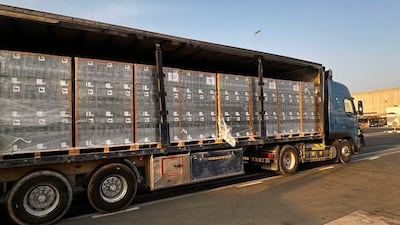
Dubai Customs intercepted 360,500 cartons in shipments linked to one importer, containing almost seven tonnes of tobacco. The consignments, which passed through Dubai’s air cargo centres, had been falsely declared as clothing.

Friedrich Schneider, a retired professor from Johannes Kepler University Linz in Austria, has researched the sector.
“The illegal tobacco trade is strongly growing because most governments strongly increased the tobacco tax,” Mr Schneider said.
'Tip of the iceberg'
Simon Clark, director of UK smokers’ rights group Forest, described the Dubai seizure as “merely the tip of the iceberg”.
He said the illicit trade in tobacco was “fuelled by punitive taxation on tobacco in countries such as the UK”.
Ireland has the highest tobacco taxes in the EU, imposing a levy of at least €10.71 ($12.42) per pack of 20 cigarettes, more than five times as much as Bulgaria, which has the EU’s lowest tobacco taxes, according to the Tax Foundation think tank.

The WHO says the illegal trade makes up as much as half of the tobacco market in some countries.
Dubai Customs said the illicit cigarettes they seized were heading to “a European country” but has not been more specific about the intended destination.
“Not only does the high cost of legal tobacco discriminate against smokers from poorer backgrounds, legitimate traders lose business to illicit traders who don’t care whether the tobacco they are selling is counterfeit or not,” Mr Clark said.
“The reality is that many consumers are far more concerned with the cost than the source of the tobacco they purchase, so the real winners are the criminal gangs and other illicit traders.”
John Waldron, policy and public affairs manager for Action on Smoking and Health (Ash), an anti-smoking organisation, said the main reason illicit tobacco was a concern was that it reduced the financial incentive for individuals to quit smoking and undermined tobacco-control measures.
“The illicit tobacco trade has strong links with organised crime, and sellers often target children, increasing the risk that they will become addicted to smoking,” he said.
“Although the loss of tax and customs revenue is a concern, the economic, health and social care costs of smoking far exceed the revenue generated by tobacco taxes.”
While some reports indicated the illicit tobacco market is growing, Mr Waldron said in the UK it was on a long-term downward trend, with the the number of illicit cigarettes smoking declining nearly 90 per cent since 2000.
“The UK Government estimates that around one in 10 of all cigarettes smoked in 2024/25 were illicit, down from one in five in 2000,” he said.
“This success has been driven by a long-running comprehensive enforcement strategy, alongside substantial declines in smoking prevalence, which has reduced demand for both legal and illegal tobacco. However, illicit tobacco remains a significant challenge.”
'Illicit whites'
It is unclear whether the cigarettes seized in Dubai were counterfeit – illegally produced cigarettes meant to look like legitimate brands – or what are sometimes termed illicit whites: cigarettes made legally but smuggled into other markets.
Cigarette producer Philip Morris International has said illicit whites “cause tremendous tax revenue losses for governments”.
Figures it published in 2020 indicate that illicit whites could account for 48 per cent of the illegal tobacco trade. In the same year, counterfeits were thought to account for only five per cent of the trade.
Reports have indicated that counterfeit cigarettes, often made in China, may have a higher nicotine content and produce more carbon monoxide than legal brands, and contain hazardous impurities.
Contraband cigarettes are another category, consisting of legally produced branded cigarettes that are shipped to another country and sold without the correct duty being paid.
As the full amount of duty is typically not paid, criminals can make significant sums by selling illicit cigarettes at prices well below those of legitimately sold cigarettes.
Also, punishments for smuggling tobacco tend to be much less harsh than those for smuggling weapons, for example, which is another factor that may attract criminals to the trade.
While some blame high taxes for the illegal trade, anti-smoking organisations typically support increases in levies. They say the tobacco industry should pay for the cost of smoking on the public purse in terms of health care and lost productivity. High taxes are also seen as discouraging smoking through the knock-on effect on cigarette prices.
Taxing to save lives
The Campaign for Tobacco-Free Kids, a US organisation, describes tobacco taxes as “the single most effective way to reduce tobacco use and save lives”.
“Increasing tobacco prices via taxes prevents young people from starting, encourages users to quit and reduces consumption among those who continue to use tobacco,” the organisation states on its website.
The weekend’s seizure follows the confiscation of more than 18 million cigarettes by Dubai Customs in August last year. That haul was made up of 12 million smuggled cigarettes and 6.7 million counterfeit cigarettes.
The theft of tobacco is also viewed as a growing problem. Emmeline Taylor, a professor of criminology at City St George's, University of London, who has researched the trade, has said tobacco theft is “a lucrative proposition for organised career criminals”.
“They operate with the knowledge that not only is there a low likelihood of detection, but if they are apprehended, the penalties will likely be minimal if they do not use or threaten violence during an offence,” she said in a 2024 statement.

