

On Sunday afternoons on a street corner outside a barbershop in one of Dubai's oldest neighbourhoods, a group of people are meeting for the same purpose.
They are members of the newly formed Anti-Doomscroll Stroll Club. The group offers respite for people who feel they have been spending too much time looking for updates about the Iran war, causing their anxiety levels to escalate.
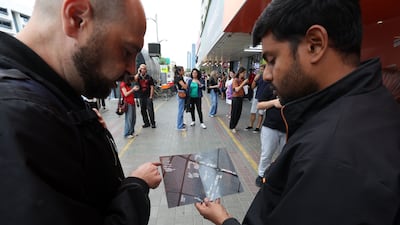
The rules of the club are simple. No phones are allowed on the stroll around the Satwa neighbourhood – strollers find their way around using old-fashioned paper maps. Photographs are allowed as long as they are taken on a camera that is not part of a phone.

The first meet-up was held a few weeks ago, and a small group took part. However, after participants posted about it on social media, the next meeting had a significantly larger turnout of 150.
Faizal Abdul Razak is Dubai born and bred and has called Satwa home for over 20 years. He is also the founder of the creative collective The Karak, from which the Anti-Doomscroll Stroll Club was formed.
“I found myself just sitting at home and constantly doomscrolling on my phone. I assumed everyone was going through this as well, so I spoke to a couple of friends and realised that people are not going outside”, he told The National.
“The initial response was pretty overwhelming. It went from about 50 people on the first walk to almost 150 people going for the second walk.”
Doomscrolling, a word that gained popularity during the Covid pandemic, means continually scrolling on social media, typically with a negative slant. In times such as these, it can have detrimental effects.
When the war started, and everything came to a standstill, Mr Razak fell into a pattern of doomscrolling, constantly checking the news and not leaving the house, and his mental health suffered.
At the start of each stroll, Mr Razak gives participants a map of his neighbourhood marked with nostalgic and meaningful places from his childhood. The map created by Mr Razak takes people on a cultural tour of landmarks and hidden gems around Satwa that hold value to him. Participants do not follow a set route, but are able to explore the area with new friends.
-
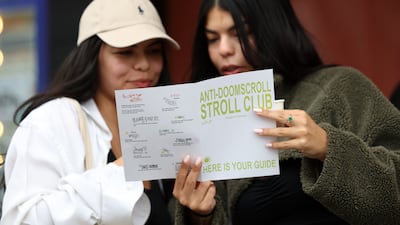
A walking club has been established in Dubai, which is offering people an alternative to spending time scrolling on their phones. All photos: Chris Whiteoak / The National -
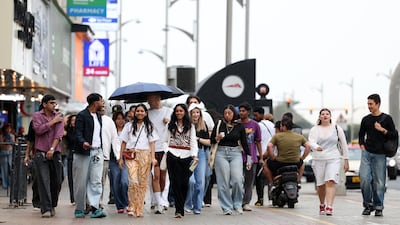
The Anti-Doomscroll Stroll Club was set up by Faizal Abdul Razak -
The Anti-Doomscroll Stroll Club encourages people to walk around one of Dubai's oldest neighbourhoods -
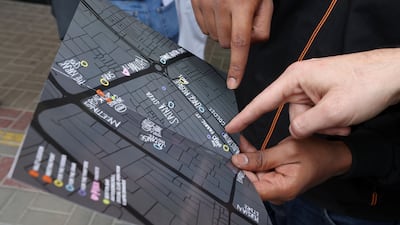
Members of the club use paper maps to find their way around -
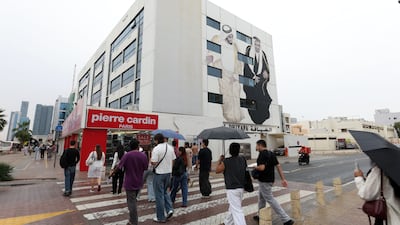
The club is already proving popular -
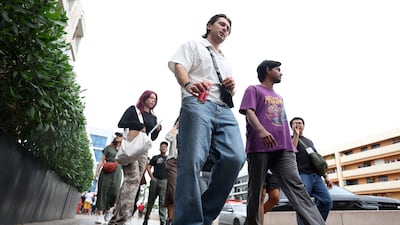
Groups of walkers are encouraged to find the hidden treasures of Satwa -
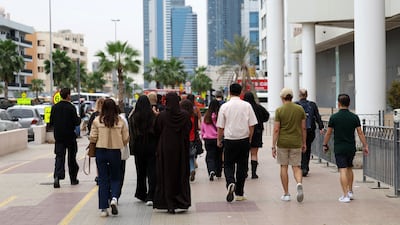
The group has been together for only a few weeks but is already growing in numbers


Sun Bakery is a main stopping point, as are the old bookstores and Ravi restaurant. Karak, fresh from a cafeteria, is a must. The club aims to attract residents who may not have seen this side of Dubai and offers an alternative to the glitz and glamour often associated with the city.
Samer Imam, a Syrian-American creative producer, was intrigued by the name of the club. He said it stuck with him and that the unique idea drew him in “immediately”.
“Doomscrolling is an issue that affects all of us, no matter your generation, age or demographic. I needed to get off my phone and interact with people," he said.
Dubai resident Zaid Kadhim was also attracted by the anti-doomscrolling initiative – he has found himself constantly checking Instagram during the war.
“Especially now that we're working from home, I catch myself doomscrolling between meetings, when I take a lunch break, or even before work,” he said. “I've become super self-aware during the event not to use my phone at all.”
Human connection through the war
Going phone-free lets the strollers connect with open and curious people who want to see the city through a new lens.
“I've met a lot of great people. You start seeing people from different communities – I've met designers, educators, people that work in finance, people in fashion and music and film," said Mr Imam.
In the context of the war, the club provides the perfect escape from uncertainty. The participants believe that this is something that will have a legacy beyond the end of the war, and could even expand to other cities.
“No matter what happens [with the war], I think something like this is needed in any world. I'll be there every week. It can live in different neighbourhoods throughout the UAE and throughout the world," he said.
"There are so many other neighbourhoods here that are just untapped. I believe a lot of people are like me, itching to get off their phones and actually experience life. For me it is about telling the stories of people in Dubai. It's a mix of all of these cultures, and the stories that they have imprinted into the city are important."

