

As it happened: storm brings heavy rain, thunder and lightning to UAE
Rain continued to fall across the UAE well into Friday evening as the low-pressure system over the country began to dissipate.
Heavy showers, thunder, and lightning were reported in Dubai, Abu Dhabi, Ajman and Sharjah, following days of stormy weather.
The National Centre of Meteorology said the country was still experiencing unstable weather.
With widespread flooding across the nation, a major clean-up operation was already under way on Friday and will continue over the weekend, which is forecast to be dry.
Municipal teams are working hard to pump water from key routes and residential communities.
Sharjah city appeared to be the worst hit, in a repeat of the April 2024 deluge. Police were seen helping motorists out of deep water and ditches.
In Abu Dhabi, flooding was particularly apparent in the city centre, although many people were seen walking to work as usual, and enjoying the cooler temperatures.
In Dubai, there was disruption close to the Sharjah border and around Dubai airport, with airlines urging travellers to get to the terminals early.
Umm Suqeim Street, a key artery running from the coast to the inland suburbs, was heavily congested, with slip roads waterlogged.
Travel disruption
Several flights to and from Zayed International Airport in Abu Dhabi and Dubai International Airport were disrupted on Friday morning, as wider regional tensions continued to impact aviation.
Heavy traffic was reported on the two main roads leading to Dubai International Airport after an overnight downpour left roads waterlogged. More rain on Friday triggered warnings from both major airports to passengers, urging them to check with their airline before travelling. This was also the case at Sharjah Airport.
A week of rain
The rainstorm was not as severe as feared, and there was no Gulf tornado or high winds to damage property.
The UAE was on high alert on Thursday, as the major weather front was due to peak across the Gulf overnight into Friday. The National Centre of Meteorology described it as the “final wave” of the spell of the weather front that has gripped the Emirates for most of the week.
-
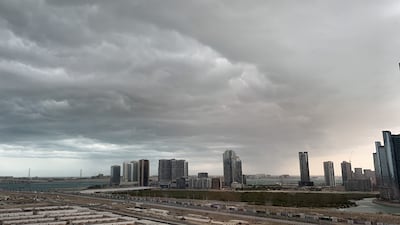
Clouds over Abu Dhabi, as seen from Reem Island. Gareth Cox / The National -

A man walks with an umbrella as heavy rain hits Sharjah. Ahmed Ramzan / The National -
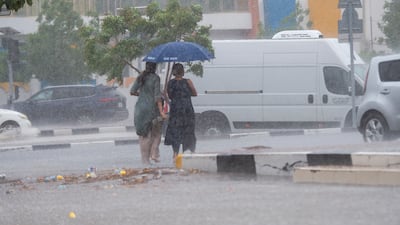
Heavy rain fell across the UAE while safety alerts were issued over more adverse weather to come. Ahmed Ramzan / The National -
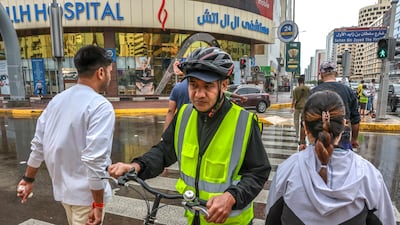
Another day of heavy rain and flooding in central Abu Dhabi as the National Centre of Meteorology forecast downpours, thunder and windspeeds of up to 55kph for March 25. Victor Besa / The National -
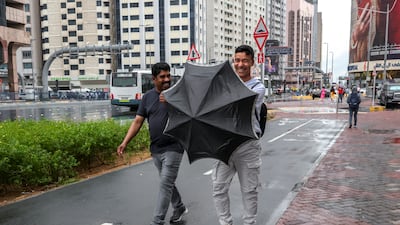
After two days of torrential downpours, residents in the capital were preparing for the rain with waterproof clothing or the ever-reliable umbrella. Victor Besa / The National -
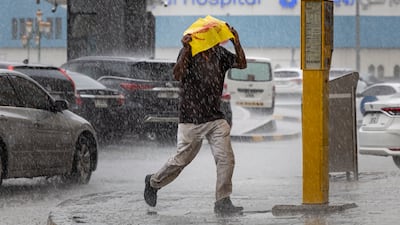
In Sharjah City at Clock Tower roundabout, this resident improvised with a reusable plastic bag to keep the rain off. Antonie Robertson/The National -
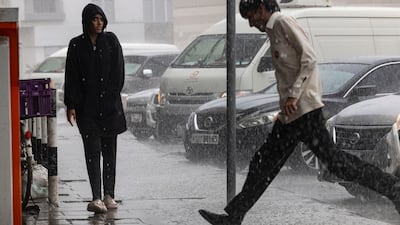
Some residents who braved the rain in Sharjah City chose to move as fast as they could through the raindrops. Antonie Robertson/The National -
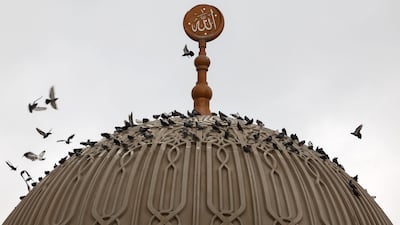
Birds of a feather gather as the rain falls in Satwa, Dubai. Chris Whiteoak / The National -

Covering your property from the rain in Satwa, Dubai. Chris Whiteoak / The National


The Ministry of Human Resources and Emiratisation said the safety of the country's workforce was a “top priority” and urged companies to take precautionary steps to protect employees.
The General Authority of Islamic Affairs, Endowments and Zakat advised worshippers to perform prayers at home while the unstable weather persists and Abu Dhabi Police urged delivery riders to steer clear of the roads for their own safety.
The new normal?
This week’s unstable weather comes almost two years after the UAE experienced its heaviest recorded rainfall. On April 16, 2024, heavy rain disrupted flights, inundated homes and flooded roads, with Dubai and Sharjah particularly badly affected. The state news agency Wam called it “a historic weather event” that surpassed “anything documented since the start of data collection in 1949”.
Authorities have moved to improve drainage systems following the 2024 floods to limit the effects of major rainfall. Dubai, for example, is building a Dh30 billion drainage project called Tasreef, which is due to be completed in 2033.
Scientists believe global warming is making stormy days in the UAE more common and more powerful. Scientists at Abu Dhabi’s Khalifa University and the National Centre of Meteorology found that there are up to two more stormy days per year now compared to 2000.
“With global warming, we know that the air is capable of holding more moisture and [this is] therefore fuelling severe convection and extreme rainfall,” said Dr Diana Francis, head of Khalifa University’s Environmental and Geophysical Sciences (Engeos) Laboratory, and one of the study's authors.

