
Anas Bukhash, one of the Gulf's most recognised social media figures, says he is “praying for peace” after a tumultuous year for the Middle East.
The host of AB Talks said social media content creators have a great responsibility to ensure their facts are solid and that they represent the region responsibly.
Mr Bukhash, 43, uses a lengthy two-hour interview format to get to the heart of celebrities and achievers, in a style that bucks the trend for short, fast-paced, and often clickbait content – and has found an audience of millions.
“It was a very difficult time last year, and I really truly pray and hope that this year brings more peace in the region,” he told The National at the 1 Billion Followers Summit in Dubai.
The litany of conflicts in the Arab world, from the fall of the Assad regime to the war in Gaza and turmoil in Lebanon has changed the media landscape for Middle Eastern content creators.
Mr Bukhash said that he thinks about what is happening in the Middle East when creating content for his podcast.
“Of course it's on our minds, and I think our goal is to still use our platforms responsibly. We always check the sources that we share.”
His commitment to spreading the message through his content to the world is what he calls “the blessing of the internet”.
A 'privilege' to share stories
He has featured guests including Dr Nafea Al Yasi, an Emirati doctor who served in Gaza in January, treating hundreds of patients in the most difficult of conditions.
“Stories like that to bring to life … it's such a privilege and a blessing.”
Speaking about his long-form interview style, he finds audiences want ever greater depth, in a time in which the assumption is that they are time-poor.

“It’s just maybe a human show and the idea was always to discover the human behind the title,” he said.
“That was the goal is if you bring a celebrity or somebody famous or not famous, who are they behind the titles that we give them? And that was always the purpose.”
Breaking with convention
Mr Bukhash decided to experiment with the media landscape by starting AB Talks, where creating a safe space for his guests to express their emotions freely was his weapon to navigating traditional media.
“Everything I didn't like in traditional media, I did the opposite in AB Talks, it's as simple as that,” he said.
Through that, he began posting on social media snippets of his episodes, recognising an opportunity that not many were taking to their advantage.
“I think you have to be at conviction internally to do something that maybe everybody didn't understand back at the time. Six years ago, there weren't as many podcasts around the world, especially in the Arab world,” he said.
A simple mantra that Mr Bukhash goes by is that “content is king”, saying that if the content is good, viewers will watch it, even if it is longer than traditional media is nowadays.
He believes that everyone has a level of authenticity that they can access without replicating other people's work.
“I always push people to be authentic to who they are and not to try to copy. You can be inspired by somebody. But you shouldn't replicate because you're unique on your own.”
To ensure that his viewers feel comfortable expressing themselves on a personal level, Mr Bukhash’s weapon to success is listening.
“It’s very important to listen properly, not just hear. I think when people can feel that you're actually listening and you're not judging,” he said.
He said that many people judge subconsciously, but by being open and listening, his guests can feel comfortable to be honest with him.
Another thing he practices in his career is being as neutral as possible while also being curious to avoid applying his prejudice in situations where learning about his guests unreserved serves him better.
He describes interviews in traditional media to be “very superficial, very shallow, very short”, robbing the interviewee from connecting with their audience.
“You don't want to disconnect the celebrity from another person who's not popular because in the end everybody is a human being. They we all go through joys and sorrows and hard times and good times,” he said.
By bringing a human element to his episodes that surpasses the superficial public persona, Mr Bukhash brings celebrities down to earth to reveal the more relatable person, and brings regular people up, giving them the platform to shine.
“If I could bring a celebrity more down to earth, suddenly you can connect and relate to the person, and now we're pushing a lot on the untold stories that are not famous people, so I always say we brought the celebrity down and we took a normal person up,” he said.
1 Billion Followers Summit – in pictures
-
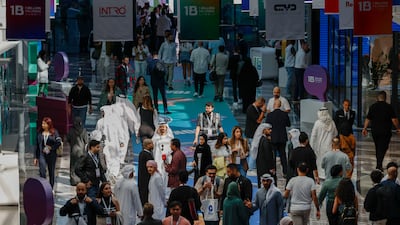
The 1 Billion Followers Summit, the world’s first and largest event dedicated to shaping the content creation economy, got under way in Dubai on Saturday. All photos: Antonie Robertson / The National -
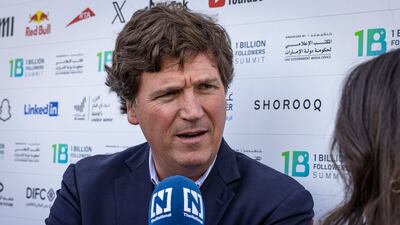
American commentator Tucker Carlson was at the summit -
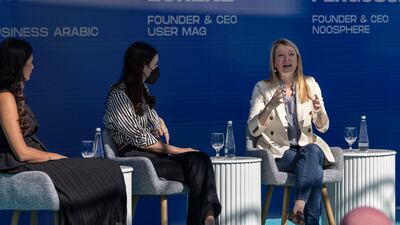
Journalists Taylor Lorenz and Jane Ferguson discuss managing misinformation and disinformation -
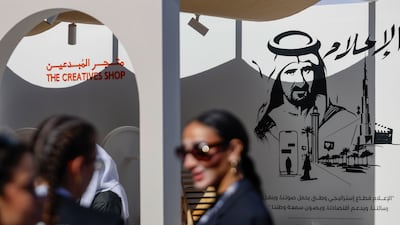
The three-day event is taking place at Dubai's Emirates Towers, the Dubai International Financial Centre and the Museum of the Future -

This year's summit is the third edition -

More than 15,000 content creators and 420 speakers are expected -
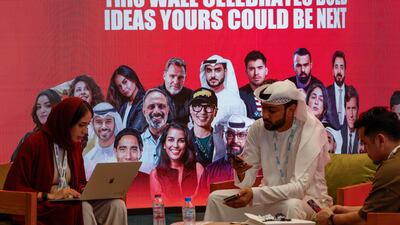
Top influencers and industry experts will also be in attendance -

This year's summit aims to advance the content economy -
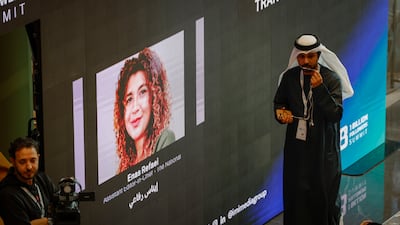
The event will feature more than 420 keynote speakers, including more than 125 chief executives and global experts -

The summit features more than 340 sessions -

Sessions will include keynote addresses, roundtables, interactive discussions and training workshops -

Discussions will focus on trends in digital media, best practices, and advancements in business, economy, investment, and content creation -

The world’s leading social media platforms, including Snapchat, X, YouTube, TikTok, LinkedIn, and Meta will discuss the future of the industry -

Platform representatives, influencers, and content creators will also exchange ideas -

The summit will also announce the winner of the One Billion Award, a $1 million prize deemed the world’s largest and most valuable for content creators -
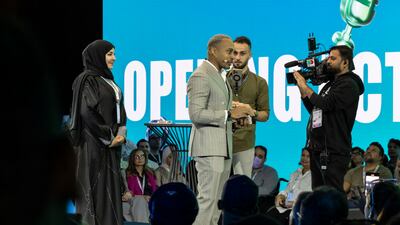
The award aims to celebrate creators whose content inspires positive change, fosters unity, and shapes future generations -
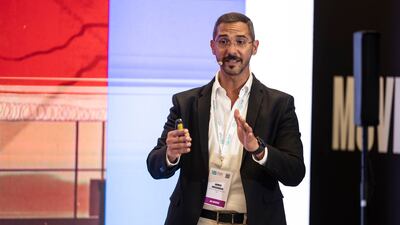
Ahmed Aboushabab, deputy head of creative at IMI and Sky News Arabia, addresses the crowds -

The event is organised by the UAE Government Media Office under the theme 'Content For Good'



