

UAE private education leaders say they remain committed to developing a new generation of Emirati teachers, but face challenges retaining and attracting top talent due to the higher salaries and shorter working days they can be offered in public schools.
Private school groups have embarked on recruitment drives in recent years to bolster their local workforce – including targeting graduates for teaching positions – in an effort to hit government-set Emiratisation goals.
The Nafis programme was introduced in September 2021 with the aim of ensuring 10 per cent of private sector jobs are taken by citizens by the end of 2026.
Lure of public sector
Nicki Williams, director of education in Abu Dhabi at school operator Taaleem, explained the difficulties in retaining Emiratis at charter schools, which are public-private partnership institutions run by private school operators.
“We often lose fantastic teachers that we have invested a lot of time and energy into training to Ministry of Education (MOE) schools,” said Ms Williams. “But at the end of the day, the way we see it is that we've achieved a goal for the country. Our ambition is to train Emiratis and if they move on to teach children in other schools, we've been a part of that bigger picture.

“It is a challenge that we have, because in the MOE schools, they dismiss early and they also pay more … Our staff work until at least 4pm on a daily basis, whereas in the MOE schools, they can often leave by 1.30pm after the pupils have been dismissed.”
Taaleem has 33 schools across the UAE which employ 461 Emirati staff, 177 of whom have been hired in 2024. Ms Williams said about 17 per cent of staff across the charter schools were Emirati – well above the Emiratisation target of 6 per cent by the end of this year.
Investing in the future
“We are very open and transparent from the minute we're doing interviews about the expectation we have [of employees], but we also try to create that balance in the working hours,” said Ms Williams.
Taaleem started a training programme to support early years teachers to focus on specific areas that members of the team were struggling with.
To reduce workload, lesson planning is shared between teachers. Taaleem also has a mentorship programme and makes sure new teachers have a work buddy they can ask questions and share ideas with.
“We always have the dangling carrot of leadership to say you can step into this role. We do retain a number of [staff] because they feel like they've learnt so much at charter schools that they don't want to step away,” she said.
Entry-level public school teachers can expect a salary of Dh4,000 to Dh13,500 which can go up to about Dh23,000 for experienced teachers. Teachers also get housing allowances.
At private schools, salaries vary but typically teachers can expect to make between Dh9,000 and Dh14,000 a month, depending on experience and qualifications. Top-end schools tend to pay between Dh16,000 to Dh17,000 a month – plus a monthly housing allowance of up to Dh6,000.
Dalia Benhida, HR and emiratisation manager at Jumeirah English Speaking School, said: “We don’t hire just to meet a quota. Our goal is to bring in people who are passionate about making a difference.”
She also said that while private sector salaries might be lower in some cases, the school offers significant work-life balance benefits, such as up to 91 days of holidays per year. “We’d rather pay a fine than hire someone who isn’t passionate or committed to their role,” she said, referring to penalties for failing to hit Emiratisation targets.
Teachers struggle with workload
Ahlam Ali Almansoori, a teaching assistant at British International School Abu Dhabi, said Emiratis often work at private schools to gain experience before moving to public schools.
“There is a big difference between private and public [schools]. Working hours aren't flexible, there is a break but they try as much as they can to fill the whole schedule,” said Ms Almansoori. She added that there can also be language barriers in schools largely staffed by non-Arabic speakers.
Asma Albloushi who teaches aviation engineering in Ajman Secondary School, said: "When it comes to private sector, they have less benefits in teaching, they have less salary."
Ali Darwish, an Islamic teacher at a Taaleem school, said: “The abundance of tasks that extend beyond working hours, like daily preparation, continuous grading, and the high number of classes, can make teachers feel exhausted and struggle to balance work with personal life.
“In addition to offering financial and training incentives, we need to provide a suitable working environment for teachers”
Mariam Al Jahoori, an Emirati teacher at the government-run Hamooda Bin Ali School in Abu Dhabi, is happy with her advancement within the public sector.
“The professional development training and other programmes are offered for free to Emirati teachers. Schools support us by giving time off during assessment weeks, ensuring we have the space to advance our education,” she said.
The Nafis programme has sought to address the pay disparity between public and private sector roles by providing monthly salary support of a maximum of Dh7,000 to Emiratis who earn up to Dh30,000 a month.
The UAE also launched a major recruitment drive at the start of 2024 aimed at hiring 1,000 Emiratis in the private education sector annually for the next four years.
Alan Cocker, principal at British International School Abu Dhabi, said key steps are being taken to support the progress of Emirati teachers.
“We provide comprehensive induction programmes to ensure our Emirati employees feel welcomed and fully integrated into our community and their new role within our school.
“By fostering a collaborative environment and celebrating cultural diversity, we empower Emirati staff to achieve their professional goals while contributing to the school's success.”
Emirati teachers key to nation's growth

Hind Al Zarouni, dean of students at the American Academy of Girls in Dubai, said private schools offer an ideal platform for Emirati teachers to help shape young minds.
“By teaching in private schools, Emirati educators can help bridge the gap between global education standards and local cultural values,” said Ms Al Zarouni.
Dr Farah El Zein, assistant professor of special and inclusive education at Emirates College for Advanced Education in Abu Dhabi, said having Emirati teachers promoted linguistic diversity by encouraging the use of Arabic and would help preserve the language, traditional poetry and storytelling unique to the UAE.
Aneesa Bin Haider, a retired public school teacher in Dubai, said: “Teaching is an important national duty that shapes the future. Emirati teachers care more for their students than anyone else, and having an Emirati teacher can inspire students to pursue teaching themselves.”
Top Dubai private schools – in pictures
-
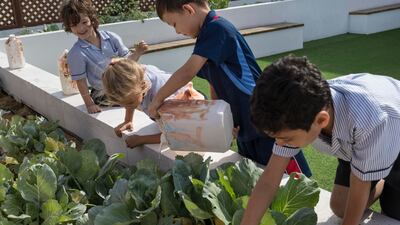
Pupils in the garden at Dubai British School, which has been ranked as outstanding by the KHDA. Antonie Robertson / The National -
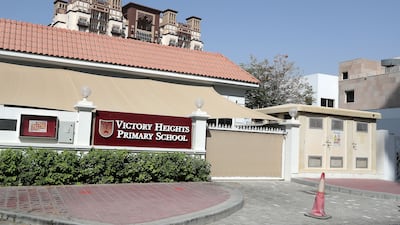
Victory Heights Primary School in Sports City has been steadily improving over the years. Pawan Singh / The National -

Founded in 2015, Dubai British School Jumeirah Park is one of the leading schools in the city. Chris Whiteoak / The National -
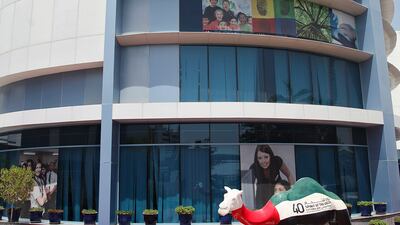
The Gems Wellington International School in Al Sufouh offers both the UK curriculum and the International Baccalaureate diploma programme. Lee Hoagland / The National -
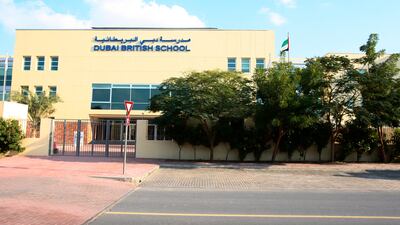
The Dubai British School at Emirates Hills. Jeffrey E. Birteng / The National -
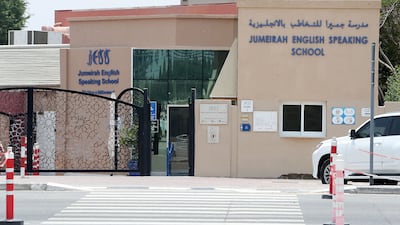
Jumeirah English Speaking School at Al Safa 1 in Dubai. Pawan Singh / The National -

Pupils open their A-Level results at Gems Jumeirah College, Dubai. Chris Whiteoak / The National -
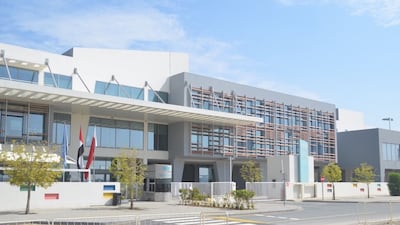
The Nord Anglia International School Dubai. Photo: Nord Anglia International School Dubai -
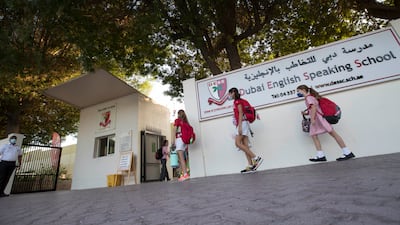
Dubai English Speaking School, one of the oldest in the country, established in 1963. Ruel Pableo for The National -
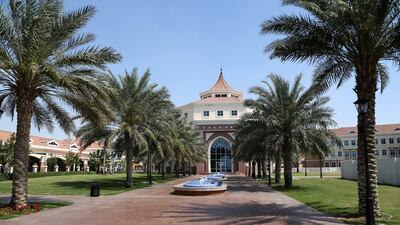
Repton School in Dubai, founded in 2007. Photo: Repton Dubai -
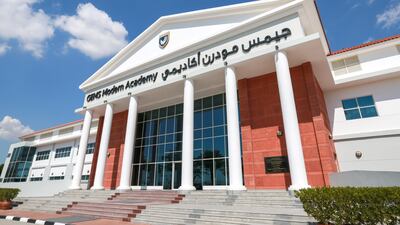
Gems Modern Academy at Nad Al Sheba 3 is the only Indian school rated outstanding in the city. Victor Besa/ The National. -
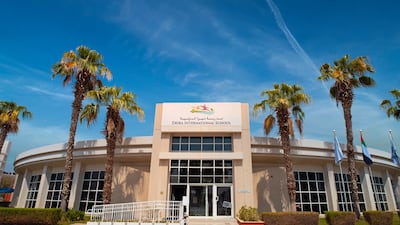
Deira International School is among those ranked as outstanding by Dubai's education authority. Photo: Deira International School -

Safa Community School is one of three schools added to the list of those recognised as outstanding by Dubai's education authority. Photo: Safa Community School -
Kings' School in Al Barsha also achieved the coveted outstanding grade. Antonie Robertson/The National -
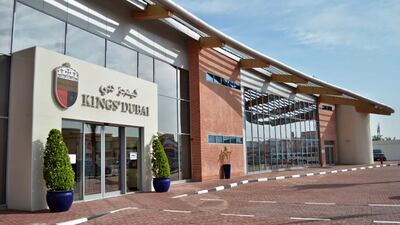
Kings' School Dubai is among the most highly rated in the city. Photo: Kings' School Dubai -

Dubai International Academy in Al Barsha. Chris Whiteoak / The National -
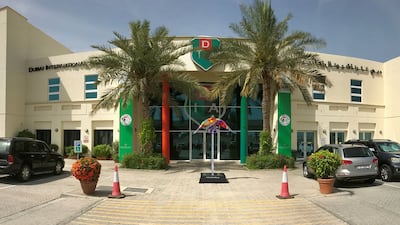
Dubai International Academy in Emirates Hills is also on the list of outstanding schools. -
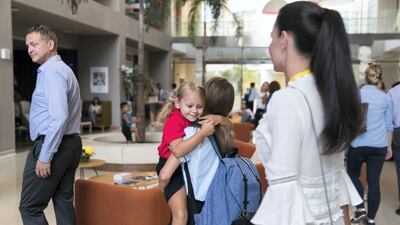
Pupils at Gems Dubai American Academy, the only American curriculum school to be ranked outstanding. Reem Mohammed/The National -
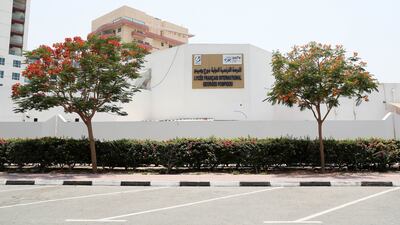
The Lycee Francais International Georges Pompidou school, in Oud Metha, was another new name added to Dubai's most highly ranked schools. Pawan Singh / The National -
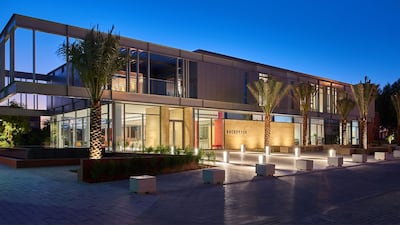
Dubai College in Al Sufouh, Dubai. Photo: Dubai College -
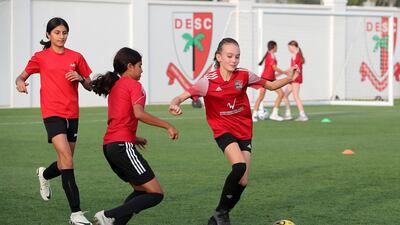
Football training at the Dubai English Speaking College in Academic City. Pawan Singh / The National -

Gems Jumeirah Primary School was also ranked among the outstanding schools in Dubai. -
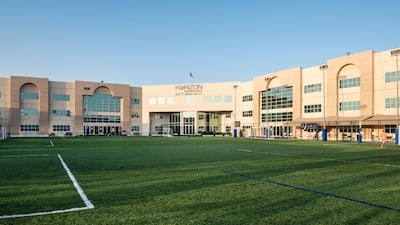
Horizon English School and Horizon International School were also ranking high among Dubai schools.



