

UPDATE: UAE schools and workplaces celebrate Emirati values on Flag Day
Citizens and residents alike will gather on Friday in a show of patriotic pride as the UAE marks its 12th annual Flag Day.
The banner occasion was established in 2013 by Sheikh Mohammed bin Rashid, Vice President and Ruler of Dubai, to commemorate the accession of the late President Sheikh Khalifa in 2004 and has become a staple of the UAE calendar in the years since.
It is typically marked on November 3, but with the date falling on a Sunday this year, Sheikh Mohammed has called on the public to fly the flag on Friday to ensure as many people as possible can show their support.
Members of the public, ministries, private companies and schools are being invited to raise the flag in unison at 11am. While not a public holiday, it is typically celebrated with greater fervour.
Here, The National looks back at the origins of the event and the rules to know to fly the flag for the Emirates.
History of the UAE flag

Abdullah Al Maainah won a competition in Al Ittihad newspaper in 1971 to decide who would have the honour of designing the flag of the new nation. His entry was inspired by the poet, Safi-u-ddin Al Hali.
The young Emirati intended the four colours of green, white, black and red to represent Arab unity, as described in Al Hali's works.
His submission beat more than 1,000 entries to be selected to represent the new nation. Mr Al Maainah was 19 at the time and later went on to become the minister of foreign affairs.
Two flags were raised in December 1971 to mark the formation of the nation – one in Abu Dhabi, the other at Union House in Dubai. The flag was flown at the UN headquarters in New York on December 10, 1971.
What do the colours of the flag stand for?
The flag’s four colours – known as the pan-Arab colours – each represent a different attribute. White stands for good deeds and generosity, green for growth and prosperity, black for strength, resilience and courage and red embodies the sacrifices made by previous generations of Emiratis in defence of the nation.
-
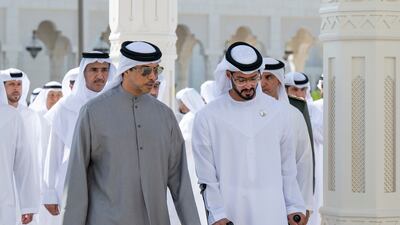
Sheikh Mansour bin Zayed, Vice President, Deputy Prime Minister and Chief of the Presidential Office, attends the flag-raising ceremony at Qasr Al Watan, in Abu Dhabi, to mark national Flag Day. Photo: WAM -
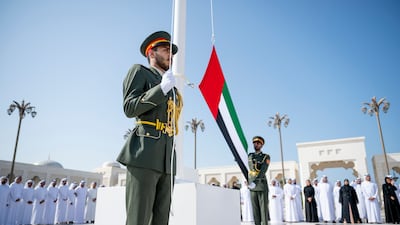
Military personnel prepare to raise the national flag at Qasr Al Watan. Photo: WAM -
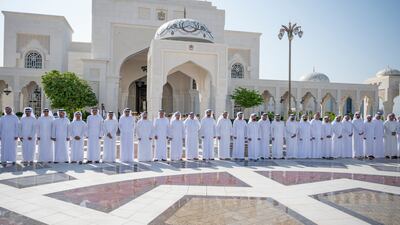
Guests assembled for the flag-raising ceremony at Qasr Al Watan. WAM -
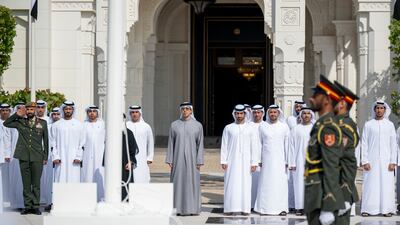
Sheikh Mansour attends the flag-raising ceremony at Qasr Al Watan. WAM -
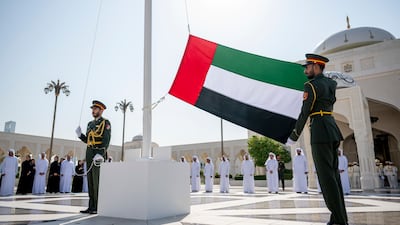
Flag Day was first held in the UAE in 2013. WAM -
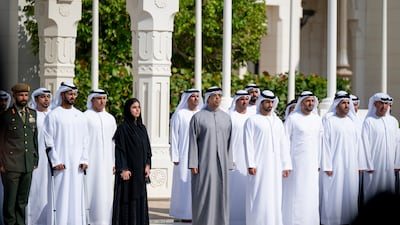
Sheikh Mansour at the flag-raising ceremony at Qasr Al Watan, as the country marked Flag Day. WAM -
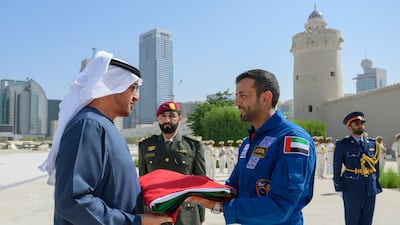
President Sheikh Mohamed receives the UAE flag from astronaut Sultan Al Neyadi at Qasr Al Hosn. Hamad Al Kaabi / UAE Presidential Court -
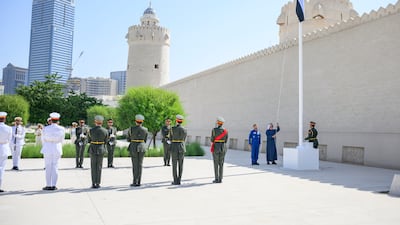
Sheikh Mohamed raises the flag during the ceremony at Qasr Al Hosn. Hamad Al Kaabi / UAE Presidential Court -
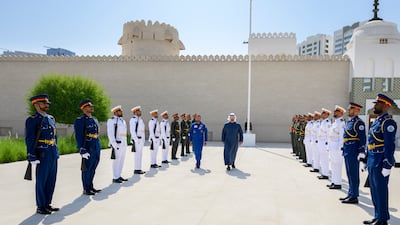
Sheikh Mohamed and Dr Al Neyadi at the Flag Day ceremony. Hamad Al Kaabi / UAE Presidential Court -
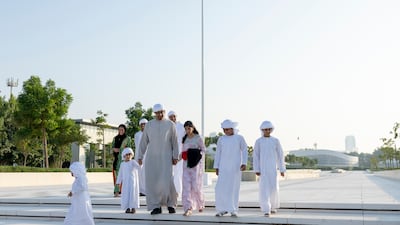
Sheikh Mohamed with his grandchildren and Sheikh Khaled bin Mohamed, Crown Prince of Abu Dhabi, at the Sea Palace ahead of Flag Day. Ryan Carter / UAE Presidential Court -
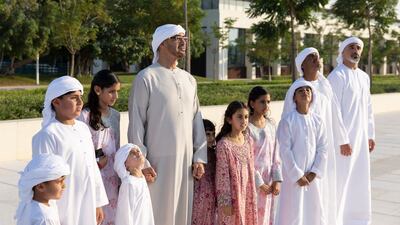
Sheikh Mohamed and Sheikh Khaled during the Flag Day event at the Sea Palace. Ryan Carter / UAE Presidential Court -
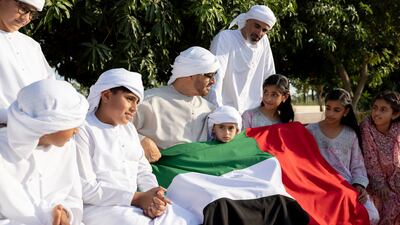
Sheikh Mohamed with his grandchildren and the UAE flag. Ryan Carter / UAE Presidential Court -
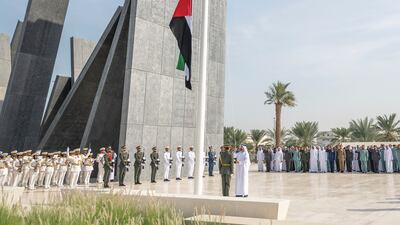
Sheikh Theyab bin Mohamed, chairman of the Office of Development and Martyrs Families Affairs at the Presidential Court, raises the UAE flag at Wahat Al Karama in Abu Dhabi. Photo: Abu Dhabi Media Office -
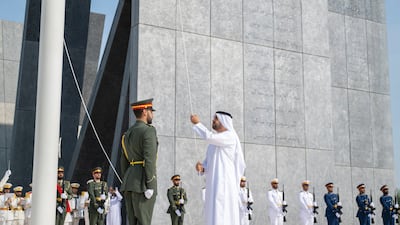
Wahat Al Karama is a memorial site honouring members of the UAE armed forces who died in the line of duty. Photo: Abu Dhabi Media Office -
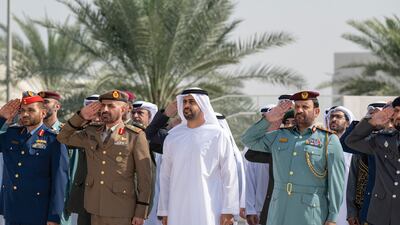
Sheikh Theyab said Flag Day was a poignant occasion for the UAE as it honours its martyrs. Photo: Abu Dhabi Media Office -
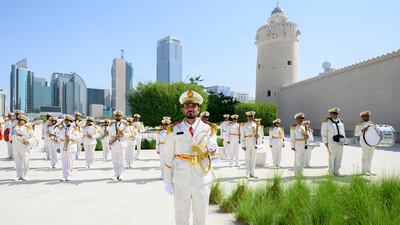
An Emirati honour guard participates in a Flag Day ceremony at Qasr Al Hosn. Abdulla Al Neyadi / UAE Presidential Court -
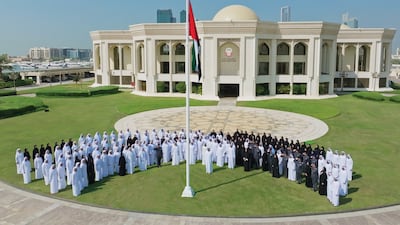
Sheikh Khaled emphasised that Flag Day is a treasured national occasion that the UAE celebrates with great pride. Wam -
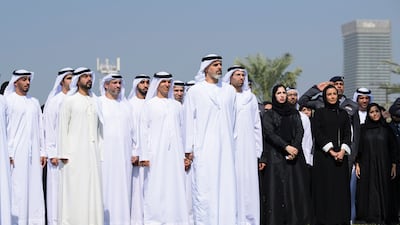
Sheikh Khaled said the occasion symbolises the UAE’s values of unity and cohesion. Wam -

Children in the quad celebrate UAE Flag Day at Repton School, in Science Park, Dubai. Chris Whiteoak / The National -

A young school pupil waves the national flag. Chris Whiteoak / The National -

UAE Flag Day is held annually on November 3. Chris Whiteoak / The National -

School around the country held assemblies and events to mark the occasion. Chris Whiteoak / The National -

The national colours were seen all around the country. Chris Whiteoak / The National -
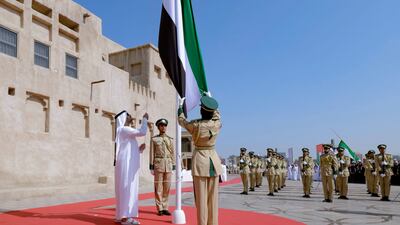
Sheikh Maktoum bin Mohammed, First Deputy Ruler of Dubai and Deputy Prime Minister, hoists the UAE flag. Photo: @DXBMediaOffice X / formerly Twitter -
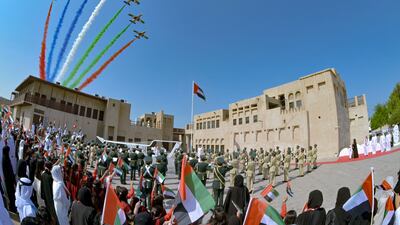
Sheikh Maktoum said: 'We are committed to continuing what our founding fathers and ancestors began.' Photo: @DXBMediaOffice X / formerly Twitter -
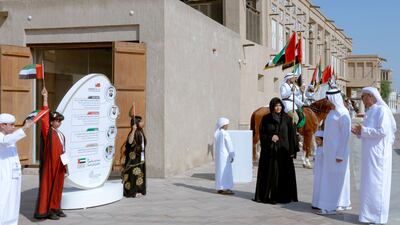
Sheikh Maktoum said the nation's could draw inspiration from 'spirit of determination and resilience' of the nation's ancestors. Photo: @DXBMediaOffice X / formerly Twitter -
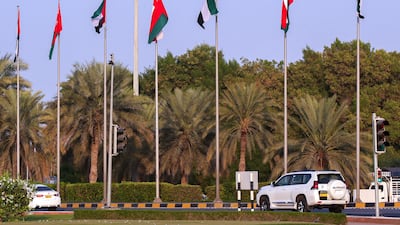
The UAE flag is raised beside the flag of Oman at the Burj Al Sahwa roundabout in Muscat, a day before the arrival of President Sheikh Mohamed. Victor Besa /The National -
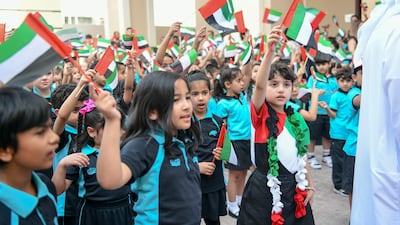
More than 2,000 pupils took part in a flag-hoisting ceremony at British International School in Abu Dhabi. Khushnum Bhandari / The National -

Citizens and residents across the UAE marked Flag Day on Friday. Khushnum Bhandari / The National -

This is the 11th year in which the annual celebration has taken place. Khushnum Bhandari / The National -
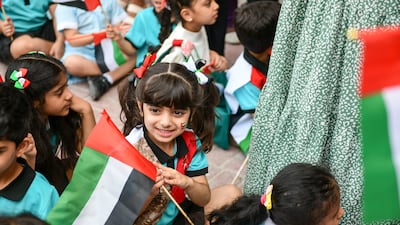
Schools, government offices, businesses and people mark Flag Day by hanging the country’s banner outside their institutions, workplaces and homes. Khushnum Bhandari / The National -
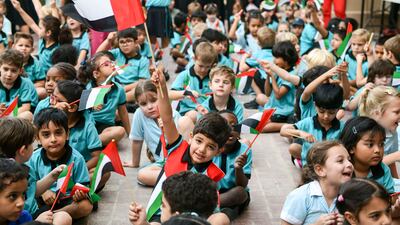
The idea was conceived by Sheikh Mohammed bin Rashid, Vice President and Ruler of Dubai, to celebrate the accession of Sheikh Khalifa as President of the UAE in 2004. Khushnum Bhandari / The National


Rules for flag display
The UAE has strict rules in place for the display of the UAE flag periodically updated and distributed by authorities. The Presidential Protocol and Strategic Narrative Authority has a detailed guidebook available online on how to display the flag indoors and outdoors, and what is prohibited.
Here are some of the rules in place to preserve the integrity of the national flag:
- The flag should be printed on durable, high-quality and matte fabric only which should be either polyester or 100 per cent nylon
- When displaying flags indoors, the base can be gold, silver or wooden. The flag must not touch the ground or base and must be at least 20-25cm from the base
- No additional decorations can be added to the flag and no other flag should be on the same pole
- The flag should be regularly checked for damage, at least once in 45 days. If damaged to any extent, it must be replaced immediately
- When hanging in streets or on buildings, the flag should hang vertically with the red part up and the other three parts facing down so the viewer sees it vertically from every direction
- Damaged flags may be recycled by disintegrating their parts so that they no longer represent the shape of the flag, nor indicate its previous representation
- Do not place any logos, designs or drawings on the UAE flag. The only exception is when the UAE emblem is displayed in the white area and represents the UAE President’s Flag
- The flag shape and colours should only be displayed as intended and not used on decorative elements or altered to fit such purposes. Examples include balloons, logos and typography
- The flag must not be printed on any disposable materials such as pillows, napkins or boxes and it is prohibited to print the UAE flag on edible items including cakes or sweets, or wrappers for such food items
- The flag or any elements of it must not be used as a trademark or part of a trademark for advertising purposes without prior permission.

