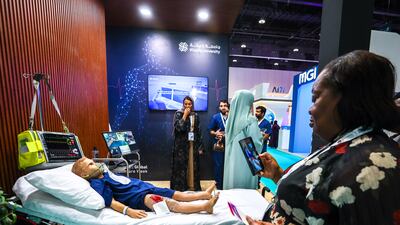
A doctor operating remotely from Abu Dhabi on a patient in South Korea. Wajod Alkhamis / The National

Remote surgery showcased in Abu Dhabi could be future of healthcare, experts say


  • English
  • Arabic

A glimpse into the future of health care was offered on Wednesday when a doctor in Abu Dhabi remotely simulated surgery on a stroke victim in Korea.

The procedure to remove a blood clot from the brain using a remote-controlled robotic system was demonstrated at Abu Dhabi Global Healthcare Week.

An audience watched the procedure on a big screen as Dr Vitor Mendes Pereira controlled robotic wires to simulate surgery 7,000km away, replicating the procedure to treat stroke victims.

The majority of humanity does not have access to this treatment
Eduardo Fonseca,
chief executive of XCath

Dr Pereira, director of Endovascular Research and Innovation at St Michael’s Hospital in Toronto, Canada, said: “While it may be a few years until such technology is introduced, the potential is monumental and could save thousands of lives.

“This is a concept that we hope will become a reality soon. I confirmed that I can control a robotic arm 7,000km away.”

There were times, he said, during the procedure that he forgot he was so far away from the patient.

The procedure has the potential to revolutionise how stroke victims are treated, he added.

Growing number of stroke victims

Each year, 15 million people globally suffer a stroke, with five million of those dying as a result and a similar figure left permanently disabled, according to the most recent report from the World Health Organisation (WHO).

The number of stroke victims is only likely to increase due to the world's ageing population, the report warned.

Most stroke victims need urgent specialist treatment that is only available in certain hospitals, added Dr Pereira.

“If we can deploy the robotic arms into the hospitals that are close to where the patients are and save their transportation time, lives will be saved,” he said.

“When a patient has a stroke, every minute counts.”

A doctor operating remotely from Abu Dhabi on a patient in South Korea. Wajod Alkhamis / The National

The simulated surgery was completed in a matter of minutes on Wednesday, with Dr Pereira using a microcatheter to re-enact the procedure to remove a clot from a blood vessel in the brain.

The procedure to remove the clot is known as mechanical thrombectomy, a treatment that is not widely available.

“The majority of humanity does not have access to this treatment,” said Eduardo Fonseca, chief executive of XCath, the firm behind the technology.

“And even those that do, do not get there in time and the procedure is incredibly time-sensitive. So this brings together a problem that can be solved by endovascular telerobotics. ”

Worldwide household income losses due to premature death or disability from strokes is $576 billion, according to the most recent figures available from the World Stroke Organisation (WSO).

The same report said the number of people having strokes had increased by 70 per cent in the past three decades, while the number of people living with strokes worldwide has shot up by 85 per cent.

A person living in a low-income country was likely to have their first stroke when they were 15 years younger than their wealthier counterparts, the same study said.

Another expert said the procedure demonstrated on Wednesday is a vital step towards reducing the number of lives affected by strokes.

“This pioneering achievement is not just a first, but a crucial stepping stone towards regulatory and industry support, ultimately leading to widespread acceptance and adoption,” said Dr Fred Moll, founder of Intuitive Surgical, a company specialising in robotic surgery.

“In the field of endovascular care, particularly in stroke treatment where every minute counts, this technology holds transformative potential.”

The use of advanced technology was the theme of this week's healthcare conference in Abu Dhabi.

An AI-powered chest X-ray for tuberculosis (TB) was showcased by M42, a tech health firm based in the emirate.

The technology, which was tested at screening centres for visas in the emirate, was said to reduce radiologists' workloads by up to 80 per cent while not missing any cases of TB.

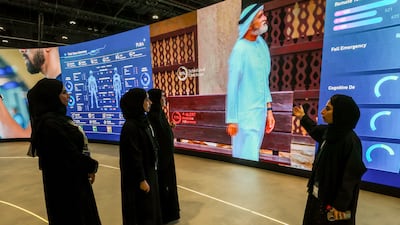
Abu Dhabi Global Healthcare Week – in pictures

  • Abu Dhabi Global Healthcare Week opens at Adnec. All photos: Victor Besa / The National
    Abu Dhabi Global Healthcare Week opens at Adnec. All photos: Victor Besa / The National
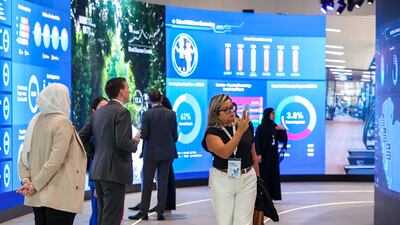
  • Delegates and visitors gather for the event in the UAE capital.
    Delegates and visitors gather for the event in the UAE capital.
  • More than 5,000 people are expected to attend the three-day event.
    More than 5,000 people are expected to attend the three-day event.
  • The event is focused on the future of human health and how to improve care.
    The event is focused on the future of human health and how to improve care.
  • The opening day looked at how artificial intelligence and emerging technology can boost health care.
    The opening day looked at how artificial intelligence and emerging technology can boost health care.
  • About 200 speakers are set to deliver the latest insights into the sector.
    About 200 speakers are set to deliver the latest insights into the sector.
  • The role stem cells play in reversing the effects of degenerative disease have also been discussed.
    The role stem cells play in reversing the effects of degenerative disease have also been discussed.
  • Mariam Al Mheiri, Head of the International Affairs Office in the Presidential Court, takes part in a panel at the event.
    Mariam Al Mheiri, Head of the International Affairs Office in the Presidential Court, takes part in a panel at the event.
  • Visitors are to discover how technology can be used to improve treatments.
    Visitors are to discover how technology can be used to improve treatments.
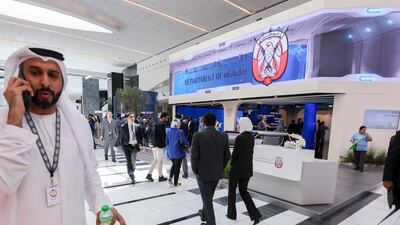
  • A booth set up for Abu Dhabi's Department of Health.
    A booth set up for Abu Dhabi's Department of Health.
  • The events includes sessions on subjects such as the latest advances in cell reprogramming.
    The events includes sessions on subjects such as the latest advances in cell reprogramming.
WISH
%3Cp%3E%3Cstrong%3EDirectors%3A%3C%2Fstrong%3E%20Chris%20Buck%2C%20Fawn%20Veerasunthorn%3Cbr%3E%3Cstrong%3EStars%3A%3C%2Fstrong%3E%20Ariana%20DeBose%2C%20Chris%20Pine%2C%20Alan%20Tudyk%3Cbr%3E%3Cstrong%3ERating%3A%3C%2Fstrong%3E%203.5%2F5%3C%2Fp%3E%0A
The candidates

Dr Ayham Ammora, scientist and business executive

Ali Azeem, business leader

Tony Booth, professor of education

Lord Browne, former BP chief executive

Dr Mohamed El-Erian, economist

Professor Wyn Evans, astrophysicist

Dr Mark Mann, scientist

Gina MIller, anti-Brexit campaigner

Lord Smith, former Cabinet minister

Sandi Toksvig, broadcaster


UAE currency: the story behind the money in your pockets
COMPANY%20PROFILE
%3Cp%3E%3Cstrong%3EName%3A%20%3C%2Fstrong%3EKinetic%207%3Cbr%3E%3Cstrong%3EStarted%3A%3C%2Fstrong%3E%202018%3Cbr%3E%3Cstrong%3EFounder%3A%3C%2Fstrong%3E%20Rick%20Parish%3Cbr%3E%3Cstrong%3EBased%3A%3C%2Fstrong%3E%20Abu%20Dhabi%2C%20UAE%3Cbr%3E%3Cstrong%3EIndustry%3A%3C%2Fstrong%3E%20Clean%20cooking%3Cbr%3E%3Cstrong%3EFunding%3A%3C%2Fstrong%3E%20%2410%20million%3Cbr%3E%3Cstrong%3EInvestors%3A%3C%2Fstrong%3E%20Self-funded%3C%2Fp%3E%0A
Ten tax points to be aware of in 2026

1. Domestic VAT refund amendments: request your refund within five years

If a business does not apply for the refund on time, they lose their credit.

2. E-invoicing in the UAE

Businesses should continue preparing for the implementation of e-invoicing in the UAE, with 2026 a preparation and transition period ahead of phased mandatory adoption. 

3. More tax audits

Tax authorities are increasingly using data already available across multiple filings to identify audit risks. 

4. More beneficial VAT and excise tax penalty regime

Tax disputes are expected to become more frequent and more structured, with clearer administrative objection and appeal processes. The UAE has adopted a new penalty regime for VAT and excise disputes, which now mirrors the penalty regime for corporate tax.

5. Greater emphasis on statutory audit

There is a greater need for the accuracy of financial statements. The International Financial Reporting Standards standards need to be strictly adhered to and, as a result, the quality of the audits will need to increase.

6. Further transfer pricing enforcement

Transfer pricing enforcement, which refers to the practice of establishing prices for internal transactions between related entities, is expected to broaden in scope. The UAE will shortly open the possibility to negotiate advance pricing agreements, or essentially rulings for transfer pricing purposes. 

7. Limited time periods for audits

Recent amendments also introduce a default five-year limitation period for tax audits and assessments, subject to specific statutory exceptions. While the standard audit and assessment period is five years, this may be extended to up to 15 years in cases involving fraud or tax evasion. 

8. Pillar 2 implementation 

Many multinational groups will begin to feel the practical effect of the Domestic Minimum Top-Up Tax (DMTT), the UAE's implementation of the OECD’s global minimum tax under Pillar 2. While the rules apply for financial years starting on or after January 1, 2025, it is 2026 that marks the transition to an operational phase.

9. Reduced compliance obligations for imported goods and services

Businesses that apply the reverse-charge mechanism for VAT purposes in the UAE may benefit from reduced compliance obligations. 

10. Substance and CbC reporting focus

Tax authorities are expected to continue strengthening the enforcement of economic substance and Country-by-Country (CbC) reporting frameworks. In the UAE, these regimes are increasingly being used as risk-assessment tools, providing tax authorities with a comprehensive view of multinational groups’ global footprints and enabling them to assess whether profits are aligned with real economic activity. 

Contributed by Thomas Vanhee and Hend Rashwan, Aurifer

Updated: May 16, 2024, 3:53 AM