

A national weather task force has held key talks on efforts to mitigate the impact of storms set to sweep across the Emirates on Wednesday and Thursday.
The Joint Weather and Tropical Assessment Team – which includes the National Emergency Crisis and Disaster Management Authority, the Ministry of Interior and the National Centre of Meteorology – underlined the need to prioritise public safety during the expected adverse weather, state news agency Wam reported on Tuesday night.
The NCM has forecast heavy rain, thunder, lightning and hail, beginning on Wednesday evening and extending to “most regions of the country” on Thursday.
The weather centre said, however, that conditions would be “less severe” than the historic deluge which lashed the country last month, causing widespread flooding, damage to homes and property and major disruption to public transport and flights.
NCM meteorologist Esraa Al-Naqbi told The National the current weather affecting the country is typical and does not compare with the storm that wreaked havoc in April.
She said that, in contrast, the weather is just a single wave beginning on Wednesday evening which is set to cover the entire country on Thursday. It has been classified as moderate while the previous storm was considered moderate to strong.
The Windy weather app projects rain and thunder to persist in Abu Dhabi and Dubai from the early hours of Thursday into the evening.
Pre-emptive action
Distance learning was directed for all private schools in Dubai on Thursday and Friday due to the expected extreme weather.
“With unstable weather predicted, all Dubai private schools, nurseries, and universities must offer distance learning on Thursday, May 2 and Friday, May 3,” the Knowledge and Human Development Authority, Dubai's private education regulator, posted on X on Tuesday.
Officials also announced that all government schools in the UAE would similarly introduce remote learning for pupils on both days.
Sharjah authorities confirmed on Wednesday that all schools and universities in the emirate would also adopt distance learning on Thursday.
Government employees in the emirate will work remotely on Thursday, with the exception of those in roles that require a physical presence, Sharjah's government media office said.
The directive only covers Thursday as Sharjah operates a four-day week, in which schools and government departments are closed on Fridays.
Public parks will be closed on both days as a safety precaution.
The Ministry of Interior said the weather was expected to have a “moderate to high impact on different parts of the country”.
The ministry urged the public to exercise caution during the unstable weather.
Police in Dubai and Abu Dhabi have called on motorists to be vigilant when driving during hazardous weather.
The Ministry of Energy and Infrastructure has taken steps to ensure roads and dams are braced for the stormy weather.
Measures have included draining water to reduce pressure and accommodate new rainfall, and cleaning water drains.
The authority said it would closely monitor dams and valleys in an effort to avert flooding.
Conditions to ease
The NCM said cloud cover would decrease on Friday on Saturday, although there remained a possibility of light to moderate rainfall, which may be heavier in some southern and eastern regions.
The Ministry of Interior stressed that authorities were “continuously monitoring the developments and updates of the weather situation”, in light of the fact many parts of the UAE are still recovering from the severe storms on Tuesday April 16.
April storms aftermath in UAE – in pictures
-
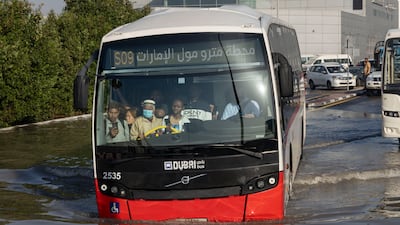
Persistent flooding along the D65 exit from Sheikh Zayed Road in April 16, 2024, leading into Al Quoz. Antonie Robertson / The National -
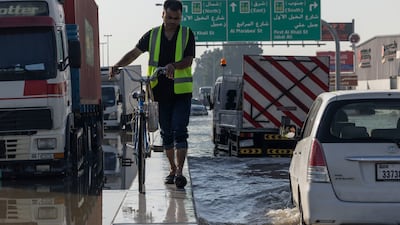
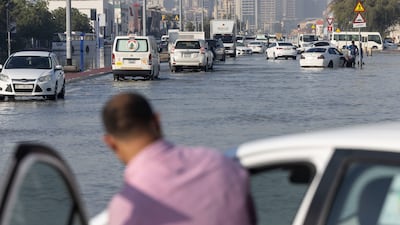
Delays took place as work continued to clear roads of excess water. Antonie Robertson / The National -
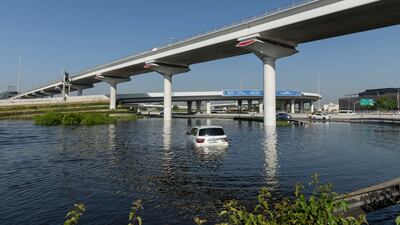
Many drivers had no choice but to abandon their waterlogged vehicles and take their chances on foot due to the record rainfall. Antonie Robertson / The National -
The UAE was hit by unprecedented flooding on April 16, 2024, than it would expect to receive in more than a year, official figures revealed. Antonie Robertson / The National -
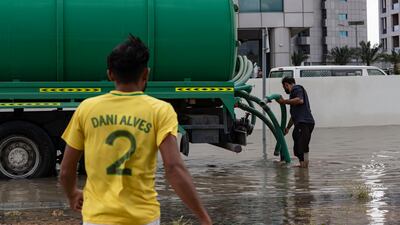
Standing water is removed in Dubai after a major storm. Antonie Robertson / The National -
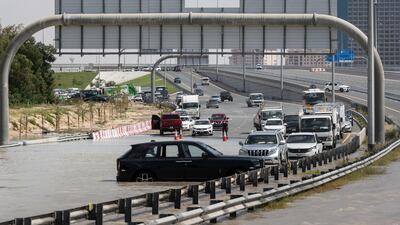
Many cars were abandoned in Dubai due to the flooding. Antonie Robertson / The National -

There was significant damage in parts of Dubai. Antonie Robertson / The National -
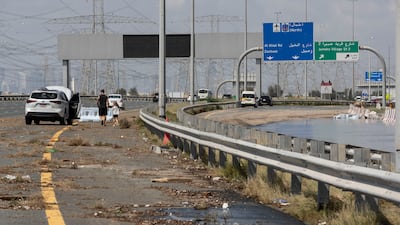
The aftermath of heavy flooding in Dubai, with debris and abandoned cars on the street. Antonie Robertson / The National -
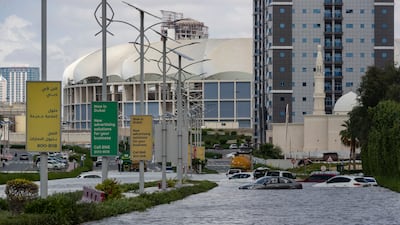
Some roads remained waterlogged in parts of Dubai after the storm. Antonie Robertson / The National -
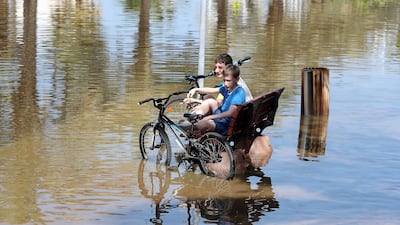
Children play with their bicycles along a waterlogged street in Dubai's Al Furjan district. Pawan Singh / The National -
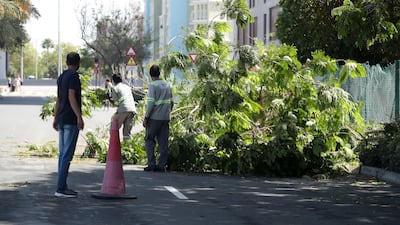
Workers cut a tree uprooted by heavy rains on Tuesday in Dubai. Pawan Singh / The National -
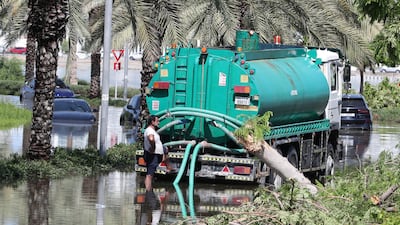
Water is drained from a flooded road in Al Furjan after the storm. Pawan Singh / The National -
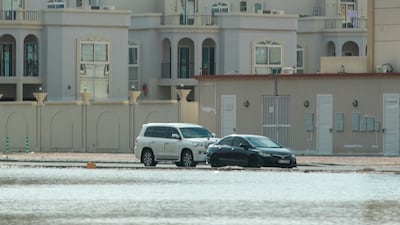
A flooded street in Khalifa City, Abu Dhabi, after the rain. Victor Besa / The National -
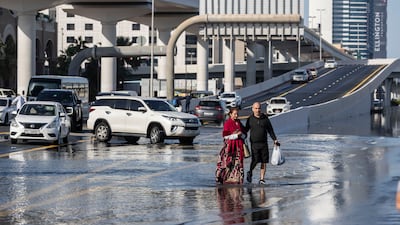
Heavy rain in Dubai made parts of Sheikh Zayed Road impassable. Antonie Robertson/The National -
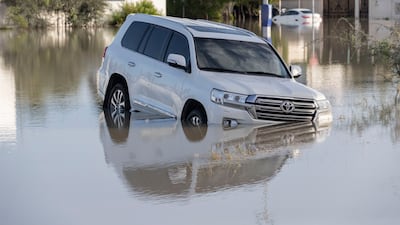
The storm left cars marooned on flooded streets. Antonie Robertson/ The National -
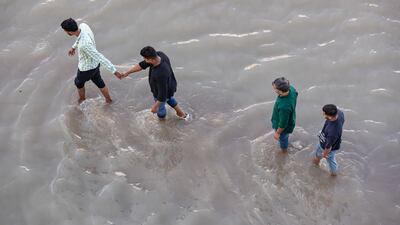
Many areas became impassable due to the flooding. Antonie Robertson / The National -
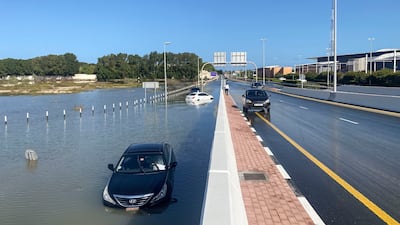
Drivers abandoned their cars at the side of roads amid high floodwaters. Antonie Robertson/ The National -
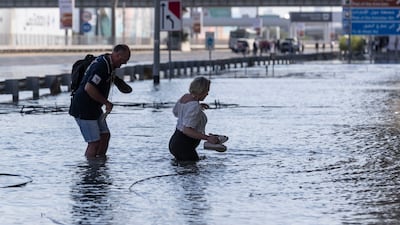
People attempt to navigate the floodwaters in Dubai. Antonie Robertson/The National -
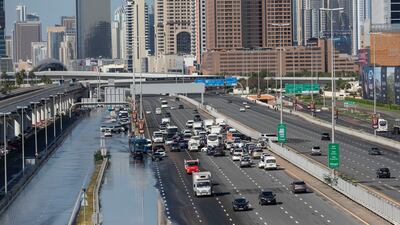
A flooded section of road near Sheikh Zayed motorway after heavy rain. Antonie Robertson / The National -
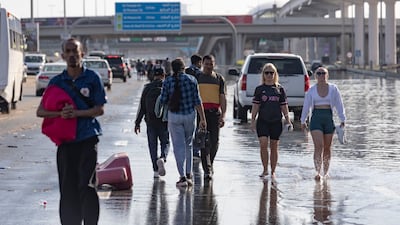
People in Dubai walk from their cars after high floodwaters made the road impassable. Antonie Robertson / The National -
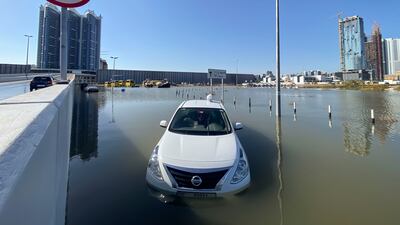
A partially submerged car following the heavy rain. Antonie Robertson/The National -
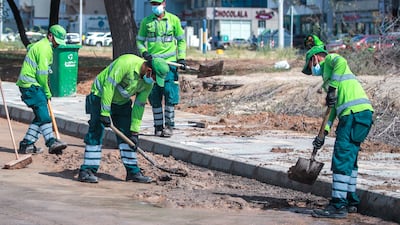
Recovery work gets under way after the rain in central Abu Dhabi. Victor Besa / The National -
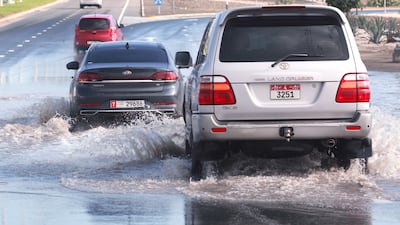
Large puddles and areas of water in Al Bandar in Abu Dhabi. Victor Besa / The National -
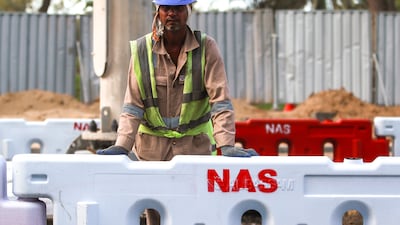
Work begins after the rain in central Abu Dhabi. Victor Besa / The National -

Recovery work gets under way in Khalifa City in Abu Dhabi. Victor Besa / The National -

Some minor damage in Khalifa City in Abu Dhabi. Victor Besa / The National -

A man washes away debris after the rain in Khalifa City in Abu Dhabi. Victor Besa / The National -
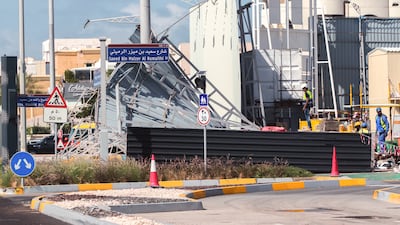
Work gets under way after heavy rain hit Abu Dhabi. Victor Besa / The National -

Passengers check flight information on screens at the Dubai International Airport. AFP -

A worker cuts through a downed tree with a chainsaw after a major storm in Dubai. AP -

A car drives through floodwaters in Dubai. AP



