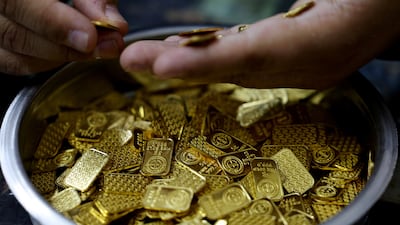

Egypt is offering to pay informal gold miners in the south for the gold they hand in, as it moves from a military crackdown to a licensing system run by a presidency-linked authority.
Mostafa Bakry, an MP and television host who has become the public face of the initiative, said on Tuesday night that Future of Egypt had pledged to pay anyone handing over gold on the spot. He said sellers would also get a receipt proving the money was legitimate.
Speaking to state media after meetings in Aswan and Marsa Alam, Mr Bakry said the authority would open three offices in the mining areas to process licence applications and complaints. He said Future of Egypt was the only body authorised to handle the file, under a presidential directive.

The plan emerged from a meeting in Cairo on November 12 convened by Ibrahim Al Organi, a businessman and head of the Egyptian Tribes and Families Union, who holds no government post.
Mona Shaker, MP for Aswan, said in a Facebook video after the meeting that a company would be set up under Future of Egypt to license artisanal miners. She said people jailed for illegal mining would be freed, except those involved in killings or drug offences.
The shift follows a military campaign against illegal mining and smuggling in the Eastern Desert. The army says it has detained 151 Egyptians and 540 foreigners since June. Two army officers, one of them a senior border guard officer, were killed.
Egypt’s military said its crackdown was against illegal mining and the smuggling of weapons, drugs and people.
The Sudanese rights group Emergency Lawyers accused Egypt’s air force of carrying out strikes last month that killed dozens of Sudanese gold miners near the border.
The Egyptian military says it did not attack civilians and that its strikes were inside Egypt, but it has not publicly addressed the allegation that it carried out the October 10 attack.
Key terms of the new agreement have not been published, however. Neither Future of Egypt nor the tribes union has said what price miners will be paid, who will own the new company or how revenue will be shared.
Furthermore, some tribes have objected to the new framework. The Bani Hilal tribe, one of the largest in Upper Egypt, said in a statement that it did not recognise the outcome of the Cairo meeting because it lacked official state status, and that it had not been represented. It called for mining areas to be offered through public auctions, and for the process to be “under state supervision only, not under individuals or private entities”.
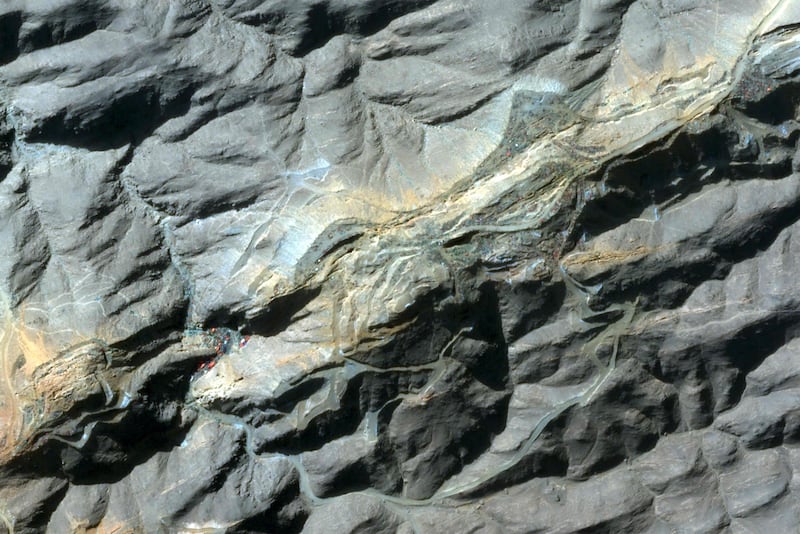
Gold has become a priority for a government short of foreign currency and illegal mining in the area has been repeatedly outlined as a threat to growing the sector and opening up the country's mines to private investment.
Egypt aims to raise annual production to 800,000 ounces by 2030 and lift the mining sector's share of the economy to 6 per cent. Currently, most industrial output comes from the Sukari mine near Marsa Alam, operated through a 50-50 joint venture between an AngloGold Ashanti subsidiary and Egypt’s Mineral Resources Authority.
Most of the mining activity is in the Eastern Desert, between the Red Sea coast and the Nile, and towards the border with Sudan. The military says its campaign has targeted areas west of Marsa Alam, Gebel Iqat, Wadi Dabur and El Baramiya.
The new arrangement also extends the reach of an authority that has grown rapidly in recent years. Future of Egypt began in 2017 as a desert land reclamation project under the military. It now handles one of the world's largest wheat import programmes and controls major lakes and fisheries. It also holds the largest stake in the Egyptian Commodities Exchange and has moved into housing, renewable energy, infant formula and now gold.
A law ratified by President Abdel Fattah El Sisi in July moved the authority from the Defence Ministry to the presidency. It allowed Future of Egypt to absorb state land and companies and to run tax-exempt “sustainable development zones”, where it issues licenses and sets fees.
Critics say the law places planning, licensing, investment and oversight in a single body with few checks.
The expansion sits uneasily with Egypt's commitments to the International Monetary Fund. The IMF has repeatedly called on Cairo to shrink the state's economic footprint and level the playing field for private companies.
Bahaa El Ghannam, the authority's head, has told parliament that the law aims to turn Future of Egypt into a “business incubator” that opens the way for private investment.

