
The end of the US-led international coalition's mission in Iraq is a transition to more durable bilateral ties, an adviser to Iraqi Prime Minister Ali Al Zaidi said on Wednesday.
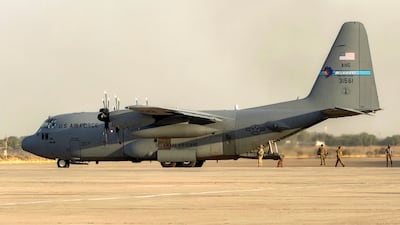
Under a 2024 agreement between Iraq and the US to wind down the anti-ISIS mission, American forces left bases in Baghdad and western Iraq in September 2025. The second and final phase ended on Wednesday with their departure from the Kurdistan region.
“The end of the coalition's mission does not mean the end of the partnership,” Qassim Al Araji, the Prime Minister's adviser on security affairs, said in a statement.

He described it as “a transition to more solid bilateral relations with continued security and intelligence co-operation, information and expertise exchange, and capacity building on the basis of mutual respect and common interests”.
The withdrawal of the US troops closes the latest chapter of US military involvement in Iraq, which stretches back to the 1991 Gulf War.
After the 2003 US-led invasion and the toppling of Saddam Hussein's regime – based on unproven claims it was developing and stockpiling weapons of mass destruction – a complex and multi-faction insurgency was sparked that lasted for decades.

By the end of 2011, the US had withdrawn from Iraq, leaving a small number of troops to protect its embassy, and to train and assist Iraqi forces. At its peak in 2007, the US military presence consisted of 170,000 soldiers.
US combat troops returned in 2014 to lead Operation Inherent Resolve, by which time ISIS had seized about one third of the country as the American-trained Iraqi security forces melted away. The Iraqi government then asked the US to support it in its fight against ISIS.
The Iraqi government, along with Iran-backed armed groups and political parties, has argued that ISIS is heavily degraded and no longer a threat, and that Iraqi security forces can handle its small remaining cells in remote areas. Others, mainly Kurds and some Sunnis, say the threat persists and that Iraq still needs US troops on the ground.
Mr Al Araji said the withdrawal completes a track of negotiations and understandings that began in mid-2021, in which he took part during his previous tenure at the National Security Advisory.
Iraq has reached “an important milestone” with the end of the international coalition's mission and the departure of its forces, Mr Al Araji said. The country will now switch to bilateral relations with the coalition's member states, “in a way that consolidates sovereignty, and serves national interests and the aspirations of the Iraqi people”, he added.
He said victory over ISIS was achieved through Iraqi “sacrifices and the bravery of the armed forces in all its branches and formations, with the support of the international coalition and brotherly and friendly countries, a role we appreciate and value”.

Iraq is now seeking to build bilateral security relationships with the US, Nato and other coalition members, focused on training, advising, intelligence sharing and defence capacity building, rather than combat operations.
The withdrawal is being portrayed as a victory for Iran-backed militias, underscoring how the move has emboldened hardline factions that have long demanded the expulsion of American forces.
The initial plan was to begin bringing their weapons under state control by a September 30 deadline, as the coalition leaves. That has now changed, with the government facing tough resistance from influential groups. The deadline has been pushed back to June 30, 2027 at the earliest.
Only two prominent pro-Tehran armed groups, Asaib Ahl Al Haq and Kataib Imam Ali, alongside cleric Moqtada Al Sadr’s Saraya Al Salam faction, claim they have placed their weapons under state authority. But hardline factions – mainly Kataib Hezbollah and Harakat Hezbollah Al Nujaba – say they will not disarm until foreign troops leave.

The Ashab Al Kahaf group congratulated Iraqis on what it described as the departure of the “American occupier humiliated under the strikes of the resistance's drones and missiles”.
The group said the issue of handing over weapons was an “illusion dreamt of by the weak” and warned that from Wednesday night, “any foreign presence, whether on land or in the air, will face a military response from us”.
It also rejected calls to distance Iraq from the so-called Iran-backed Axis of Resistance in the region, saying it would continue to operate according to the axis's policy, and threatened retaliation against any state that participates in any aggression against Iran.
The group would soon unveil a new weapon and warned that “any hand that reaches our mujahideen will be cut off”, the statement said. “We will use weapons to defend weapons against anyone,” it added.
The rhetoric underlines the challenge facing the government as it seeks to capitalise on the coalition's departure as a sovereignty achievement while also facing pressure from Washington and from Sunni and Kurdish blocs to bring all weapons under state control.

