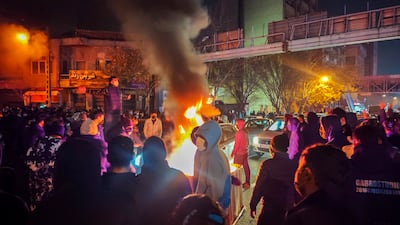
A UN-backed fact-finding mission has said that the Iranian government's crackdown on the 2025-2026 protests involved gross violations that amounted to crimes against humanity.
The crimes included “murder, imprisonment, torture and other inhumane acts committed as part of a widespread and systematic attack on civilians”, the Independent International Fact-Finding Mission on Iran said in its latest report to the UN Human Rights Council on Thursday.
“Many of these gross violations amount to crimes against humanity,” it said. The mission said that Iranian security forces carried out killings on a large scale in all 31 provinces, with the highest death tolls reported in Tehran, Karaj, Mashhad, Isfahan and Rasht.

Security forces positioned themselves on rooftops and other elevated positions and fired assault rifles into crowds, the mission said. In Karaj, security forces used tear gas to trap demonstrators in narrow alleys before opening fire, while protesters sustained severe wounds to the head, chest and eyes from metal shotgun pellets, in some cases causing permanent blindness.
At least 221 children were reportedly killed, some of them as young as two years old, the report said. Security forces also attacked healthcare facilities, beating and arresting wounded protesters and detaining some healthcare workers, which the mission said deterred victims from seeking life-saving care.
The Iranian government imposed a nationwide internet and communications blackout on January 8 during the height of the crackdown. The shutdown lasted more than five months, the mission said. It described it as the longest nationwide shutdown on record, and said it unlawfully blocked information and emergency co-ordination.
Tens of thousands of people were deprived of their liberty through large-scale arbitrary arrests and detention, the report said. Detainees faced torture, solitary confinement and denial of legal counsel, while families were left without information on the whereabouts of their relatives in circumstances raising concerns of enforced disappearances.
Iranian authorities also delayed or refused to release victims' bodies, the mission said. In several cases, officials allegedly demanded payments, forced relatives to sign false statements claiming victims were state agents and restricted or threatened memorial and mourning ceremonies.
The government subsequently intensified its use of the death penalty against protesters, the report said. At least 29 men were executed between March and August 2026 following expedited trials, including five public executions, all in connection with the protests. More than 70 people, including five women and three boys, remained at imminent risk of execution, it said.
Trapped between regime and war
The report said civilians in Iran were caught between “gross human rights violations” committed by the regime and as a result of the war with the US and Israel.
It said it had reasonable grounds to believe the US committed war crimes during two air strikes following US and Israeli attacks on Iran on February 28. The strikes killed at least 178 civilians, including women and children, according to the report.
The mission said Tomahawk missile strikes hit the clearly identifiable Shajareh Tayyebeh Primary School in Minab, killing more than 150 people, including about 120 children.
The US has not admitted involvement but said the attack was being investigated. President Donald Trump said in March that Iran might have been responsible, as “other nations have Tomahawks”. Members of the US Congress have pressed the administration to reveal what it knows.
The UN mission also cited an air strike in Lamerd in which Precision Strike Missiles dispersed clouds of tungsten pellets over a clearly identifiable sports complex and residential area, killing 22 civilian men and women.
The mission said there were reasonable grounds to believe the attacks constituted the war crime of launching indiscriminate attacks resulting in the loss of civilian life or injury to civilians or damage to civilian objects.
The UN urged Iran and the US to immediately cease violations and crimes, provide full reparations to victims and guarantee non-repetition. It also called for an immediate end to hostilities and renewed diplomatic action by UN member states for permanent peace and accountability through universal jurisdiction.

