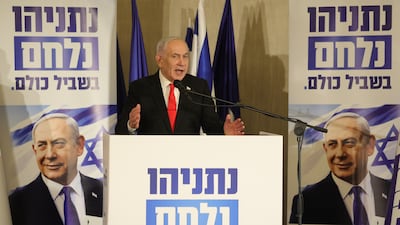
As Israel concludes Rosh Hashanah, when Judaism teaches that God determines humanity’s fate for the coming year, many are praying for peace and calm after a long period of regional conflict. The country is on high alert for an Iranian attack, amid reports that Iran has started rebuilding nuclear and ballistic missile facilities.
All this comes as Israel deals with unprecedented international isolation – the most dramatic instance being the UK’s decision, alongside 11 other western nations, to impose sanctions on illegal settlements in the occupied West Bank.
Many Israelis might also be praying for protection from internal strife, too. The week before Rosh Hashanah has been particularly important for the election season as polls loom in October. Parties submitted their final lists of candidates and Prime Minister Benjamin Netanyahu faced a torrent of anger over reports that he ignored warnings about Hamas preparing for the attacks on October 7, 2023. Even within voting blocs, spats continue over tactics and egos.


Fears are mounting that parties will use foul play to get ahead. A survey by the Israel Democracy Institute found 59 per cent of Jewish Israelis think there is “a high likelihood of interference” from within. Many fear the losing side will refuse to accept the result. An IDI survey released a month earlier found that 72 per cent of Jewish Israelis said there was a danger to the integrity of the elections.
For now, though, the picture is one of deadlock. “The biggest polling trend that is surprising to me is how stable the Netanyahu and opposition blocs have been,” Israeli pollster Dahlia Scheindlin told The National. “Nothing seems to change them in any statistically significant direction.”
If there is no late surge for Mr Netanyahu or some “very surprising coalition engineering”, Ms Scheindlin said, Israel is facing the prospect of a Netanyahu caretaker government until there are new elections, perhaps followed by “another cycle of endless elections, which is depressing for everyone”.
Despite his uncertain prospects, no one is writing off Mr Netanyahu yet. He is the longest-serving prime minister in Israeli history and has a reputation for clinging on to power longer than critics expect and hope, including after the catastrophe of the October 7 attacks. Commentators have speculated that he might seek an escalation in the region or the occupied West Bank, or convince US President Donald Trump to intervene in his favour.

Ms Scheindlin said that even a dramatic regional escalation might not have much effect on polling. Although Israelis typically rally around the flag during such times, the Iran war was popular across the political spectrum. “I think another escalation is probably going to make it look like Netanyahu is doing it cynically and for political reasons, or at the very least that he is not in control of these forever wars that are not really helping the country,” she said.
A deadlock is a problem for the region, too, said Hebrew University researcher Dr Ali Al Awar, who described these elections as a potential “turning point in the Middle East and for the Palestinian cause in particular” if Mr Netanyahu loses power.
“A loss for Netanyahu will present the Palestinians in Gaza with a glimmer of hope,” Dr Al Awar said. “It could mean pressure from Trump and the international community to have Israel gradually withdraw from the strip, as well as southern Lebanon, and a security agreement with Syria. It could also mean a change in Israel's conduct in the West Bank and East Jerusalem and a stop to the state's protection of settlers.”
Michael Hanna, director of the US programme at International Crisis Group, said he did not think President Trump was fully invested in Mr Netanyahu’s re-election, despite having sometimes intervened in his favour.
“To Trump, he is someone that he knows well and dealt with, but they did have their run-ins,” Mr Hanna said.
“Netanyahu's loss of the prime minister's job will be useful for Israel and will end the headache caused to the Trump administration by the policies of extremist-right members of his cabinet. But the disappearance of Netanyahu will make little difference to Washington because the relationship between the two countries is deeply institutionalised.”

