
Drone attacks by Iran-backed militias in Iraq against Saudi Arabia late on Friday were meant to “show solidarity" with the Houthi rebels, who have seized Red Sea coastal areas of Yemen, a source in Baghdad close to armed groups told The National.
But simultaneous attacks from Yemen and Iraq on Saudi Arabia point to a renewed alignment among Iranian proxies across the region amid a deepening US-Iran stand-off.
The attacks came during a period of intensified operations by the Iran-backed Houthis in Yemen against Saudi Arabia.
Saudi Arabia said the drones launched from Iraq attacked its East-West pipeline, forcing the shutdown of the vital oil infrastructure amid a widening Middle East war and threatening to send energy prices even higher.
The kingdom said it would not retaliate for now after a request from Iraq's Prime Minister Ali Al Zaidi, while reserving the right to take all necessary measures to protect its sovereignty, security and critical sites, the Saudi Ministry of Foreign Affairs said in a statement.
Mr Al Zaidi, who is also commander-in-chief of Iraq's armed forces, has dismissed the military commander Maysan province, south of Baghdad, from which the drones were fired. On Saturday, Mr Al Zaidi also ordered the dismissal of the provincial police chief.
The Prime Minister's military spokesman Sabah Al Numan said orders were also issued for the transfer of the province’s security agency directors to the reserve command reserve, as well as the launch of an investigation. The measures come “in light of the recent security breaches that occurred in the governorate", Mr Al Numan added.
Mr Al Zaidi ordered the closing of "several" border crossings with Iran, the government's security media cell said in a statement. Iraqi authorities "have started administrative and security measures at several border crossings", it added, without naming them.
It also said they have increased "intelligence activities" to determine "the breaches and violations that took place at these crossings".
A security official said the crossings were Shalamcheh in Basra province, Al Sheeb in Maysan and Mandali in the central province of Diyala. The move was meant to "track down the perpetrators and prevent their escape", the official added.
Later on Saturday, Baghdad announced that people stranded at Shalamcheh and Al Sheeb were permitted to pass.
"The operation was to show solidarity with Houthis while facing continuous Saudi aggression,” the source said. When asked whether the operation was planned jointly with the Yemeni rebels, he said he would not describe it as “co-ordinated with them".
There has been no claim of responsibility from any pro-Tehran militias.

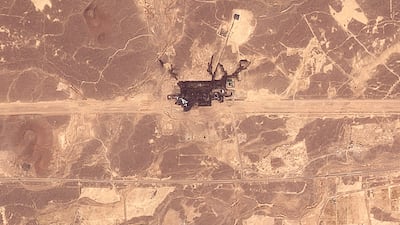
Mr Al Numan added that Prime Minister Al Zaidi agreed to an Iranian request for a joint investigation into the discovery of drone launch platforms near the Iraqi-Iranian border in Maysan. He didn't give more details.
In recent days, Houthi rebels tightened their grip in the Red Sea that, combined with the Strait of Hormuz disruptions, has put an energy squeeze on both sides of the Arabian Peninsula and sent global oil prices rising back above $100 per barrel. The group had also seized the strategic Perim Island on Friday in the Bab Al Mandeb strait, at the mouth of the Red Sea.
The attacks on Saudi Arabia from Yemen and Iraq could represent a dangerous escalation of near-simultaneous strikes from two separate fronts while diplomatic efforts to end the war have stalled.
Mr Al Zaidi’s government is under pressure to rein in armed groups as it prepares for the full withdrawal of the US-led coalition on September 30.
Friday’s attack comes after Saudi Arabia and the US carried out strikes in late July on Popular Mobilisation Forces, the government-sanctioned umbrella group that comprises mainly of Iran-backed groups. These attacks left at least 20 fighters killed and dozens wounded.
At the time, the kingdom accused Iran-backed militias of firing drones at energy installations in eastern Saudi Arabia. The US Central Command said the strikes were conducted in co-ordination with Riyadh and attacked launch and storage sites used by the groups.
Iraqi officials condemned the July strikes as a breach of the country's sovereignty. Militia leaders responded with threats to target Saudi and US interests if attacks continued.
That exchange raised fears of a widening of the conflict, with Iraqi armed groups increasingly aligning their rhetoric and actions with the Houthis.
The latest developments add pressure on Baghdad to enforce control over armed groups operating outside state authority. The government has said it is building new air defence capabilities and that September 30 will mark the end of the international coalition’s mission in the country.