For Qibal Abdulhadi, seeing people around her put years of displacement behind them and return to their homes is almost unbearable.
“Our neighbours returned to their villages and rebuilt their houses,” she told The National from the shack that has been her home for the past decade, in the Al Karamat camp in Idlib, Syria. “I saw pictures of them and I envy them, because they have the money to rebuild.”
Qibal fled her village of Al Lataminah in rural Hama province during the civil war when her home was destroyed during heavy bombing of the area by forces loyal to the former regime of Bashar Al Assad.
A year after the fall of the Assad family’s 50-year, iron-fisted rule over Syria, she is among the millions of Syrians still displaced within the country and unable to go home and rebuild because they lack the money to do so.
“I want to go back, but I don’t have a house to go back to,” she said. “Everyone here is in a terrible situation.”
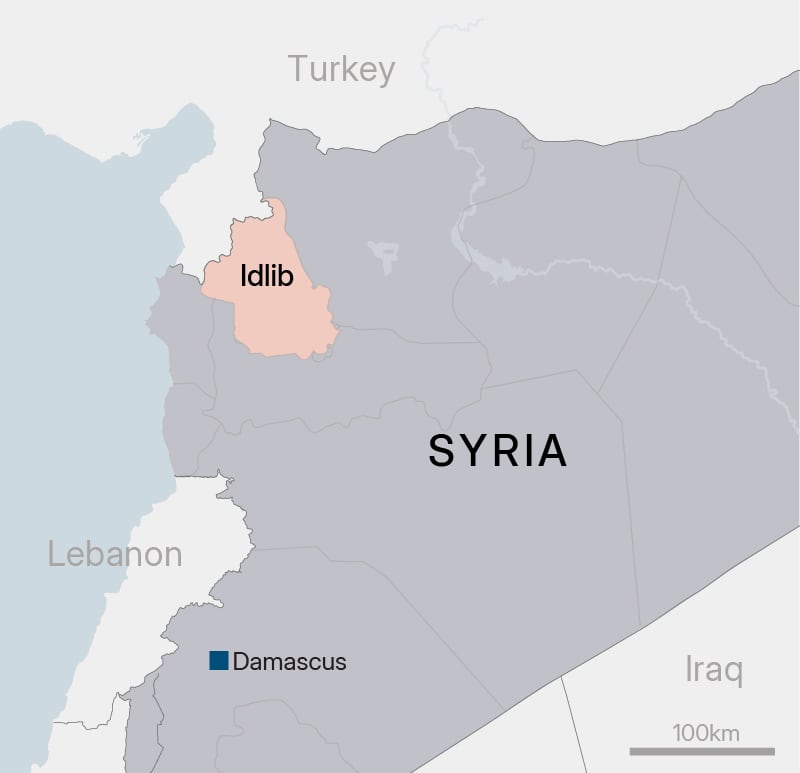
A combination of aid cuts and the sheer stresses on the new government in Damascus mean that life is as hard as it has ever been for residents of Al Karamat, which is close to the Turkish border.
The camp's residents are some of the 760,000 people who remain internally displaced in this pocket of north-western Syria, a government migration management official told The National. Before the fall of the Assad regime, the area had been long held by rebels and hosted people seeking refuge from bombing, forced conscription and arrest elsewhere in the country.
Al Karamat's residents are also among the roughly six million who remain internally displaced across Syria as a whole, according to the International Organisation for Migration. This is one of the huge challenges still facing Syrian authorities.
While nearly two million people have returned to their homes since the Assad regime’s fall, enormous destruction, poverty and continuing instability are preventing many more from doing so.
Shanty town
The Al Karamat camp is a shanty town-like cluster of rough breeze block buildings, with electricity supplied only by solar panels. Sewage water runs into the empty homes of those who have left over the past year.
Of the 11,000 households here before the Assad regime fell, around half have returned to their original homes, mainly in rural Hama province, says camp manager Yassin Salloum Adahina.
Evidence of those who have left Al Karamat is all around, in the shells of their former homes, which stand as peculiar skeletons among the houses of those who remain. Some people dismantled their homes to use the components for rebuilding in their home villages, taking with them tarpaulin roofs, breeze blocks and sheet metal. Children in Al Karamat have taken over other homes with hammers and their hands as makeshift playgrounds.
But others, like Qibal, who is a mother of seven, simply cannot afford to leave. Working eight hours a day as a farm labourer earns her just 100 Turkish lira ($2.30) – the common currency in this part of Syria, which is under heavy influence from its northern neighbour. It is just enough to buy bread for her family.
“If I don’t work, I don’t feed my children. I don’t have any other choice,” she said.
Mr Adahina, the camp manager, himself lives with his family in a shack and an adjacent tent. “Every day that passes, people here are dying a slow death,” he said. “Why? Lots of other people have returned, but they remain here.”
Among some, frustration is growing with the new authorities over what they feel is the marginalisation of Syrians who remain displaced in camps. “Where is the state? They don’t see us, they have forgotten us,” said camp resident Ahmed Youssef Eissa, 52, who is originally from rural Hama.
“We lived through 14 years of humiliation and shame in displacement camps, and now we are marginalised and forgotten, as if we didn’t go out in a revolution,” he said, waving his arms in frustration. “Why are we still living in camps? Even just when it comes to things like rubbish, no one is clearing the rubbish.”
He hopes that pledges from the government to provide more support to the displaced might be helped by a recent vote in the US House of Representatives to approve the repeal of the Caesar Act, which imposed harsh sanctions on Syria during Assad’s rule. “We want to see the promises after this,” he said.
Another camp resident said that her sons in the military had not received salaries and called on President Ahmad Al Shara to focus on Syrians still living in dire conditions in internal displacement camps. “Our situation is less than zero here,” she said, echoing a sentiment still felt by many across Syria.
Aid cuts
For those who have been forced to stay behind, recent humanitarian aid funding cuts have made life harder.
International organisations that used to provide food vouchers and rubbish collection for Al Karamat residents stopped their services in the last two years, Mr Adahina said. As some residents left, their empty homes have become putrid rubbish tips, filled with sewage and piles of rotting trash.
Children play alongside them in the dirt alleyways between the shacks, and Mr Adahina reports skin rashes among many of the camp’s younger residents, exacerbated by swarming insects. Those complaints have worsened over the past year as aid and refuse collection services have dried up and no one has provided an alternative, he said. Even basic foodstuffs are hard to come by.
Since the fall of the Assad regime – which coincided with, but was not the reason for, funding cuts – “no one here has received a single grain of rice from any organisation”, Mr Adahina said.
Humanitarian organisations around the world are calling for alternative financing as President Donald Trump’s cuts to US aid funding, and lower pledges from other donors, have forced them to halt many vital programmes. The cuts have also affected other countries including Sudan and Yemen. In Syria, an end to widespread conflict does not mean people are no longer in need, and the country's situation remains one of the world’s largest humanitarian crises, UN agencies say.
In October, the UN Office for the Co-ordination of Humanitarian Affairs (OCHA) appealed to the UN Security Council for more money to help Syria, with its plans just 19 per cent funded.
“We need concrete steps to mobilise resources, and to do so quickly,” Ramesh Rajasingham, the director of OCHA's humanitarian sector division, told the council.
Al Karamat’s residents want to improve their lives, and not by relying on foreign aid. They are open to ideas from the new government in Damascus to support small business projects through provision of basic equipment that they cannot afford, which would then allow them to become self-sufficient.
Camp resident Hatem Sayed Mansour, who is originally from Hawija in Hama province, said he thought recent such proposals by the Social Affairs and Labour Ministry were “an excellent idea”.
“These are the projects we hope for,” he said. “We can’t rely on the outside, we rely on ourselves.”
But so far, authorities have not delivered on promises to camp residents. Mr Adahina said he had called on the local governor in Idlib and others for more support for the camp, but saw that their limited means meant they had been unable to deliver anything so far.
“The [Idlib] governor and so on made promises, but they have nothing in their hands, they have nothing tangible on the ground,” he said.
The Syrian government migration management official told The National that authorities had received the displaced people's requests for the restoration of basic services, and “are working within available resources and in co-operation with humanitarian organisations”. But “insufficient funding hinders a rapid response to these needs”, the official added.
To allow them to go home, vital infrastructure such as schools and health centres must be repaired and reconstructed and clean drinking water and sanitation provided, the official added.
Qibal does not know how much longer she will be displaced. Life in the camp has tired and changed her, forcing her into long hours of work just to meet she and her family's most basic needs. Going home feels like a far-off possibility.
“We are living here while God grants us relief and we feel able to build one room – just one room – to live in back in our village,” she said. “That’s all we want.”

COMPANY%20PROFILE
%3Cp%3E%3Cstrong%3ECompany%20name%3A%3C%2Fstrong%3E%20HyperPay%3C%2Fp%3E%0A%3Cp%3E%3Cstrong%3EStarted%3A%3C%2Fstrong%3E%202014%3C%2Fp%3E%0A%3Cp%3E%3Cstrong%3EFounder%3A%3C%2Fstrong%3E%20Muhannad%20Ebwini%3C%2Fp%3E%0A%3Cp%3E%3Cstrong%3EBased%3A%3C%2Fstrong%3E%20Riyadh%2C%20Saudi%20Arabia%3C%2Fp%3E%0A%3Cp%3E%3Cstrong%3EIndustry%3A%3C%2Fstrong%3E%20FinTech%3C%2Fp%3E%0A%3Cp%3E%3Cstrong%3EFunding%20size%3A%3C%2Fstrong%3E%20%2455m%3C%2Fp%3E%0A%3Cp%3E%3Cstrong%3EInvestors%3A%3C%2Fstrong%3E%20AB%20Ventures%2C%20Amwal%20Capital%2C%20INet%2C%20Mada%20VC%2C%20Mastercard%2C%20SVC%3C%2Fp%3E%0A
AT%20A%20GLANCE
%3Cp%3E%3Cstrong%3EWindfall%3C%2Fstrong%3E%3Cbr%3EAn%20%E2%80%9Cenergy%20profits%20levy%E2%80%9D%20to%20raise%20about%20%C2%A35%20billion%20in%20a%20year.%20The%20temporary%20one-off%20tax%20will%20hit%20oil%20and%20gas%20firms%20by%2025%20per%20cent%20on%20extraordinary%20profits.%20An%2080%20per%20cent%20investment%20allowance%20should%20calm%20Conservative%20nerves%20that%20the%20move%20will%20dent%20North%20Sea%20firms%E2%80%99%20investment%20to%20save%20them%2091p%20for%20every%20%C2%A31%20they%20spend.%3Cbr%3E%3Cstrong%3EA%20universal%20grant%3C%2Fstrong%3E%3Cbr%3EEnergy%20bills%20discount%2C%20which%20was%20effectively%20a%20%C2%A3200%20loan%2C%20has%20doubled%20to%20a%20%C2%A3400%20discount%20on%20bills%20for%20all%20households%20from%20October%20that%20will%20not%20need%20to%20be%20paid%20back.%3Cbr%3E%3Cstrong%3ETargeted%20measures%3C%2Fstrong%3E%3Cbr%3EMore%20than%20eight%20million%20of%20the%20lowest%20income%20households%20will%20receive%20a%20%C2%A3650%20one-off%20payment.%20It%20will%20apply%20to%20households%20on%20Universal%20Credit%2C%20Tax%20Credits%2C%20Pension%20Credit%20and%20legacy%20benefits.%3Cbr%3ESeparate%20one-off%20payments%20of%20%C2%A3300%20will%20go%20to%20pensioners%20and%20%C2%A3150%20for%20those%20receiving%20disability%20benefits.%3C%2Fp%3E%0A
Miguel Cotto world titles:
WBO Light Welterweight champion - 2004-06
WBA Welterweight champion – 2006-08
WBO Welterweight champion – Feb 2009-Nov 2009
WBA Light Middleweight champion – 2010-12
WBC Middleweight champion – 2014-15
WBO Light Middleweight champion – Aug 2017-Dec 2017
Winners
Ballon d’Or (Men’s)
Ousmane Dembélé (Paris Saint-Germain / France)
Ballon d’Or Féminin (Women’s)
Aitana Bonmatí (Barcelona / Spain)
Kopa Trophy (Best player under 21 – Men’s)
Lamine Yamal (Barcelona / Spain)
Best Young Women’s Player
Vicky López (Barcelona / Spain)
Yashin Trophy (Best Goalkeeper – Men’s)
Gianluigi Donnarumma (Paris Saint-Germain and Manchester City / Italy)
Best Women’s Goalkeeper
Hannah Hampton (England / Aston Villa and Chelsea)
Men’s Coach of the Year
Luis Enrique (Paris Saint-Germain)
Women’s Coach of the Year
Sarina Wiegman (England)
Skoda Superb Specs
Engine: 2-litre TSI petrol
Power: 190hp
Torque: 320Nm
Price: From Dh147,000
Available: Now
What vitamins do we know are beneficial for living in the UAE
Vitamin D: Highly relevant in the UAE due to limited sun exposure; supports bone health, immunity and mood.
Vitamin B12: Important for nerve health and energy production, especially for vegetarians, vegans and individuals with absorption issues.
Iron: Useful only when deficiency or anaemia is confirmed; helps reduce fatigue and support immunity.
Omega-3 (EPA/DHA): Supports heart health and reduces inflammation, especially for those who consume little fish.
The specs
Engine: 2-litre 4-cylinder and 3.6-litre 6-cylinder
Power: 220 and 280 horsepower
Torque: 350 and 360Nm
Transmission: eight-speed automatic
Price: from Dh136,521 VAT and Dh166,464 VAT
On sale: now
Past winners of the Abu Dhabi Grand Prix
2016 Lewis Hamilton (Mercedes-GP)
2015 Nico Rosberg (Mercedes-GP)
2014 Lewis Hamilton (Mercedes-GP)
2013 Sebastian Vettel (Red Bull Racing)
2012 Kimi Raikkonen (Lotus)
2011 Lewis Hamilton (McLaren)
2010 Sebastian Vettel (Red Bull Racing)
2009 Sebastian Vettel (Red Bull Racing)
Another way to earn air miles
In addition to the Emirates and Etihad programmes, there is the Air Miles Middle East card, which offers members the ability to choose any airline, has no black-out dates and no restrictions on seat availability. Air Miles is linked up to HSBC credit cards and can also be earned through retail partners such as Spinneys, Sharaf DG and The Toy Store.
An Emirates Dubai-London round-trip ticket costs 180,000 miles on the Air Miles website. But customers earn these ‘miles’ at a much faster rate than airline miles. Adidas offers two air miles per Dh1 spent. Air Miles has partnerships with websites as well, so booking.com and agoda.com offer three miles per Dh1 spent.
“If you use your HSBC credit card when shopping at our partners, you are able to earn Air Miles twice which will mean you can get that flight reward faster and for less spend,” says Paul Lacey, the managing director for Europe, Middle East and India for Aimia, which owns and operates Air Miles Middle East.
UAE v Ireland
1st ODI, UAE win by 6 wickets
2nd ODI, January 12
3rd ODI, January 14
4th ODI, January 16
Bridgerton%20season%20three%20-%20part%20one
%3Cp%3E%3Cstrong%3EDirectors%3A%20%3C%2Fstrong%3EVarious%3C%2Fp%3E%0A%3Cp%3E%3Cstrong%3EStarring%3A%3C%2Fstrong%3E%20Nicola%20Coughlan%2C%20Luke%20Newton%2C%20Jonathan%20Bailey%3C%2Fp%3E%0A%3Cp%3E%3Cstrong%3ERating%3A%20%3C%2Fstrong%3E3%2F5%3C%2Fp%3E%0A
WHAT IS A BLACK HOLE?
1. Black holes are objects whose gravity is so strong not even light can escape their pull
2. They can be created when massive stars collapse under their own weight
3. Large black holes can also be formed when smaller ones collide and merge
4. The biggest black holes lurk at the centre of many galaxies, including our own
5. Astronomers believe that when the universe was very young, black holes affected how galaxies formed
How much do leading UAE’s UK curriculum schools charge for Year 6?
- Nord Anglia International School (Dubai) – Dh85,032
- Kings School Al Barsha (Dubai) – Dh71,905
- Brighton College Abu Dhabi - Dh68,560
- Jumeirah English Speaking School (Dubai) – Dh59,728
- Gems Wellington International School – Dubai Branch – Dh58,488
- The British School Al Khubairat (Abu Dhabi) - Dh54,170
- Dubai English Speaking School – Dh51,269
*Annual tuition fees covering the 2024/2025 academic year
Lewis Hamilton in 2018
Australia 2nd; Bahrain 3rd; China 4th; Azerbaijan 1st; Spain 1st; Monaco 3rd; Canada 5th; France 1st; Austria DNF; Britain 2nd; Germany 1st; Hungary 1st; Belgium 2nd; Italy 1st; Singapore 1st; Russia 1st; Japan 1st; United States 3rd; Mexico 4th
Dubai Bling season three
Cast: Loujain Adada, Zeina Khoury, Farhana Bodi, Ebraheem Al Samadi, Mona Kattan, and couples Safa & Fahad Siddiqui and DJ Bliss & Danya Mohammed
Rating: 1/5
Avatar%3A%20The%20Way%20of%20Water
%3Cp%3E%3Cstrong%3EDirector%3A%20%3C%2Fstrong%3EJames%20Cameron%3C%2Fp%3E%0A%3Cp%3E%3Cstrong%3EStars%3A%20%3C%2Fstrong%3ESam%20Worthington%2C%20Zoe%20Saldana%2C%20Sigourney%20Weaver%3C%2Fp%3E%0A%3Cp%3E%3Cstrong%3ERating%3A%20%3C%2Fstrong%3E3.5%2F5%3C%2Fp%3E%0A
Avatar: Fire and Ash
Director: James Cameron
Starring: Sam Worthington, Sigourney Weaver, Zoe Saldana
Rating: 4.5/5
Tips to keep your car cool
- Place a sun reflector in your windshield when not driving
- Park in shaded or covered areas
- Add tint to windows
- Wrap your car to change the exterior colour
- Pick light interiors - choose colours such as beige and cream for seats and dashboard furniture
- Avoid leather interiors as these absorb more heat
Farage on Muslim Brotherhood
Nigel Farage told Reform's annual conference that the party will proscribe the Muslim Brotherhood if he becomes Prime Minister.
"We will stop dangerous organisations with links to terrorism operating in our country," he said. "Quite why we've been so gutless about this – both Labour and Conservative – I don't know.
“All across the Middle East, countries have banned and proscribed the Muslim Brotherhood as a dangerous organisation. We will do the very same.”
It is 10 years since a ground-breaking report into the Muslim Brotherhood by Sir John Jenkins.
Among the former diplomat's findings was an assessment that “the use of extreme violence in the pursuit of the perfect Islamic society” has “never been institutionally disowned” by the movement.
The prime minister at the time, David Cameron, who commissioned the report, said membership or association with the Muslim Brotherhood was a "possible indicator of extremism" but it would not be banned.
