

Iran has recalled its ambassadors in Germany, France and Britain for consultations over the reimposition of UN sanctions against Tehran, which came into effect on Saturday night.
The move to recall the diplomats was made “in response to the irresponsible action of the three European countries in misusing the snapback mechanism”, state-run Mehr news agency reported.
The snapback is a process whereby sanctions are being reinstated at the behest of the three European powers, also known as the E3, who say Tehran has failed to fulfil its obligations under a 2015 treaty to regulate its nuclear energy programme.

The measures will freeze Iranian assets abroad, ban arms sales to Tehran and curb development of its ballistic missile programme, further straining an economy already weakened by years of restrictions.
Britain, France and Germany triggered the 30-day snapback mechanism last month. The E3 say Iran is enriching uranium well beyond levels necessary for civilian use. Western powers have long suspected Tehran is seeking to build a nuclear bomb, a claim denied by Iran.
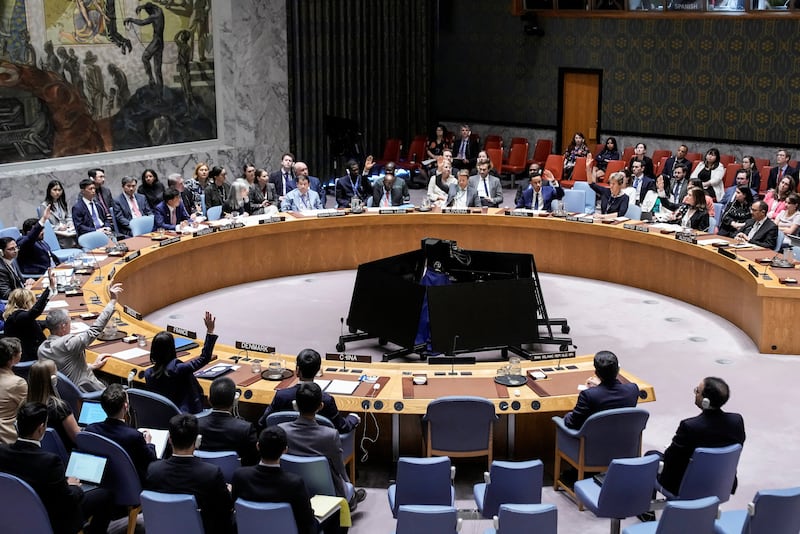
On Friday, the UN Security Council rejected a last-minute effort backed by Russia and China to delay the reimposition of the sanctions for six months.
The vote on a draft resolution failed to secure the minimum nine votes needed in the 15-member council. Nine members voted against, four in favour, while two abstained. The draft urged all parties to “immediately resume negotiations”.
European nations have said Iran must comply with a series of conditions. These include resumption of direct negotiations with the US over its nuclear programme and allowing UN inspectors to access nuclear sites. Tehran must also account for more than 400kg of highly enriched uranium that the UN's nuclear watchdog says it possesses.
Conflict over Iran's nuclear programme led to a 12-day war with Israel in June, which culminated in a US bombing of Iranian nuclear plants and an Iranian strike against a US airbase in Qatar.
Iranian Foreign Minister Abbas Araghchi said the E3’s efforts to revive the sanctions are “null and void” and carry no legal force, Mehr reported.
He told the Security Council that the US and its European allies bore full responsibility for any fallout from their decision to restore the sanctions.
“The developments we have witnessed set a dangerous precedent,” he said. “If agreements can be broken at will, no nation can trust international commitments.
“If unlawful measures are enforced by power instead of law, the Security Council risks losing credibility and authority.”
Iranian President Masoud Pezeshkian said the US and Israel were seeking to use the pressure at the Security Council to topple the Islamic republic's government.
“If the goal had been to resolve concerns on the nuclear programme, we could easily do that,” Mr Pezeshkian told reporters in New York. He said Iran will never pursue nuclear weapons.
Mr Pezeshkian said US demands that Tehran hand over its enriched uranium were "unacceptable".
He said Washington had asked Tehran to relinquish all of its enriched uranium in exchange for a three-month reprieve from sanctions.
The Iranian leader previously said France had made a similar proposal but offering only a one-month delay.
“Why would we put ourselves in such a trap and have a noose around our neck each month?” he said.
He also accused the US of pressing the Europeans not to reach a compromise.
Steve Witkoff, special envoy for US President Donald Trump, has said Washington does not want to hurt Iran and is open to further talks.
But Mr Pezeshkian said Mr Witkoff lacked seriousness, adding he had backtracked on agreements during earlier discussions.

