Israel carried out air strikes on the Syrian cities of Homs and Latakia late on Monday.
They are the latest in dozens of bombardments launched by Israel since the overthrow of Bashar Al Assad in Syria last year.
The Syrian Foreign Ministry condemned the attacks as "aggressive escalations" and a "blatant violation" of the country's sovereignty, state news agency Sana reported.
The Britain-based war monitor Syrian Observatory for Human Rights reported that "the Israeli strike near Homs targeted a military unit south of the city".
Syrian media did not elaborate on the size or impact of the reported strikes and Israel did not comment. But Israeli Defence Minister Israel Katz has previously said the country's forces operate "day and night" wherever necessary for security.
In late August, the Israeli army launched an aerial operation in the south of Damascus, which killed six Syrian soldiers.
Sana also reported earlier this month that Israeli soldiers detained seven people in the southern province of Quneitra.
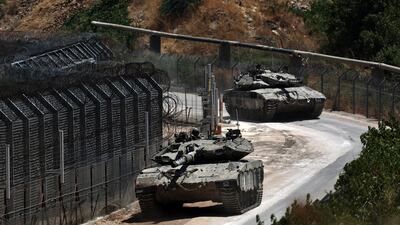
After Mr Al Assad's fall, the Israeli army entered the demilitarised buffer zone in the Golan Heights, bordering the part of the Syrian plateau occupied by Israel, and its forces regularly conduct incursions into southern Syria.
Despite Israel's strikes since the new Syrian government was installed last December, the two countries have held US-mediated talks on de-escalating conflict.
Israeli Prime Minister Benjamin Netanyahu said late last month that his government was engaged in talks aimed at demilitarising southern Syria, implicitly acknowledging for the first time contact with the new Syrian regime.
Syrian state media has also reported that Foreign Minister Asaad Al Shibani met Israeli Strategic Affairs Minister Ron Dermer in Paris on August 19.
They spoke about the situation in Syria's Druze-majority province of Sweida after deadly sectarian clashes there. Israel intervened in those clashes with air strikes in what it called a campaign to protect the Druze.
Israel has repeatedly cited its own security concerns in its military interventions, including what it sees as an obligation to protect members of the Druze minority, who share heritage with Druze living in Israel.