

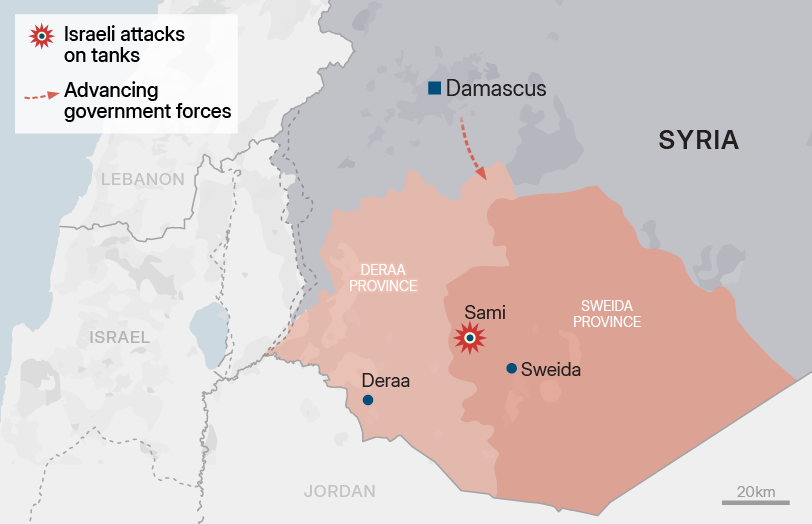
The once invincible Sweida in southern Syria – the centre of an uprising against French colonial rule a century ago – was counting its dead this week, after days of fighting.
A fragile ceasefire appeared to be holding yesterday, the second day without clashes in the city in the past week.
On Monday, Health Ministry teams were counting the dead and taking bodies to hospitals, where mortuaries were already full after the violence.
Dr Khaldoun, a Druze surgeon at the Sweida National Hospital, told The National that Syrian military and Interior Ministry forces who arrived in the city last week “supposedly to stop clashes and spread security, turned out to be monsters”.
More than 1,120 people were killed in the fighting, according to the UK-based Syrian Observatory for Human Rights. It said this included almost 300 civilians, many who had been summarily executed.
US diplomatic pressure on Syrian authorities helped bring a halt to the violence on Sunday. Israel said it launched air strikes on Damascus last week in defence of the Druze.
But the area, the heartland of the Druze minority – a sect dating back 1,000 years – remains under siege by the authorities.
Damascus said Druze militias killed hundreds of Sunnis in Sweida during the clashes, which were sparked by abductions in the city. Druze militias and Bedouin fighters were involved in the violence, before Syrian security troops arrived in the area.
Local officials said women were among those killed by snipers and other gunmen during assaults.
Dr Khaldoun said “medical teams were shot dead while trying to save people”.
He said the number of people who died receiving treatment at the hospital, as well as the number of bodies brought there, had reached 500.
Jiryes Al Ishaq, a Christian who lived on a farmland on the western outskirts of Sweida, said he fled the clashes and took shelter in the Greek Orthodox parish in the centre of the city.
“Pillage has been widespread but I don’t know what happened to my land,” he said.
“We are provided for at the parish, because the authorities have vowed not to harm [the compound], but the rest of the city is devastated.”
He referred to unconfirmed reports that government-allied militants had killed a Christian family of a dozen members in Sweida. The Syrian government has said that such killings would result in prosecutions.
Fighting in Sweida – in pictures
-
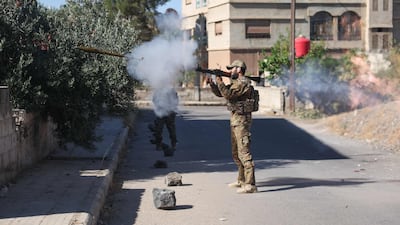
A member of a government-aligned security force fires a weapon amid clashes in Syria's southern city of Sweida. AFP -
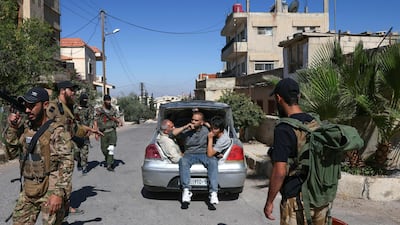
Residents flee their homes amid the clashes in Sweida. AFP -
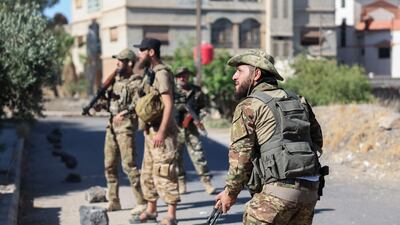
Clashes raged in the southern city after a ceasefire between government forces and Druze armed groups collapsed. AFP -
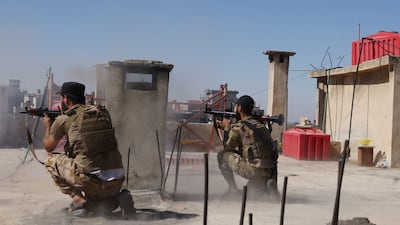
Government forces take aim from a rooftop position. AFP -
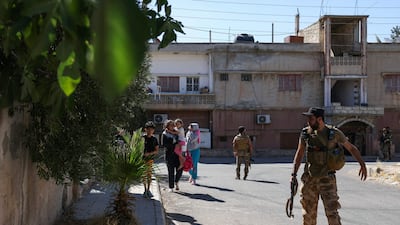
Troops patrol an area as residents flee their homes amid clashes. AFP -
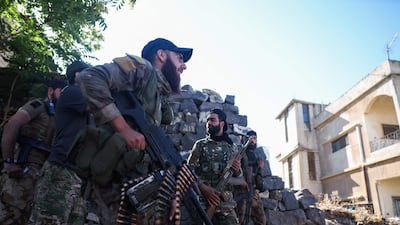
Heavily armed troops enter densely populated neighbourhoods. AFP -
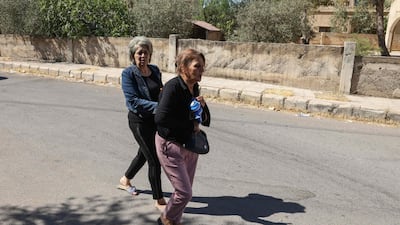
Women rush on a street as they flee their homes amid the clashes. AFP


Sweida is home to 270,000 Druze, who comprise most members of the sect left in Syria after waves of emigration. There are an estimated one million Druze worldwide, mainly in Syria, Lebanon and Israel, plus the diaspora.
From 1925 to 1927, the Druze, led by Sultan Basha Al Atrash, mounted an uprising against French rule. That failed but it was instrumental in projecting the image of the Druze as being Syrians first in a predominantly Sunni country.
Sultan Al Atrash became a figure in the narrative of Arab nationalists across the Middle East. Bedouin tribes joined him in the uprising. Sunni merchants in Damascus financed the Druze armed struggle against the French, as thousands of Druze fighters were killed by superior firepower.
Sultan Al Atrash died in 1982. However, one of his daughters, Muntaha, led peaceful resistance in Sweida when the March protest movement broke out in Syria in 2011.
In the last 15 months of former president Bashar Al Assad’s rule – before he was ousted last December – Sweida renewed the civil disobedience movement, demanding the removal of
the regime. Among its leaders was Hikmat Al Hijri, the most senior of a triumvirate comprising the Druze spiritual leadership.
Suhail Thebian, a prominent Druze civil figure, had opposed the increased arming of the Druze under Mr Al Hijri, after the Assad regime fell.
But he said the community has had no option but to resist government forces, although the cost has been high.
“Sweida has become a disaster zone,” Mr Thebian said. “There is nothing more I can tell you. I have survived, for now”.
Mr Al Hijri had resisted attempts by the new Syrian government to control Sweida, saying new security forces should be drawn from residents of the province. He described the government as extremists and undemocratic.
So, when clashes began in Sweida last week between Druze and Bedouin fighters, Mr Al Hijri refused to have government forces in the city.
This set the scene for operation in which the government recruited Sunni auxiliaries from Sweida and elsewhere.
Even Druze who have been critical of Mr Al Hijri’s handling of the crisis said the violence in the city has raised concerns about the authorities.
“They have cut the internet to make it difficult to know and document the size of the atrocities they committed,” said Nawaf, another Druze doctor.
The city and nearby villages “have been devastated”, an engineer in Sweida said. “We can’t even reach them,” he added.
“Bodies are still lying in open fields. There are no vehicles, no gasoline. I went to the hospital, but it can’t receive anyone as it is now out of service.”

