


The Druze-majority city of Sweida in southern Syria witnessed a week of heavy clashes coupled with an offensive by pro-government troops. A ceasefire appeared to be holding on Sunday.
Sweida is the capital of its province with the same name, which is home to 270,000 Druze, making it the heartland of the sect in Syria.
Over the past week, the minority suffered the biggest loss of life since mounting a failed revolt against French colonial rule from 1925 to 1927. Druze sources say that it will take days to find out how many members of the sect were killed, with many civilians killed in their homes in Sweida and surrounding villages. However, the toll could be more than 1,000, the sources said.
Hundreds of the attacking forces, composed of regular troops and paramilitary, are estimated to have been killed, many by Israeli air raids.
The sect is an offshoot of Islam and the Druze are mainly present in Israel, Jordan, Syria and Lebanon.
-
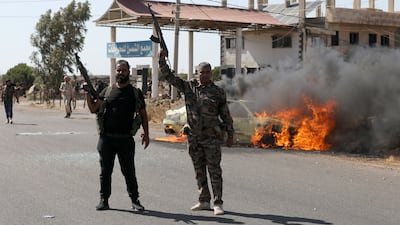
Armed men in front of a burning car near the site of clashes between Druze fighters and Bedouin tribesmen in Sweida, southern Syria. Getty Images -
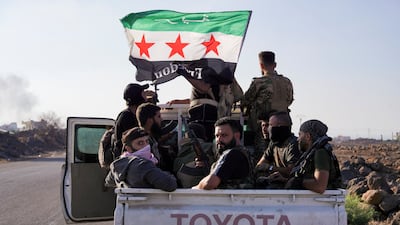
Members of Syria's security forces sit together in the back of a truck, amid fighting in Sweida. Reuters -
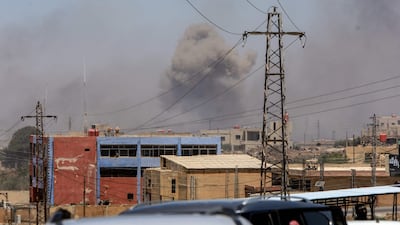
Smoke billows on the horizon during Israeli strikes near the city of Sweida. AFP -
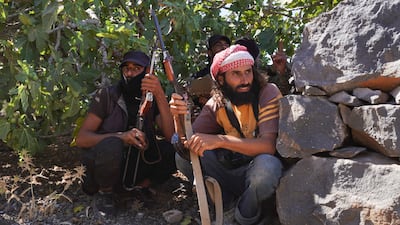
Armed men sit in wait in Sweida. Reuters -
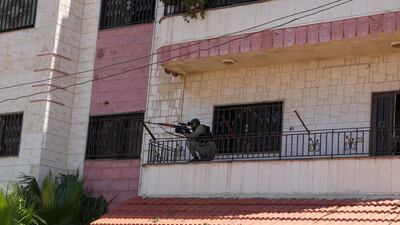
A member of Syria's security forces takes position in Sweida. AFP -
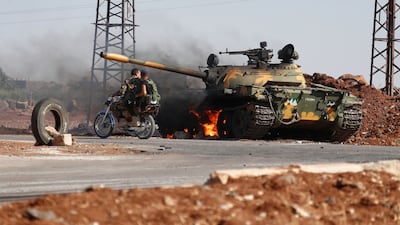
Syrian government soldiers pass a burning tank on the outskirts of Sweida city. Dozens of people were reported killed in the fighting. AP -
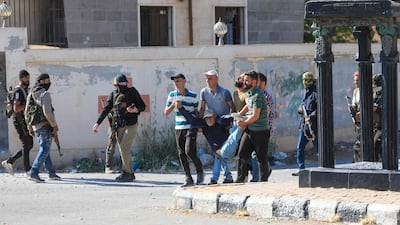
An injured man is carried away during clashes in an area between the villages of Mazraa and Walga, near the predominantly Druze city of Sweida. AFP -
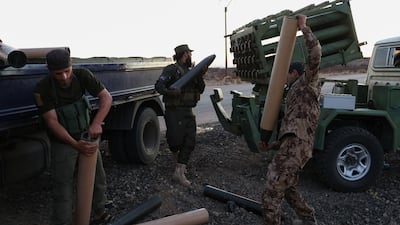
Syrian government forces prepare to fire a rocket launcher near Sweida. Getty images -
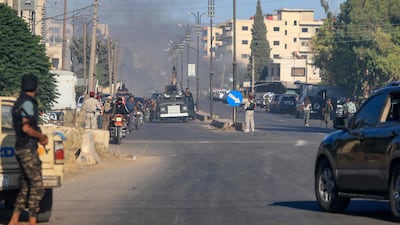
Members of Syria's security forces look on as smoke billows from clashes between Bedouin tribes and Druze fighters, between Mazraa and Walga. AFP -
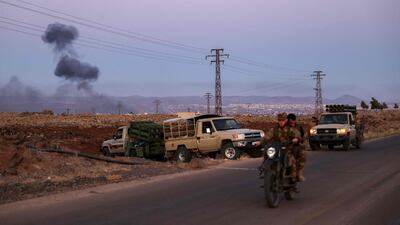
Smoke billows from Israeli air strikes in an area between Mazraa and Walga. Israel said it was acting in defence of the Druze minority. AFP -
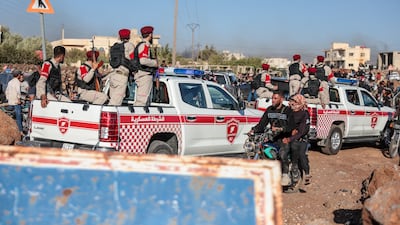
Syrian military police sent to the area. Government troops and auxiliary forces were among those killed in the fighting, said officials. EPA -
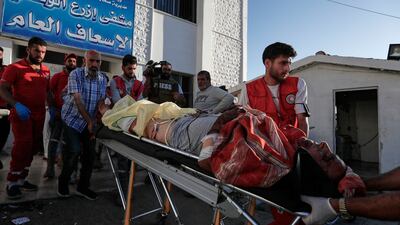
Syrian Red Crescent volunteers bring an injured man to Ezra Hospital, in southern Syria. AP


Druze resistance emerges
Before the attacks on the city on Sunday, about 3,000 Druze militiamen in Sweida were largely under the command of Laith Al Baalous, a Druze figure. Mr Al Baalous had advocated for accommodation with the government, led by Hayat Tahrir Al Sham, an offshoot of Al Qaeda. The group led the ouster of the regime of former president Bashar Al Assad in December.
Sheikh Hikmat Al Hijri, the most prominent in a triumvirate comprising the Druze spiritual leadership, resisted attempts by Mr Al Shara to control Sweida by appointing new security troops in the province, drawn from the ranks of HTS and its allies.
However, violence between the government and the Druze broke out first in Damascus, when militia allies of Mr Al Shara attacked Druze residential areas, killing dozens of civilians. The attacks stopped after Israel bombed targets belonging to the Syrian military and its auxiliaries in the capital and its outskirts. Israel said it has been carrying out strikes to defend the Druze community but some political analysts say Israel also wants the central authorities to remain weak.
The violence was followed by talks between Druze representatives and Damascus on handing control of Sweida governorate, but Mr Hijri resisted a proposal by Mr Al Shara to post 300 to 500 Druze security personnel allied with the president. During negotiations on readmitting former Druze soldiers into the new army, Mr Al Shara also rejected 2,700 names of out of 3,600 presented by Mr Hijri, according to sources in Jordan who have been following the events. Mr Al Hijri also labelled the Damascus government as extremist and anti-democratic.
The stalemate over the admission of HTS-linked security troops to Sweida set the scene for the government offensive, which came after clashes broke out between armed residents of a Sunni Bedouin quarter and Druze gunmen.

The clashes where prompted by the abduction of Adlalah Duwara, a vegetable seller and member of the Druze sect, while driving his lorry on the main road from Sweida to Damascus, which is under government control. His tribe responded by abducting a man in a Bedouin Sunni neighbourhood of Sweida, which started a cycle of abduction between the two communities.
The scale of attacks and killings during the subsequent government offensive led Druze factions to coalesce around Mr Al Hijri. This newfound unity, however, could be tested if Sweida remains under siege and no supplies reach the city.
Sweida's defenders
Over the past week, Mr Al Hijri took control over an umbrella organisation of 3,000 fighters in Sweida, called the military council. It has been joined by thousands of Druze residents of the province, many of whom are ex-soldiers who took up arms to defend their homes. Many had acquired weapons from the 15 Division, a unit of the former army that was based in Sweida.
“They are still short of anti-tank weapons,” said one of the sources in Jordan, adding that intimate knowledge of the terrain, as well as Israeli air support had helped the Druze ward off the offensive.
Although Israel has not attacked any Syrian targets from the air in the past 24 hours, its drones and other aerial reconnaissance remain posted over the skies of Sweida and over Deraa city, the launch pad of the government attacks, the source said.

Attacking forces and their core
The thrust of the initial offensive on Sweida last week was carried out by about 14,000 troops and auxiliaries. They were comprised of regular infantry divisions, backed by tank formations and spearheaded by sniper and special operations units. A unit of mostly Uighur foreign fighters, who specialise in penetrating urban defences and are now part of the army, was also posted to the northern outskirts of Sweida. However, Israeli air strikes forced these troops to withdraw from Sweida city to the northern and western countryside.
A second wave of attacks started on Saturday, and although the fighting has been framed as being between Bedouin and Druze, regional security sources said government troops were also heavily involved.
The new force, one of the sources said, is mostly the same troops who initially attacked Sweida. “This time, they wore [tribal] robes,” one official said, adding that the government transported thousands of Bedouin in the last several days from Aleppo in the north and Deir Ezzor in the east to the western outskirts of Sweida, but the main combatants, remained government forces.
The Bedouin who went to fight in Sweida with government backing belong to the Mawali and Baqqara tribes in Deir Ezzor, as well as the Okeidat tribe in Aleppo. Many members of these tribes had fought on the side of the former Assad regime in the 2011 to 2024 civil war but turned loyal to the new authorities after HTS ousted the former system.
“If authorities in Damascus want to preserve any chance of achieving a unified, inclusive and peaceful Syria … they must help end this calamity by using their security forces to prevent ISIS and any other violent jihadists from entering the area and carrying out massacres,” Secretary of State Marco Rubio said on X.
After the US warning, issued by Mr Rubio, government troops and their auxiliaries have retreated from a line of villages and towns to the west of Sweida, but remain close by, in the governorate of Deraa.
Among their main commanders is Shaher Amran, a security head in Deraa province, Ahmad Dalati, who is in charge of security in Sweida, Mouwafaq Al Dokhi, a Bedouin security official, and an intelligence operative known as Khattab, head of a newly created intelligence unit named Unit 555.

